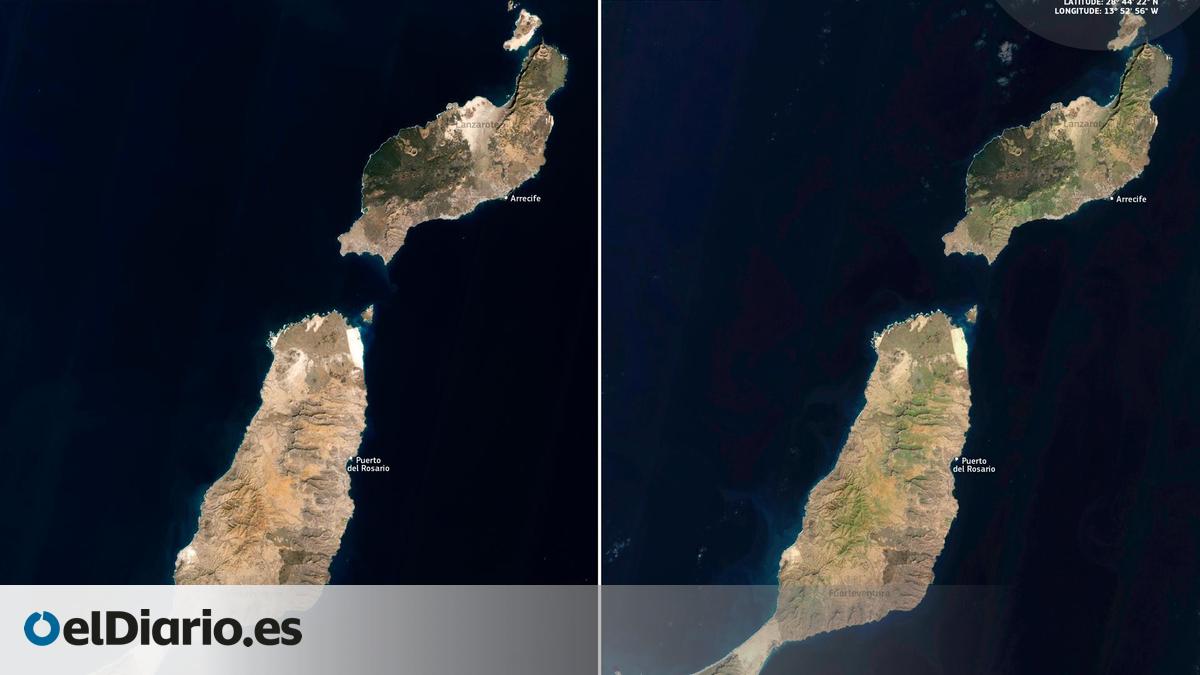
The Transformation of the Canary Islands in Winter 2025
A Rainy Farewell to 2025
As 2025 came to a close, the Canary Islands experienced an extraordinary weather phenomenon. The archipelago, known for its warm climates and scenic vistas, was graced with abundant rainfall across all the islands. This deluge extended well into January, resulting in a shift in atmospheric conditions characterized by overcast skies, robust winds, and even snow on the higher peaks. The much-needed precipitation came as a refreshing change for a region long afflicted by drought, reviving its landscapes and promising new life.
Impact of Rainfall on Island Landscapes
The most dramatic transformation occurred in the more arid islands of Lanzarote and Fuerteventura. Satellite imagery captured by the European Sentinel-2 from the Copernicus program showcased stark contrasts: the lush green cover began to replace the signature ochre and sandy hues that dominate the volcanic terrain. Since mid-December, rainfall records were shattered, offering a surprising shift that altered the very character of these landscapes.
Visual Splendor from Above
Drones and satellite images reveal an astonishing sight. The once stark, barren hills, rolling valleys, and dormant volcanoes have donned a vibrant green cloak, marking a temporary yet striking metamorphosis. This unusual greenery, which can be observed from space, has captivated both residents and tourists, sparking a sense of euphoria among those who have witnessed their homeland’s remarkable transformation.
Lanzarote and Fuerteventura: A Closer Look
The changes in Lanzarote and Fuerteventura highlight the islands’ resilience and beauty. Fuerteventura’s arid plains, usually scantily vegetated, became a tapestry of diverse flora. Flowering plants and grasses flourished, creating a striking contrast against the rugged volcanic formations. Lanzarote, known for its stark beauty and unique geological features, transformed into a veritable garden that invited butterflies and birds, filling the air with their vibrant energy.
Nature’s Response to Climate
The rain not only changed the visual appeal of these islands but also addressed an urgent ecological need. The drought had impacted water supplies and ecosystems, threatening vulnerable species and the delicate balance of nature. The sudden influx of rainwater replenished aquifers and rejuvenated vegetation, providing food and habitat essential for the local wildlife.
Community Reactions and Social Impact
The rainy season’s arrival brought about significant changes in daily life for residents. Conversations in local cafes turned to talk of greenery and the ecosystems returning to life. Farmers eagerly anticipated the benefits the rain would have on crops, enhancing agricultural productivity after years of struggle. The tourism industry, ever-influential in the Canary Islands, saw a renewed interest from visitors eager to experience this unusual spectacle of nature.
Final Thoughts
The aftermath of the heavy rains in late 2025 marks an intriguing chapter in the history of the Canary Islands. As the vibrant greenery stretches across the islands, it serves as a reminder of nature’s ability to rejuvenate and adapt. The winter deluge has not only transformed the physical landscape but has also ignited a fresh hope and enthusiasm among the islands’ residents and those who visit, forever altering their perspective on the potential of this unique but often unpredictable environment.