An Insightful Dialogue with Politician Pilar Rodríguez: On Censorship Motions and Personal Tributes
In a recent interview, politician and political scientist Pilar Rodríguez candidly shared her views on a motion of censorship that emerged in the Ayuntamiento of Antigua. Rodríguez stated, “I am not in favor of censorship motions because I believe they should be used for exceptional situations.” Her frank opinion provided a refreshing perspective on a politically charged topic.
Reactions to Recent Political Moves
The motion aimed to unseat the current mayor, Matías Peña, and was backed by several parties, including CC, PP, AMF, and Contigo. Rodríguez revealed her surprise at the swift action taken against Peña: “I was shocked,” she admitted, noting that the parties involved hadn’t communicated their dissatisfaction directly with the mayor before pursuing such drastic measures. This lack of communication raised questions about the intentions and trust within local politics.
Rodríguez emphasized the importance of dialogue within the governing coalition, stating that before resorting to censorship, it would be reasonable to exhaust all channels of communication. “It’s essential to engage in discussions before jumping to extreme actions,” she argued, underscoring the value of collaborative governance.
The Impact on Public Trust
This political turbulence comes at a sensitive time as citizens prepare for upcoming elections. Rodríguez expressed her concern about the social implications of these disruptions, remarking that such behavior contributes to a growing mistrust among the electorate. “The citizens feel let down,” she asserted, linking these events to a broader sense of disenchantment with public representatives. When politicians act without backing from their constituents or each other, it translates into a loss of faith in the democratic system.
A Candid View on Tuineje
While Rodríguez stands firm against the motion in Antigua, she acknowledged that there might be valid grounds for a motion of censorship in the municipality of Tuineje. She pointed out the distressing management issues there, labeling the current situation as “nefasta” (disastrous). According to her, key services have deteriorated, illustrated by the closure of the Catastro Office and inadequate social services.
Rodríguez pushed for accountability in Tuineje governance, claiming, “There is no legal security, none at all.” Her observations about the closed auditorium, which once served as the cultural centerpiece for the community, underline the decline in public service quality. She suggested that instead of outright censorship, alternative actions like “letting another person take over the list to create a fresh start” would be more beneficial, focusing on the need for genuine public service.
Relationships within Political Structures
During the interview, Rodríguez also addressed her affiliation with the political party Nueva Canarias. She described her connection as “normal,” expressing her willingness to contribute to the party’s efforts in future elections. This openness indicates her resilient dedication to community service, suggesting that she may return to active politics if circumstances align.
“If I have health, I will do it,” Rodríguez stated, showing that her commitment to public service is unwavering. She indicated a readiness to adapt her involvement depending on the party’s needs and the political landscape.
Personal Reflections: A Tribute to Integrity
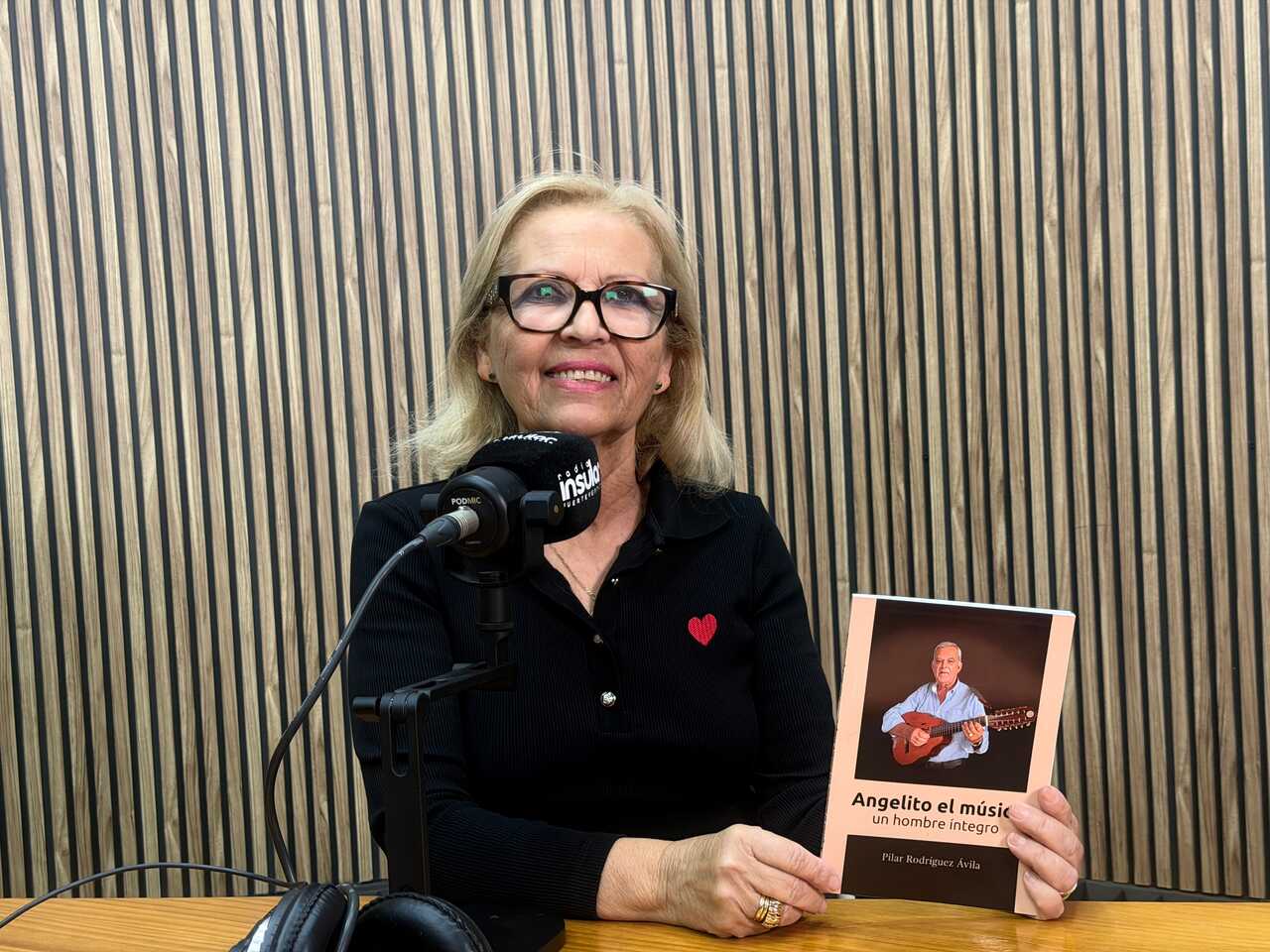
On a more personal note, Pilar Rodríguez shared her experience of grief and healing through writing. She recently published a book, “Angelito el músico. Un hombre íntegro”, dedicated to her late husband, a tribute that highlights the values of integrity and simplicity.
The book has garnered international attention, having reached three continents and over 40 countries, resonating with readers and allowing them to connect with her husband’s legacy. The addition of a German translation further emphasizes the cultural impact her husband had, especially in promoting Canary Island folklore in Germany.
Rodríguez explained that writing this book was a crucial part of her healing process, allowing her to honor her husband’s memory while reminiscing about their shared life. Reflecting on her journey, she stated that the essence of life resides in “the simple and the true.” Through this work, she has found solace and purpose in keeping her husband’s spirit alive.
Pilar Rodríguez’s insights showcase a blend of political acumen and personal resilience, offering a unique lens through which to view the dynamics of governance and the transformative power of heartfelt remembrance in the face of loss.