The Forgotten Legacy of Spain in American History
The story Americans tell about their nation often begins in New England, with iconic images of the Mayflower and the Pilgrims. This narrative, while powerful, is incomplete. Long before the Pilgrims arrived, another European civilization had already explored, settled, and shaped vast regions of what is now the United States: the Spanish Empire. Understanding this chapter is not just an exercise in nostalgia; it’s essential for grasping the full tapestry of American history.
The Early Spanish Exploration
In 1513, Juan Ponce de León landed on the peninsula he named La Florida, marking the beginning of a Spanish presence that would last for centuries. For the Spanish Crown, North America was not an unexplored frontier but an integral part of a vast imperial world. This early exploration laid the groundwork for a complex network of settlements, trade routes, and cultural exchanges that would influence the continent long before English settlers arrived.
St. Augustine: The First European City
The first permanent European city in what is now the continental United States was St. Augustine, founded by Pedro Menéndez de Avilés in 1565. This city, established 42 years before Jamestown, was built according to the urban principles codified in the Laws of the Indies. It featured a planned street grid, a central plaza, churches, hospitals, and one of North America’s strongest fortifications, the Castillo de San Marcos. St. Augustine also hosted one of the earliest documented European Thanksgiving celebrations, showcasing the blending of Spanish settlers and Native Americans.
Missions and the Expansion of the American West
While English colonies remained concentrated along the Atlantic coast, Spanish expeditions ventured deep into the continental interior. Explorers like Álvar Núñez Cabeza de Vaca and Hernando de Soto traversed vast territories, documenting the landscapes and cultures they encountered. These expeditions were not isolated; they created an interconnected world of settlements and commerce long before the United States expanded beyond the Appalachian Mountains.
The establishment of Catholic missions became a crucial aspect of Spanish settlement in the Southwest. Jesuits, Franciscans, and Dominicans founded communities that combined religion, agriculture, and local governance. Figures like Eusebio Francisco Kino transformed Arizona through innovative ranching and irrigation practices, while Junípero Serra’s mission chain in California laid the foundation for cities like San Diego and Los Angeles.
The Cultural Legacy of Spain
The cultural impact of Spain on the United States is profound and enduring. Spanish became the first European language of administration and diplomacy across vast regions of North America. Indigenous peoples adopted it for trade and communication, leading to a rich linguistic exchange that persists today.
The mythology of the American frontier is also steeped in Hispanic origins. The horse culture that transformed the Great Plains was introduced through Spanish livestock, and the iconic cowboy owes much to the vaquero of the 17th century. Terms like rodeo, lasso, and ranch all trace their roots back to Spanish, illustrating how deeply intertwined these cultures are.
Spain’s Role in the American Revolution
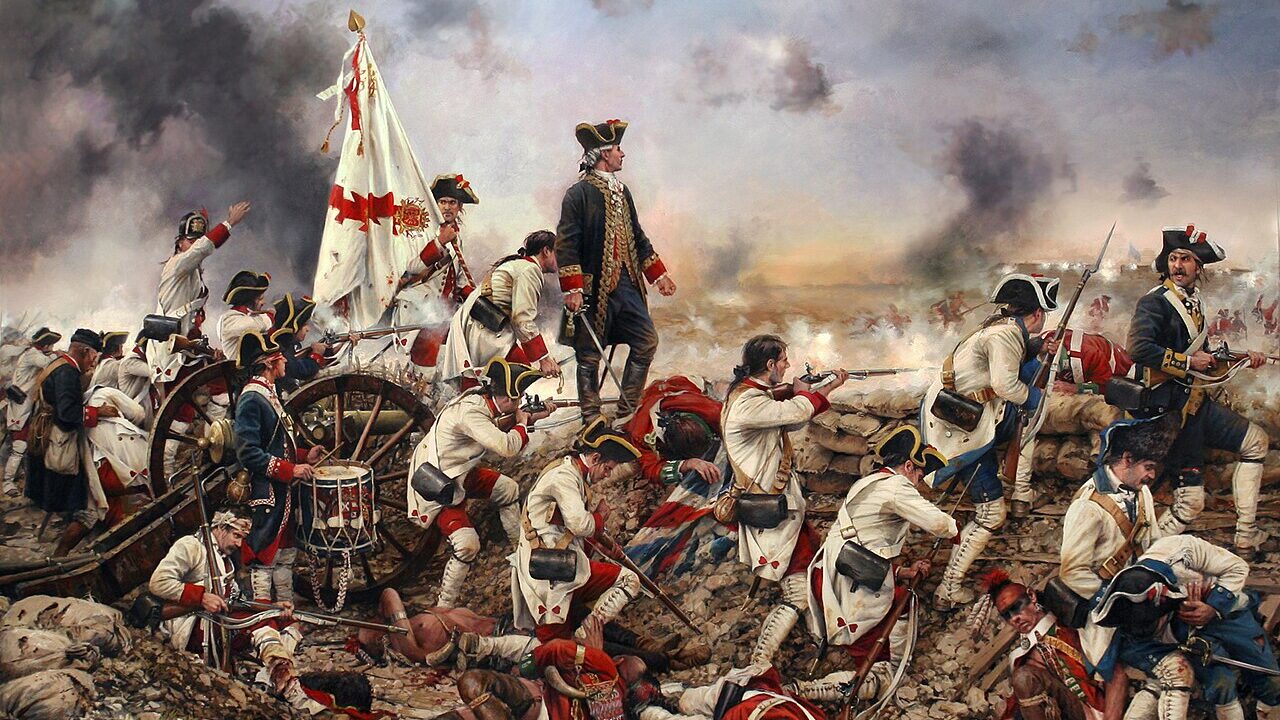
Spain’s influence became even more pronounced during the American Revolution. While the narrative often highlights Washington and French support, Spain played a crucial, albeit understated, role. By the late 18th century, Spain controlled vast territories, and King Charles III recognized the strategic opportunity to weaken Britain.
Spain began supplying the American rebels with money, weapons, and military supplies, significantly bolstering the Continental Army. In 1779, Spain formally entered the war, with Governor Bernardo de Gálvez leading a diverse force that captured key British strongholds along the Gulf Coast. His campaigns not only weakened British control but also diverted resources away from the main theaters of the war, contributing to the eventual American victory.
Legal and Cultural Continuities
The relationship between Spain and the emerging United States did not end with independence. Many legal institutions established under Spanish rule persisted after the transfer of sovereignty. States like California, Texas, and New Mexico retained principles derived from Spanish civil law, such as the doctrine of community property, which recognized equal rights for spouses in property ownership.
Spanish influence is also evident in the American landscape. The names of states and cities—Florida, Colorado, Los Angeles, and San Antonio—reflect this legacy. Even the dollar sign is believed to trace its origins to the Spanish piece of eight, which was widely circulated long before the United States was formed.
A Richer Historical Context
Recognizing Spain’s contributions does not diminish the achievements of English-speaking colonists or the Founding Fathers. Instead, it places them within a broader historical context. The United States did not emerge from an empty continent; it inherited a landscape rich with history, governance, and culture shaped by Spanish influence.
This understanding invites us to complete the narrative of American history, acknowledging the profound Hispanic roots that have long been overlooked. The origins of the United States are not only richer and older but also intricately woven with the legacy of Spain, a chapter that deserves its rightful place in the story of America.


