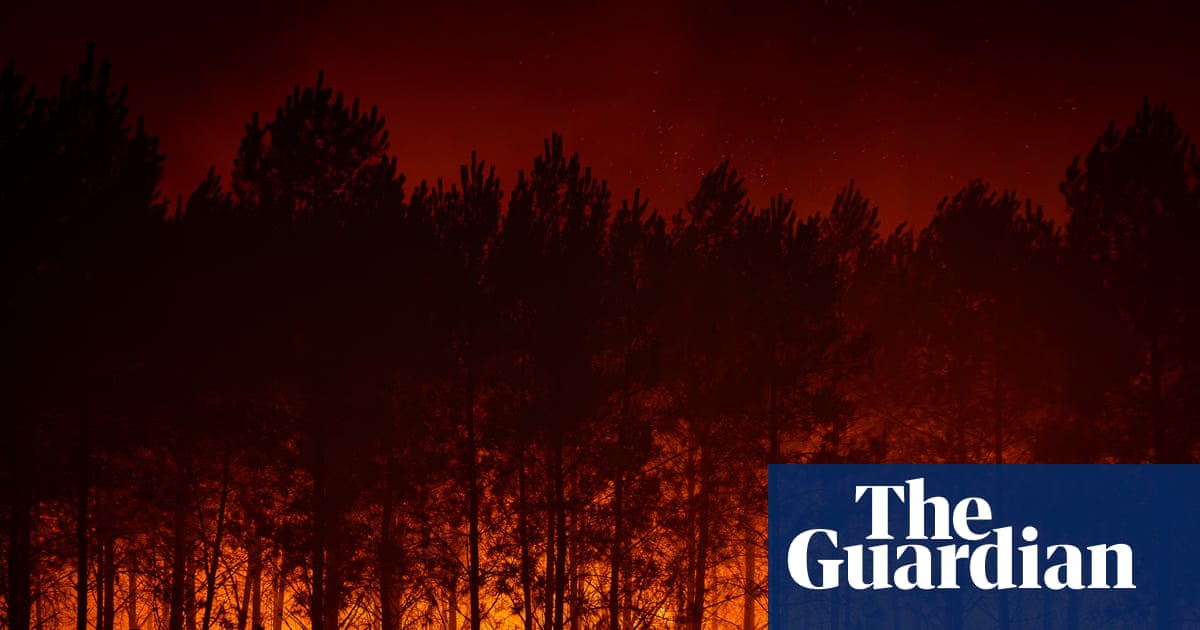
Firefighters Battle Wildfires in France and Spain Amidst Looming Heatwave
Firefighters in France and Spain are in a race against time to control massive wildfires that have devastated vast areas of land. With another heatwave predicted to hit this week, the urgency to contain the flames has intensified. Spain’s Interior Minister, Fernando Grande-Marlaska, emphasized that Monday and Tuesday are “absolutely crucial days” for firefighting efforts as temperatures are expected to rise significantly from Wednesday onward.
Record-Breaking Fires in Spain
In Spain, the situation has reached alarming levels. A wildfire in the hilly terrain of Ávila, west of Madrid, has become the largest on record, consuming an astonishing 50,000 hectares (123,000 acres). Authorities are currently battling two separate fires northwest of Madrid, bringing the total area of scorched land near the capital to a staggering 70,000 hectares. The scale of destruction has raised concerns about the long-term impact on the environment and local communities.
France Faces Its Own Crisis
France is not far behind in this battle. The Gironde region, known for its picturesque landscapes, is grappling with a wildfire that has burned 42,000 hectares. Eric Brocardi, a spokesperson for the French fire service, stated that the country is in a “race against time” to control the flames before the impending heatwave. Weather forecasts predict temperatures could soar to 40°C (104°F) in some areas, complicating firefighting efforts.
Evacuations and Emergency Measures
The Gironde fire has triggered the evacuation of approximately 220,000 people, highlighting the human cost of these natural disasters. Firefighters are employing various strategies, including using mechanical diggers to create firebreaks in the Cestas commune, about 10 miles from Bordeaux. Despite these efforts, the fire remains “not contained” and continues to pose a significant threat to nearby urban areas.
Unprecedented Wildfire Season
This year’s wildfire season has been described as “completely exceptional” by French officials. Since January, over 116,000 hectares of forest and vegetation have been burned in France alone, far exceeding the 70,000 hectares reported for the entirety of 2025. In Spain, the government reported that 172,000 hectares of forested land have been consumed this year, a figure six times greater than the same period last year.
Climate Crisis and Its Consequences
Prime Minister Pedro Sánchez of Spain has linked these devastating wildfires to the broader climate emergency, stating that they are not isolated incidents but rather a painful manifestation of a changing climate. He noted that wildfires are becoming more voracious and heatwaves more frequent, making the land increasingly vulnerable. The European Commission has echoed these sentiments, with officials admitting that Europe is not adequately prepared for the consequences of the climate crisis.
International Support and Coordination
In response to the escalating crisis, the European Union has mobilized resources to assist both countries. Seven planes and four helicopters have been dispatched to France, while Spain has received six planes and three firefighting teams. EU officials are also on the ground in the Bordeaux region to support local authorities in their firefighting efforts.
Health Risks and Air Quality Concerns
The smoke from the wildfires is causing a marked deterioration in air quality across the Nouvelle-Aquitaine region and beyond. Health authorities have issued warnings, particularly for vulnerable populations such as the elderly, pregnant women, and those with respiratory issues. Precautions have been advised, including closing windows, wearing FFP2 masks outdoors, and avoiding strenuous activities. In response to the health crisis, the prime minister’s office has distributed over 1.5 million FFP2 masks to affected areas.
Broader Implications for Europe
The scale and intensity of the wildfires in France and Spain have raised questions about Europe’s preparedness for such natural disasters. Countries like Italy are also grappling with their own wildfires while sending resources to assist their neighbors. As the continent braces for further heatwaves, the need for a comprehensive strategy to combat wildfires and address the underlying causes of climate change has never been more pressing.
Conclusion
As firefighters continue their heroic efforts to contain the flames, the situation remains fluid and precarious. The combination of extreme weather conditions and the ongoing climate crisis underscores the urgent need for collective action and preparedness in the face of such unprecedented challenges.