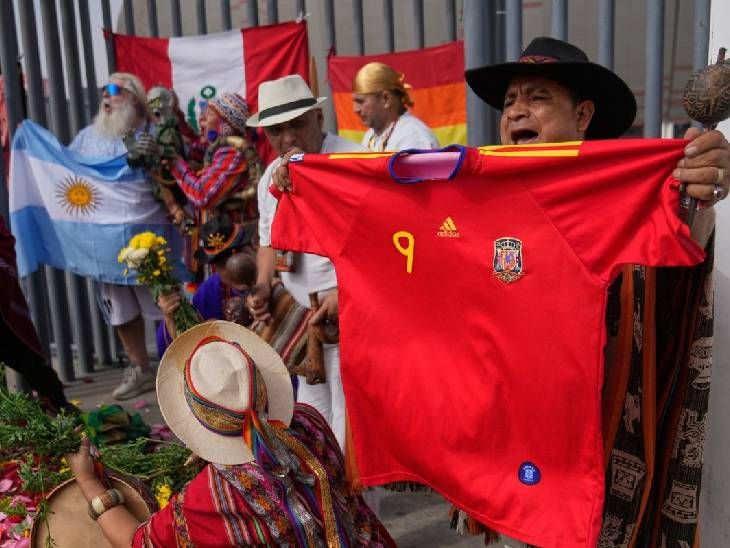
The Emotional Clash: Spain vs. Argentina in the World Cup Final
The upcoming Football World Cup final promises to be more than just a match between Spain and Argentina; it’s a poignant reflection of centuries-old ties between two nations. With shared language, cultural similarities, and familial connections, this match has become an emotional battleground for many fans. The question looms large: should one cheer for the heart or the homeland?
A Personal Perspective: Juan Manuel Posada
Take, for instance, the story of 75-year-old Juan Manuel Posada, a resident of Buenos Aires. Born in Spain, he moved to Argentina in 1968. His heart may lean towards Spain, but he expresses a unique sentiment: “Even if Argentina wins, I won’t be sad.” This sentiment encapsulates the emotional complexity many face as they navigate their loyalties.
Juan’s family reflects this duality as well. His grandson, a fervent supporter of Argentina, has made a playful pact with his grandfather: if Argentina wins, Juan must don the team’s jersey in celebration. This light-hearted promise highlights how sports can bridge generational divides, even in the face of conflicting loyalties.
The Generational Divide: Manuel Fernandez Acevedo
Similarly, 81-year-old Manuel Fernandez Acevedo, who left Spain as a child, shares a similar story. With his daughter and granddaughter born in Argentina, he feels a deep affection for both countries. “I just want the better team to win,” he states, emphasizing that the match transcends mere national pride.
This sentiment is echoed by many in the diaspora, where the emotional stakes are high. The relationship between Spain and Argentina is not merely linguistic; it’s woven into the fabric of their shared history.
Historical Ties: A Cultural Connection
The roots of this connection can be traced back to the 16th century when Spanish explorer Pedro de Mendoza founded Buenos Aires. The subsequent influx of Spanish settlers established deep cultural and familial ties that have only strengthened over the centuries.
Football, alongside literature, music, and cuisine, has played a pivotal role in shaping this relationship. Legendary players like Alfredo Di Stéfano and Lionel Messi have not only dazzled fans but have also served as cultural ambassadors, bringing the two nations emotionally closer.
A Historic Final: Spanish-Speaking Rivals
In the annals of World Cup history, Spain and Argentina have faced each other only once before, during the group stage of the 1966 tournament, where Argentina emerged victorious. This final marks a significant moment as it is the first time these two teams will meet in a World Cup final. It’s also noteworthy that this is only the second final in World Cup history featuring two Spanish-speaking countries, the first being the 1930 clash between Uruguay and Argentina.
The Diaspora: A Shared Celebration
In recent decades, economic crises and political turmoil have led many Argentinians to seek better opportunities in Spain. Approximately 450,000 individuals born in Argentina now call Spain home. For these families, the upcoming match is akin to a family reunion, filled with shared hopes and dreams.
Social media is abuzz with humorous videos showcasing the playful banter between families divided by allegiance. Children are often caught in the middle, navigating their loyalties in a light-hearted manner. This dynamic adds a layer of warmth and humor to what could otherwise be a tense rivalry.
The Emotional Stakes
As the final approaches, it becomes clear that this match is not just about determining a champion. It’s a celebration of shared heritage, familial bonds, and the emotional ties that bind millions across continents. For many, the outcome will resonate far beyond the scoreboard, touching the very essence of their identities and relationships.
In this unique context, the World Cup final between Spain and Argentina stands as a testament to the power of sport to unite, divide, and evoke deep emotions. As fans prepare to cheer for their teams, they also prepare to navigate the complex tapestry of love, loyalty, and legacy that this match represents.


