The Journey of Youssef El Abbas: A Tale of Hope and Despair
Four days ago, Youssef El Abbas, a 44-year-old Moroccan father of four, found himself at a crossroads, staring down the opportunity to reclaim the life he had lost seven years earlier. News had spread that approximately 400 people had successfully swum from Morocco to the Spanish enclave of Ceuta, a mere 12 miles (19 km) across the strait of Gibraltar from mainland Spain. For El Abbas, this was not just a chance; it was a lifeline.
A Long-Awaited Return
El Abbas had been deported from Spain in 2019 after losing his job in Bilbao, where he had lived and worked for 14 years. Since then, he had been separated from his wife and four daughters, who remained in Spain. The thought of reuniting with them had never left his mind. “In Morocco, I was alive, but I wasn’t really living,” he reflected, underscoring the emotional toll of his separation.
Determined to seize this unexpected opportunity, El Abbas took a taxi to Tétouan, a city south of Ceuta. As he traveled, he encountered a wave of social media posts and news reports indicating that Moroccan authorities were allowing people to cross the border. Unlike those who had attempted the crossing the night before, he could now travel overland and swim for just five minutes to reach Spanish territory, bypassing border controls.
The Overwhelming Scene in Tétouan
Upon arriving in Tétouan, El Abbas was met with chaos. “Young men were running through the streets, flooding every corner,” he described. The usual checkpoints that had previously barred entry for those without European documents were conspicuously absent. The Moroccan police were reportedly urging people to “Go, go, go! Run now, run into Spain,” a stark contrast to the violence that had marked the previous night’s attempts.
However, El Abbas noticed a troubling trend: while Moroccans were being allowed to cross, sub-Saharan migrants were being forcibly pushed back. This selective treatment highlighted the complex dynamics at play in the region, where borders are not just physical barriers but also symbols of deeper societal issues.
The Swim to Freedom
El Abbas reached the border at 2:45 PM on Wednesday. By 3 PM, he was standing on Spanish soil after a brief swim. Yet, the journey was not without its horrors. “In just 10 minutes in the water, I saw four people floating dead in Moroccan waters,” he recounted, a grim reminder of the risks involved in such desperate attempts for freedom. Tragically, at least 72 people drowned or were crushed during this mass crossing.
This influx of migrants was unprecedented, with over 50,000 people reportedly crossing into Ceuta that week alone. Spain’s Prime Minister, Pedro Sánchez, described the situation as a “violation of Spain’s territorial integrity,” reflecting the political ramifications of the crisis.
The Aftermath: A Bittersweet Reality
El Abbas’s return was bittersweet. Although he was initially helped out of the water by a Spanish Guardia Civil officer, the kindness quickly turned to violence. Just three days after his arrival, he and others were surrounded by military patrols and beaten. “The same hand that helped me out of the water was the one that later hit me,” he lamented, capturing the duality of his experience.
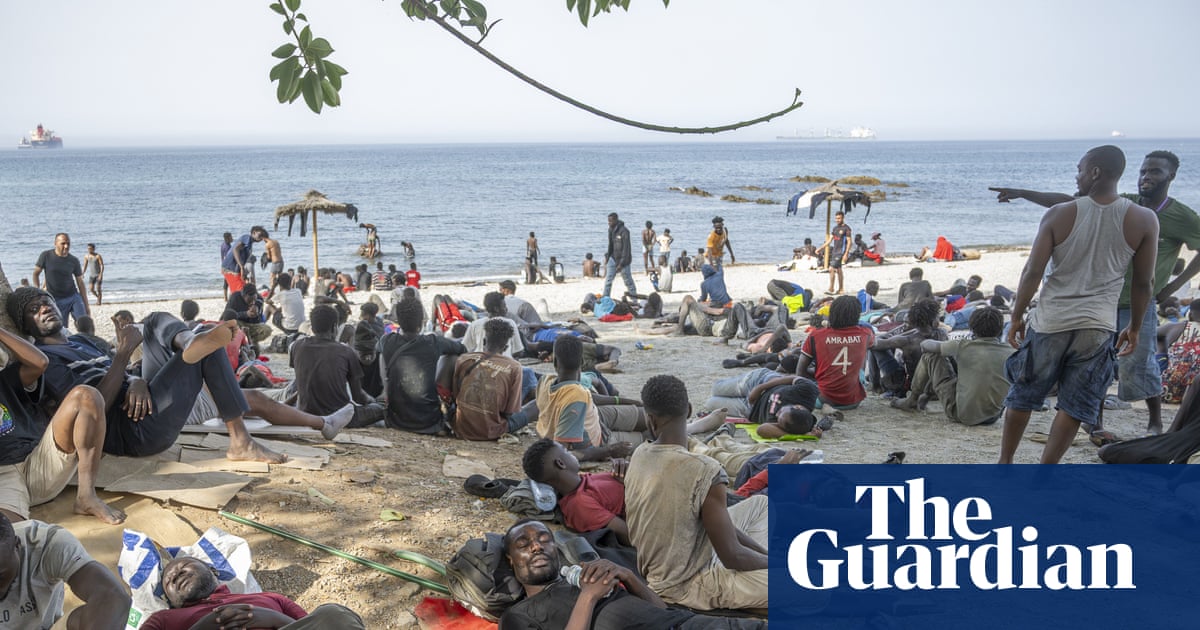
Despite more than 48,000 people returning to Morocco by the end of the week, many remained stranded in Ceuta, sleeping in parks and public squares, waiting for a chance to move on. The situation was dire, with locals like Said, a 17-year-old from Casablanca, finding themselves with little more than a bottle of water and a carton of yogurt from a kind stranger.
The Struggle for Basic Needs
Said had also joined the throngs heading to Ceuta when he heard the border was open. However, the initial excitement quickly faded into a harsh reality. He was taken to a center for unaccompanied minors but found no available places, leaving him back on the streets. The current protocol treated unaccompanied minors as regular migrants, often resulting in their return to Morocco.
The challenges were compounded by language barriers, as Said and other teenagers struggled to find food or shelter. “No one would sell us food or allow us into shops and restaurants because we did not speak Spanish,” he explained, highlighting the isolation many migrants faced.
Community Response and Rising Tensions
As Ceuta slowly began to regain a sense of normalcy, local cafes reopened, and residents stepped up to help. Many locals were seen distributing water, sandwiches, and blankets to those in need. However, this spirit of solidarity was threatened by the arrival of far-right politicians and neo-Nazi groups, eager to exploit the humanitarian crisis for their own agendas.
Local resident Malika expressed her frustration, stating, “They’re going to exploit our feelings to claim the credit and say they defended Ceuta.” This sentiment was echoed by Fatima Hamed Hossain, a member of Ceuta’s assembly, who warned that the crisis had deepened divisions within the city, feeding into the rise of far-right sentiments.
Hope Amidst Uncertainty
As the caravan of people returned to Morocco, Said remained focused on his future. His aspirations were simple: secure a place in a protection center, learn Spanish, and eventually find work as a barber. Yet, he feared the possibility of ending up without legal documentation, which could shatter his dreams before they even began.
“All I need,” he said, “is a chance.” His words encapsulate the hopes and struggles of countless individuals like El Abbas and Said, who are caught in a complex web of migration, identity, and the quest for a better life.