Fuerteventura Times – Business & Startups
Harnessing Renewable Energy: The Path to Sustainable Growth in Fuerteventura
Fuerteventura is leading the charge in renewable energy development, a shift poised to reshape its economic landscape. The island’s government is making significant strides toward a greener future, revealing ambitious plans to boost sustainable energy initiatives. By investing in solar, wind, and other renewable resources, Fuerteventura sets an inspiring precedent for balancing economic growth with environmental stewardship.
Recent statistics highlight a promising trajectory; renewable energy already accounts for over 40% of the island’s energy consumption. Local authorities are not just looking to enhance energy independence but also to attract eco-conscious businesses and tourists drawn to the island’s commitment to sustainability. This green initiative is expected to spark a wave of new jobs, with sectors revolving around renewable technologies multiplying as investments flow in.
As Fuerteventura embraces this renewable energy evolution, it positions itself not just as a tourist haven, but also as a burgeoning hub for innovation and entrepreneurship in sustainability. With the promise of a cleaner, greener island, local startups are increasingly inclined to explore opportunities in eco-friendly products and renewable services. Fuerteventura’s steps toward a sustainable energy future offer a blueprint for other regions looking to harmonize economic prosperity with ecological responsibility.
Source: Gobierno de Canarias.
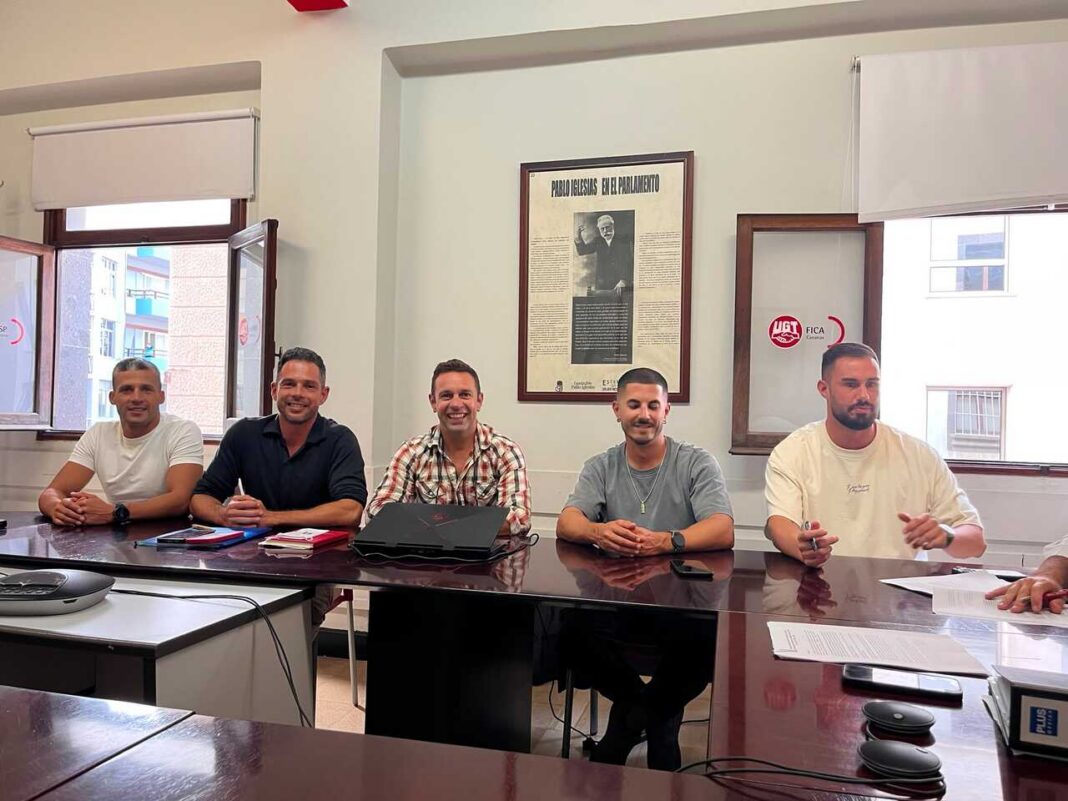
The first aid sector in the Canary Islands signed its first Collective Agreement this Wednesday, an agreement that worker representatives consider historic and that introduces important labor and salary improvements, including a 30% increase in the base salary. The agreement also establishes recognized professional categories, payment for holidays, a reduction in annual work hours and a specific bonus for the islands with less coverage, among other measures. “Today we can say it with pride, we have made history,” the Fuerteventura lifeguards highlighted after the signing, emphasizing that the agreement is the result of “more than a year of organization, struggle, effort and unity of the lifeguard workers.” The signing culminates negotiations that were already very advanced during the last mobilizations carried out by the group in the Canary Islands. The next challenge: municipal tenders The entry into force of the agreement now opens another fundamental issue for the sector, its effective transfer to public surveillance and rescue contracts. The new working and salary conditions must be incorporated by city councils and other administrations responsible for contracting lifesaving services in the specifications of future tenders. This aspect is especially relevant in a sector in which a good part of the beach surveillance services are provided through companies awarded public contracts. The increase in labor costs derived from the new agreement must, therefore, be reflected in these contracts to guarantee compliance. Lifeguards have been demanding not only better salaries, but also sufficient staff, job stability and an update of the regulation of prevention, surveillance and rescue services on the beaches of the Canary Islands. During their mobilizations they have directly linked the conditions in which the lifeguard teams work with the capacity to prevent and respond to accidents that occur on the coast. After signing, the group insists that the agreement does not represent the end of their demands, but rather the beginning of a new stage. “We know that there is still much to improve, but this agreement is a fundamental starting point and opens a new stage for our sector,” they point out. And they send a clear message, “what we have achieved together, we will defend together. And we will continue organizing, demanding and fighting to continue advancing and improving our conditions.”
Originally reported by www.lavozdefuerteventura.com, rewritten by the Fuerteventura Times AI Editorial Desk.