
Fuerteventura’s Rising Business Scene: A Beacon of Opportunity
Unlocking Economic Potential in the Canary Islands’ Hidden Gem
Fuerteventura, one of the stunning Canary Islands, is rapidly transforming its landscape for business and innovation, drawing attention from entrepreneurs and investors alike. With its serene beaches and a mild climate, the island is not just a vacation destination but also a nurturing ground for startups and budding businesses. Over recent years, Fuerteventura has embraced digitalization and sustainable initiatives, creating a promising ecosystem for various industries, notably tourism, renewable energy, and technology.
The local government is actively promoting entrepreneurship through incentives and support programs tailored for startups. By facilitating access to resources and providing a streamlined regulatory environment, Fuerteventura is positioning itself as an attractive hub for innovative ventures. For example, with its rich natural resources and a burgeoning focus on renewable energy, the island is becoming a focal point for sustainable business practices that align with global market demands, particularly in eco-tourism and green technologies.
Additionally, the island’s unique cultural heritage and diverse landscapes offer entrepreneurs a distinctive flair to their business concepts. As more startups begin to call Fuerteventura home, they inject fresh ideas and diversify the local economy, enhancing its resilience against economic downturns. For investors and businesses seeking untapped potential, Fuerteventura presents a captivating opportunity to be part of its growing narrative while enjoying the island’s exquisite charm.
Source: Gobierno de Canarias
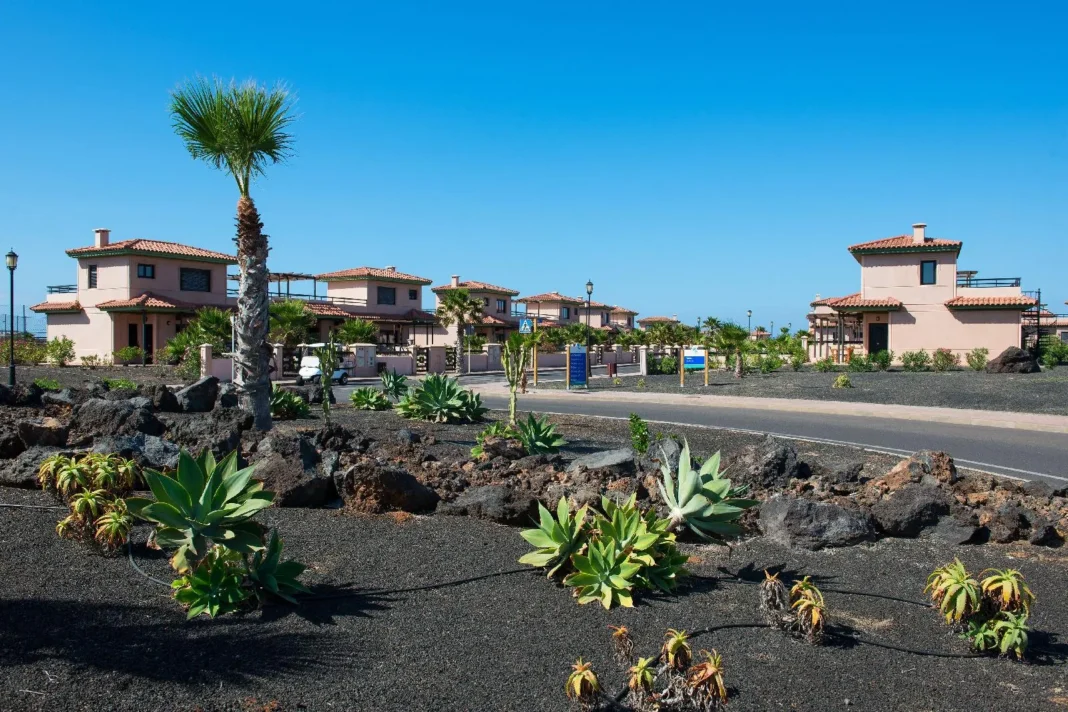
The real estate company Aliseda stops the sale of homes in the urbanization in the north of the island NewsFuerteventura Editorial When Aliseda decided not to extend the contract that Nombredo SL had signed with Pier & Vacances in the Origo Mare complex, in the north of Fuerteventura, everything pointed to a very lucrative business for the real estate company that had taken over the tourist part that remained in the complex. The tourist operation had 323 homes and common areas, which had been operated since 2014 as a tourist establishment under the brand of the aforementioned French company. ALISEDA, a real estate agency owned by the investment fund Blackstone and Banco de Santander, put these homes on the market in March, with one, two and three bedrooms with “attractive” prices that were hailed as an interesting alternative for the stressed housing market in the north of the island. If you want to receive this and all the FREE information about Fuerteventura and the Canary Islands promptly through our WhatsApp channel, which is not a chat and you cannot send or receive comments, only information and videos about the island, sign up for the Fuerteventura News channel. It is, as we say, a total of 323 houses, “distributed in several Oases”, explains the development of Nombredo SL in 2014, “with the capacity to accommodate from couples to families or groups of friends.” Of them, 35 are studios, from the Select category; 132 are 1-bedroom houses – 98 Select and 34 VIP-; 112 are 2-bedroom houses – 92 Select and 20 VIP-; and 44 are 3-bedroom houses – 38 Select and 6 VIP. They also include studios adapted for people with reduced mobility. “All the high-end accommodations stand out for their special ethnic-inspired design. Perfectly integrated with the environment, the fully equipped houses are located on the ground floor and have a garden and terrace,” said Nombredo SL. This immense real estate operation would generate multimillion-dollar profits in an urbanization that always had the Damocles sword of justice, after questionable urban and environmental management by municipal, island and regional institutions. On the other hand, it is no less true that “the operation takes beds out of the tourist market while at the same time it can generate a large area of housing at a time when there is a lot of demand, especially in the north,” explain institutional sources. In this sense, a solution is being sought that is of interest to the parties, since there is an interest in reaching a successful conclusion. Problems with property registration Sales operations are not taking place at this time. “Aliseda is not selling” and according to sources consulted the problem is that “the houses that were sold in March from the tourist exploitation are having problems registering as homes.” In this sense, these sources estimate that the return from tourist to residential implies adhering to the pertinent legislation, with the corresponding changes, even at a structural level, an issue that the tourist exploitation units that intend to convert into residential would have to certify. It is interpreted that the units of the complex, to be considered homes again, have to comply with basic legislation, which is none other than Decree 117/2006, of August 1, which regulates the habitability conditions of the homes and the procedure for obtaining the certificate of habitability. This being the basic technical regulation that establishes the minimum requirements for a property to be legally considered a home in the archipelago. For the procedure to be carried out, requirements such as minimum surface area (25 square meters), mandatory spaces (kitchen, bathroom, living/bedroom area) and minimum free ceiling heights must be met. Environmental conditions that regulate natural lighting, the volume of ventilation and the dimensions of the light wells or facades and the certificate of habitability that defines the mandatory technical document to contract water, electricity and gas services, or to deed sales and rentals. Although the exploitation units predate the decree, the transition to tourist exploitation of this part of the complex requires, according to sources consulted, to go through the process of obtaining the relevant certificate of habitability again. The environment is deteriorating at times. Right now Aliseda’s business is up in the air. There are those who are betting that a legal formula will be found that allows the process, but it will not be free of difficulties. It must be remembered that with the real estate sales prices we could be talking about a final amount above 50 million euros, without taking into account the common areas. While the homes sold in March have not been able to be registered, “illegal works” are being carried out on them, according to neighbors who bought more than five years ago. “They are manufacturing on terraces, or even on the sides of the bungalows, which generates a situation of deterioration in the area,” explained neighbors consulted. “A few days ago a construction project in a house was sealed by the municipal police and the seal has already been removed and they continue,” they say.
Originally reported by www.noticiasfuerteventura.com, rewritten by the Fuerteventura Times AI Editorial Desk.