Fuerteventura’s Booming Real Estate Market: New Opportunities on the Horizon
Dynamic shifts in the island’s property landscape signal robust growth potential for local entrepreneurs.
Fuerteventura’s real estate sector is undergoing a transformation, providing fertile ground for startups and established businesses alike. With the island’s breathtaking landscapes and favorable climate, the growing demand for second homes and rental properties has captured the attention of investors. The recent uptick in property transactions suggests a strong recovery from past economic setbacks, making now a pivotal time for real estate ventures.
Local entrepreneurs are seizing this momentum, capitalizing on the rise of digital nomadism that has reshaped how and where people choose to live and work. Innovative housing solutions, such as co-living spaces and eco-friendly developments, are becoming increasingly popular, catering to a diverse range of lifestyle preferences. As traditional business models adapt to meet market needs, the emphasis on sustainability and community-centric designs is creating a unique niche for startups willing to embrace change.
Moreover, the island’s strategic push to boost infrastructure and connectivity enhances its appeal, both for residents and investors. New investments in transport and utilities signal a commitment to fostering a robust business environment. These developments are not just vital for attracting international buyers; they also provide a platform for local enterprises to flourish, ultimately propelling Fuerteventura’s economy forward.
Source: Gobierno de Canarias.
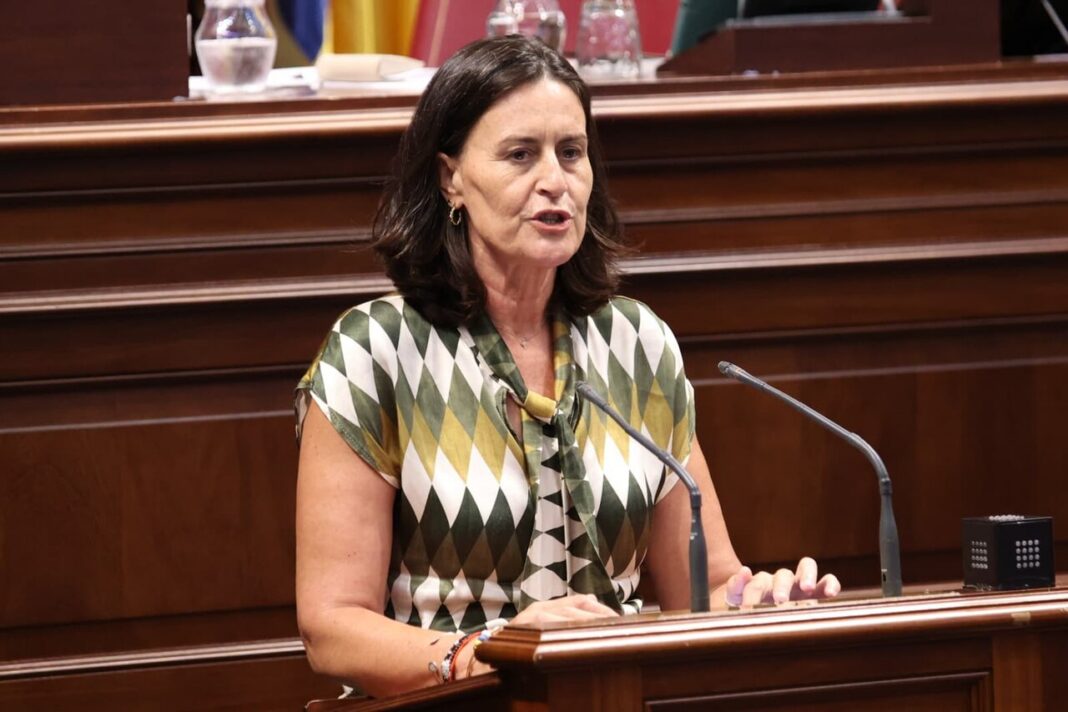
The deputy of the Canary Nationalist Group (CCa), Natalia Évora Soto, has spoken in the plenary session of the Parliament of the Canary Islands during the debate on the measures that will be promoted to expand the water resources of the islands. During his speech, Évora noted the current situation that the islands are going through regarding their natural water reserves. As the representative explained, “a study by the University of La Laguna has analyzed how climate change and human activity will affect the natural water resources of the Canary Islands in the long term.” For the Majorera parliamentarian, the conclusion is clear: “we have to prepare for a scenario of lower water availability.” In this context, he asked the Minister of Territorial Policy, Territorial Cohesion and Water, Manuel Miranda, to continue working on strengthening the water resources of the islands, and opted to “continue advancing in efficiency, savings and energy consumption.” In this way, Natalia Évora proposed strengthening the water and energy binomial to “be more efficient, reduce dependence on fossil fuels and contribute to a more competitive and efficient Canary Islands.” For the deputy, water is a key and strategic resource for all sectors and, therefore, it is essential to “strengthen industrial water production, especially desalination, but increasingly integrating renewable energies.” Natalia Évora made reference to the history of the archipelago, deeply marked by the collective effort to guarantee water with the creation of galleries, wells and now also with desalination plants. “In the Canary Islands we have learned that the sea can also be part of the solution,” he noted. On the other hand, the Majorera parliamentarian regretted that the Canary Islands have gone 14 years without a hydraulic works agreement with the State. “Every year we have to continue negotiating the 20 million euro subsidy that was included in the 2023 state budgets. An item that, in addition, is insufficient for the needs of the Canary Islands, remains unconsolidated,” Évora added. “To this we must add what happened in the previous legislature (between 2019 and 2023), the lack of investments and planning in water matters took its toll on all the islands,” stressed the deputy. In addition, he pointed out that this situation led to the need to declare a water emergency on the islands. In this context, the Majorera deputy highlighted the work that the Government of the Canary Islands is carrying out in this mandate to solve the solution by carrying out necessary actions such as the approval of the Third Cycle of the Hydrological Plans of the Canary Islands and the Second Cycle of the Flood Risk Management Plans, “documents that should have been approved at the end of 2021,” she noted. He also highlighted the effort that has been made in terms of planning and coordination with the island water councils and councils, “carrying out works and actions and giving new impetus to the integral water cycle, always prioritizing the needs of each island.” According to the nationalist parliamentarian, “this work has produced results and has ensured that the majority of the islands have managed to escape the water emergency situation.”
Originally reported by www.lavozdefuerteventura.com, rewritten by the Fuerteventura Times AI Editorial Desk.