The New Urban Planning Landscape of La Oliva: A Detailed Overview
Las cartas del territorio de La Oliva han empezado a barajarse. The strategic environmental assessment procedure for the new General Plan (PGO) has officially commenced, marking a significant turning point in the municipality’s urban development. Currently, the initial document is on public display, outlining a clear roadmap that the local government, led by Pilar González, aims to follow.
Framework of Urban Planning Alternatives
The new plan presents five potential forms of urban management. Among these, the municipal team has set aside the existing framework from the year 2000 and an unapproved draft plan from 2003, focusing instead on three updated alternatives. Key themes emerge from these alternatives, including:
- Expanding Corralejo Towards the West
- Legalizing the Origo Mare Development
- Facilitating Growth in El Cotillo
- Reviving Urban Life from Parque Holandés and El Jablito southward
This vision aims to address both the town’s rapid growth and the pressing environmental considerations that accompany such expansion.
Population Growth and Economic Disparities
The team behind the new plan, under Francisco González-Jaraba, reflects on La Oliva’s astonishing demographic transformation over the last two decades. The population has skyrocketed from about 6,956 residents in the year 2000 to nearly 24,508 today, a staggering increase of 3.5 times. This growth is predominantly attributed to tourism, a sector in which La Oliva has positioned itself as a pioneer within Fuerteventura.
However, this tourist-driven expansion hasn’t yielded a commensurate economic distribution among residents. Data reveal that La Oliva boasts the lowest per capita income among the island’s tourist municipalities, standing at €18,600 annually, trailing behind Antigua (€20,400) and Pájara (€34,200).
Current Tourism Infrastructure
In the Corralejo area alone, a significant number of accommodations have sprung up: the Geafond urbanization and the failed Atalaya Dorada project account for a total of 23,731 tourist beds—10,910 of which are hotel rooms. Meanwhile, between El Cotillo and Origo Mare, an additional 1,581 beds exist, bringing the overall tourist bed count in La Oliva to over 25,000.
This represents substantial pressure on local resources and infrastructure, with the area’s development largely mirroring the explosive growth of both population and tourism.
Historical Context and Urban Planning Gaps
The prevailing local planning framework, established in 2000, recognized 24 areas earmarked for tourism development, encompassing around 2,864 hectares. These areas could theoretically provide up to 116,588 beds—nearly five times the current capacity. However, many of these proposals remain unrealized, often due to their fallow status or location in unsuitable regions.
Urban proposals like those for Tamboril (over a million square meters designated for 2,900 beds) and Golf Country Club (four million square meters) remain on the table despite their isolation and fragility—prompting the current plan’s authors to suggest declassifying them.
Abandoned Urban Projects
Driving along the new highway from Caldereta to Corralejo, travelers may unwittingly pass through several urban “fossils.” Regions such as SAU 7 Tinojay and SAU 5 Mal Nombre, despite being well over a million square meters, are now descheduled from future developments. These areas have seen dreams of recreational facilities, such as the failed Dreamland theme park, slip into obscurity.
The new General Plan proposes removing these projects from the urban blueprint entirely, allowing space for fresh initiatives better aligned with current urban needs.
Key Development Areas: The Case of El Cotillo
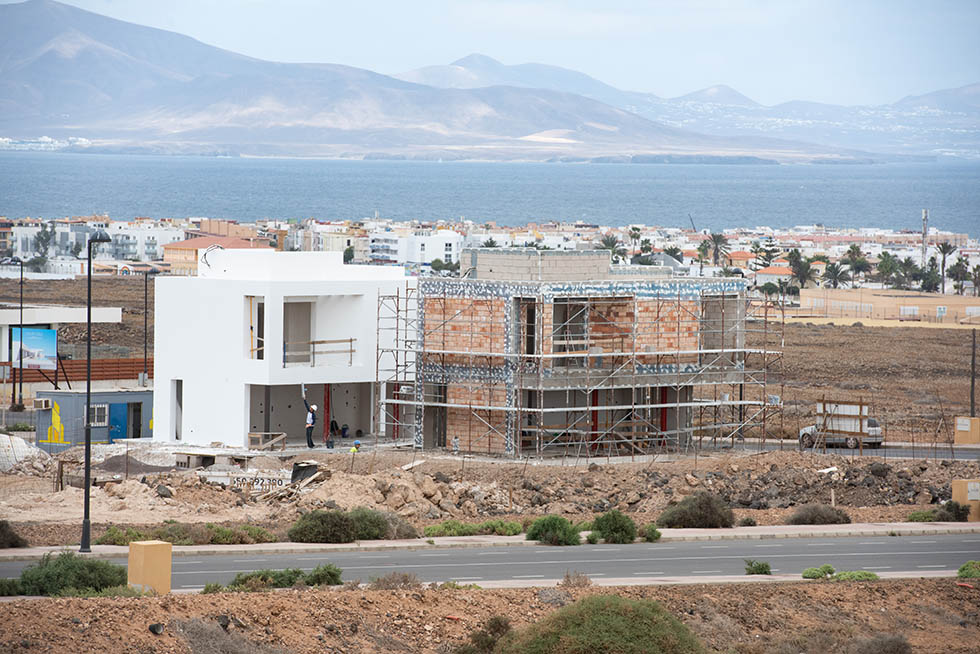
El Cotillo, a fishing village with rich historical roots, holds significant potential for future urban development. Plans are afoot to expand the town northward and southward, as well as towards El Roque. The ongoing public consultation period has already hinted at the emergence of new urban zones aimed at revitalizing El Cotillo’s real estate landscape.
These developments come amidst restrictions, as the existing Plan Special Los Lagos—covering about 790,000 square meters—faces challenges due to environmental constraints. Nevertheless, the Municipality aims to negotiate a favorable path for existing landowners, potentially integrating their buildable areas into future constructs.
Growth Projections in the Draft Plan
The five scenarios detailed in the new PGO illustrate varied future landscape possibilities for La Oliva. The current plan acknowledges over 34 million square meters of land classified for urban use, while alternative projections from the 2003 draft propose a more modest growth trajectory.
The newer alternatives suggest a range of urban and developable space, underscoring a commitment to stimulating real estate opportunities while balancing potential impacts on local ecosystems and community dynamics.
These reflections and proposals demonstrate the municipality’s evolving vision as it seeks to navigate the complexities of urban development in La Oliva, ensuring that future growth aligns with both community needs and environmental responsibilities.