The Tale of Juan Rodríguez and Roque Martín in Lajares
A Simple Life Turned Complex
Juan Rodríguez was known for his quiet demeanor. Residing alone in Lajares, a village in Fuerteventura, he spent his modest days in the family home inherited from his parents, living harmoniously with his goats. However, his life took a tumultuous turn before his passing two years ago. A decision he made years earlier—to sell his water rights for a small sum of 10,000 pesetas—unraveled into a legal nightmare. This private contract with his neighbor, Roque Martín Mesa, morphed into the controversial sale of two substantial properties without any alteration in price or clarity.
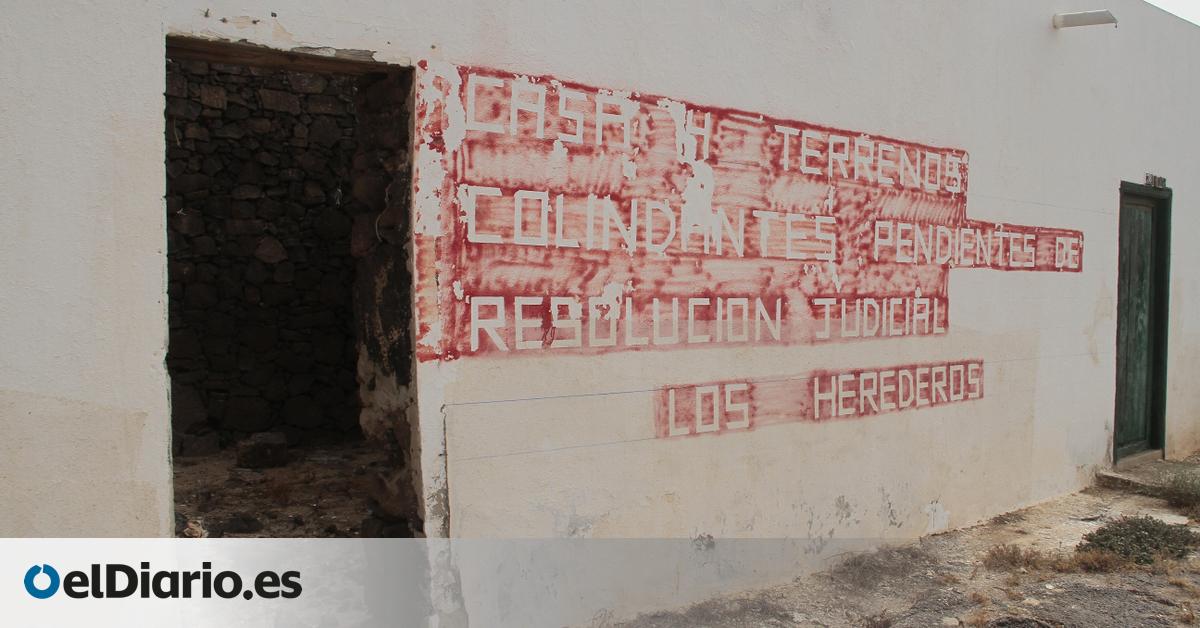
Juan Pedro, a nephew of Juan, recounts, “Roque had promised: ‘You live comfortably until you die, and when you die, the house is mine.’” Now, a painted sign on the wall of Juan’s old home proclaims: “House and adjoining lands awaiting judicial resolution. The heirs.” This act is aimed at preventing any presumed ownership claims that might lead to future sales.
Lajares: A Village in Transition
Presently, Lajares boasts around 2,000 inhabitants and is home to various foreigners, including English, Germans, and Italians, many of whom have contributed to its transformation into a surfer’s paradise. Yet, just a few decades ago, the landscape reflected agricultural simplicity, with fields of corn, chickpeas, and lentils replacing today’s upscale villas.
In this village, transactions concerning land, water, or livestock were often conducted by Rafael del Toro, affectionately dubbed Rafaelito, who despite lacking formal notarial status, managed to document sales with a reliability that would later be challenged. Roque, also known as Roquito, refined this system, with allegations against him suggesting he manipulated original contracts to seize valuable properties.
The Shadow of Roque Martín
A stroll through Lajares could easily become a tour of lands once sold by Roquito. Some properties are fully developed, while others are in limbo with halted construction. The scope of Roque’s influence became more apparent after his arrest alongside Santiago Morales and fifteen others in an operation named Atino. The details disclosed by the Guardia Civil cited a criminal scheme rife with property usurpation, fraud, and falsification of documents. Notably, among the arrested were three notaries and a cadastral worker, underlining a potentially extensive network of complicity.
Ties to Other Islands and Community Land
The nefarious activities did not confine themselves to Lajares; they extended to various municipalities across the Canary Islands. Reports suggest that Roquito had alliances within the Catastro (land registry) that bolstered his schemes. Furthermore, the legal complexities surrounding communal lands, particularly those belonging to groups like the Comunidad Aljibe de La Laguna or Los Curbelos, complicated matters. These lands, essential for collecting rainwater in the arid landscape, have witnessed Roque’s attempts to fragment and sell parcels, leading to contentious disputes that have fractured many families in the village.
A History of Greed and Manipulation
Residents recalled Roque’s early signs of ambitious behavior. As a child, his first entrepreneurial venture involved hauling water and sand, charging a fee for his services. It is said that his foray into real estate began with his family’s inheritance, cleverly mixing goats with property sales.
Many of the illegally acquired lands were sold at prices below market value, a practice that bolstered his profits and reputation. Some plots were reportedly sold to multiple buyers, demonstrating a calculated approach to property speculation.
One notable instance involved a historic estate known for its handcrafted water catchment system. In another case, a family ended up buying back their own land from Roquito for an exorbitant sum, illustrating the lengths to which he would go to manipulate ownership.
Legal Battles and Unraveling Truths
Legal documents play a crucial role in this saga. Individuals often unknowingly lost their land inheritance due to Roque’s machinations. Instances such as the case of Manuel Viera, whose property was fraudulently registered using forged signatures, highlight how deeply this issue affected many lives. After years of litigation without resolution, Viera lamented, “Now everything is built up, and third parties own it. My dignity is worth more than money.”
The communal lands, preserved to retain groundwater, have not escaped Roque’s grasp. His attempts at selling off parcels have been met with resistance, but the situation continues to unfold in local courts.
Legal Struggles and Injustice
In 2015, the law caught up with Roque when he was sentenced to a year in prison for attempted fraud. The case, brought forward by Tino Rodríguez, unfolded as Roque attempted to enforce a falsified property sale involving not just his signature but also those allegedly for his parents. The court found the evidence fabricated, providing a rare glimpse into the legal battles that plagued the community.
The Role of Unwitting Accomplices
Understanding how Roque managed to exploit the system for so long reveals the interconnectedness of fear, ignorance, and possible collusion. Allegations suggest he was supported by individuals from the Cadastre and possibly complicit municipal employees, as well as proxies. For instance, Miguel Ábalo, a carpenter who aligned with Roque’s ventures under the guise of a partnership, claims ignorance of their legal implications.
Miguel’s life took a turn filled with anxiety, as he now navigates legal complexities, reflecting a community afflicted by years of upheaval at the hands of one man’s ambition.
In an intricate web of deceit, community betrayal, and legal strife, the tale of Juan and Roque encapsulates a broader narrative of land ownership, trust, and the vulnerability of ordinary people caught in a system rife with exploitation.