The Enigmatic Churches of Fuerteventura: Secrets in Stone
Las piedras de las antiguas iglesias de Fuerteventura no hablan, pero ciertamente miran al cielo. The island’s ancient stone churches have stood the test of time, and those who approach their walls with a sense of calm and curiosity may uncover something extraordinary. Between the 15th and 17th centuries, the builders of these sacred structures employed a secret pattern, one that has left researchers and archaeoastronomers alike scratching their heads in wonder.
The Curious Orientation of the Churches
Recently highlighted by content creator @8canarias_, many churches in Fuerteventura possess a particular alignment. A study conducted by the Instituto de Astrofísica de Canarias examined 48 chapels and churches on the island, revealing something intriguing: while most follow the Christian tradition aligning with the rising sun, a notable group deviates by roughly –14 degrees.
This deviation raises fascinating questions about its origins. Could it be a result of syncretism, the blending of indigenous and Christian practices following the conquest? This theory suggests that some churches may have been built over ancient orientations tied to local celebrations or celestial bodies, such as Sirius, which was significant for the ancient Majos.
Unique Divergences
The distinct orientation of these churches marks a difference from neighboring islands like Lanzarote and La Gomera, where alignments were primarily influenced by practical factors such as protection from prevailing trade winds or topographical considerations of rugged valleys. This insight into the orientation of these structures further deepens the mystery of Fuerteventura’s ecclesiastical architecture.
Historical Context: The Role of Orientation
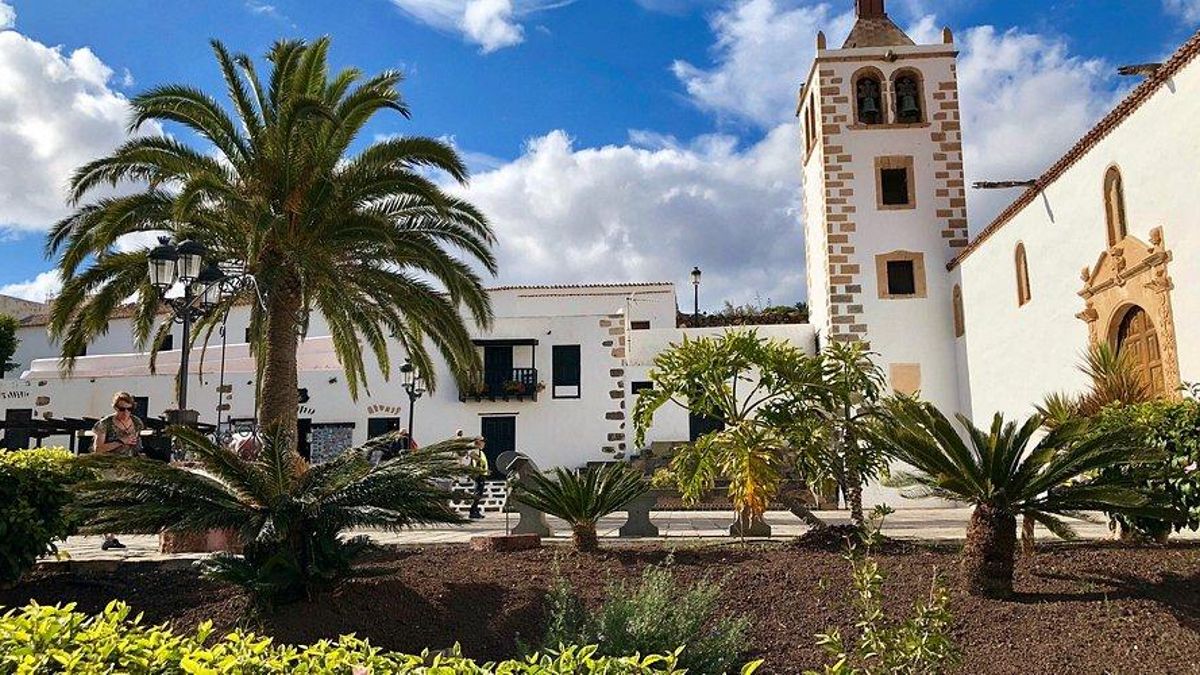
Medieval Christian tradition emphasized that altars should face east, symbolizing resurrection and hope, with the Church of Santa María in Betancuria, founded around 1410, exemplifying this norm. However, the Renaissance era saw some churches departing from these guidelines. For instance, the Chapel of Nuestra Señora del Socorro in La Matilla aligns with the winter solstice, while the Shrine of Fatima in La Asomada aligns with the summer solstice. These celestial alignments suggest that builders were knowledgeable not just in Christian doctrine but also in astronomy and the cycles of nature.
Bridging Science and Memory
Archaeoastronomers refer to this phenomenon as a “canonical but singular” pattern. The term “canonical” acknowledges that most churches abide by Christian alignment standards, while “singular” points to the exceptions that seem to preserve a legacy of an older past. This older history is characterized by a culture that looked to the sky for guidance, measuring time and even requesting rain from the heavens.
Content creators share insights along this line, proposing that these architectural choices might represent yet another chapter in the story of how new Christian beliefs assimilated and transformed indigenous traditions.
Churches That Defy Expectations
Throughout Fuerteventura, locations like Giniginamar, Las Playitas, Gran Tarajal, and El Cotillo feature churches that defy conventional orientation norms. Some chapels open toward the ocean, almost suggesting their doors face the horizon rather than conform to liturgical directions. In contrast, others appear to be shaped by the ambitions of powerful families, adapting the church’s axis to reflect their interests.
Beneath the surface of these theories lies a wealth of history. The churches of Fuerteventura embody not just layers of faith but also stories written in the stars above, the ancient land beneath, and the winds that sweep across the island.
The alignment of these sacred structures invites exploration not only of their spiritual significance but also of the astronomical knowledge embedded in their very foundations. Every sunrise, as light pours over these churches, serves as a reminder that humanity’s oldest compass might still be the sky above. The churches whisper the secrets of a profound bond between human endeavors and the celestial sphere, showcasing a vibrant tapestry of history and belief woven through time in Fuerteventura.