The Historic First LGBTIQ+ Pride March in Spain: A Journey from Shadows to Celebration
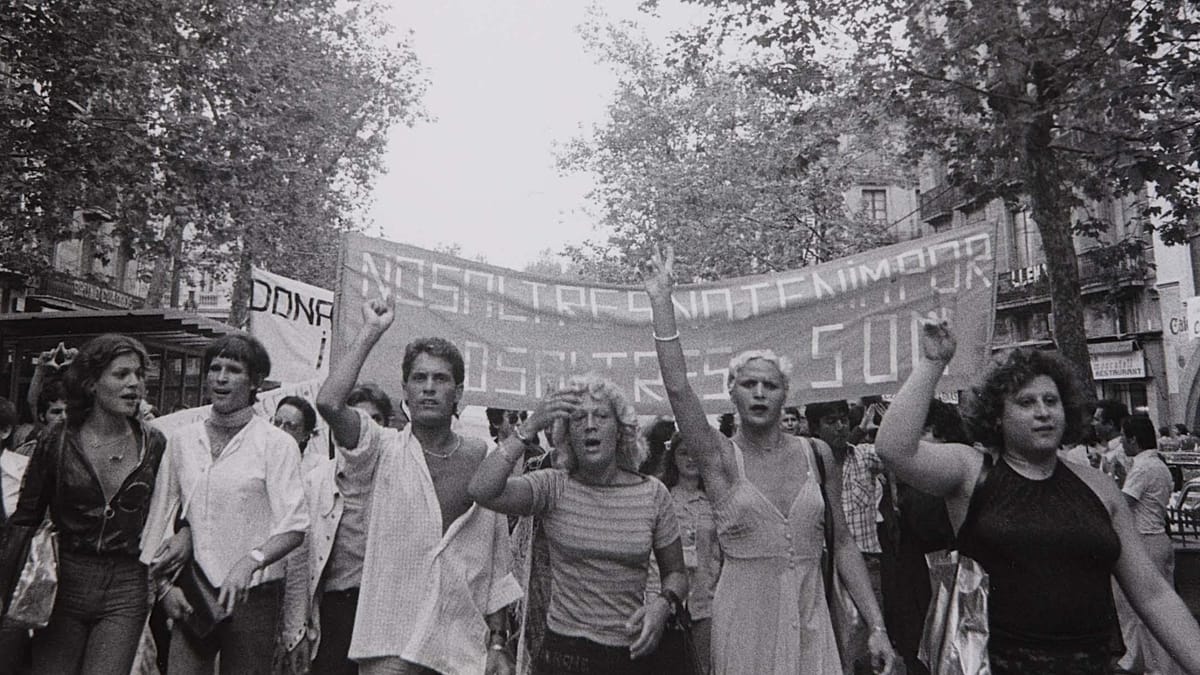
More than 4,000 people set off along Las Ramblas on a pivotal Sunday in June 1977. They walked slowly, each step heavy with the weight of history, knowing they were embarking on something unprecedented, risky, and yet utterly inevitable. For years, they had lived in the shadows, concealing their identities under the oppressive regime of Franco, which criminalized sexual dissent. That day, they stepped into the light for the first time, boldly declaring their existence with the slogan: “Nosaltres no tenim por, nosaltres som”—translated as “We are not afraid, we are.” This march marked the first LGBTIQ+ Pride event in Spain’s history, forever altering the landscape of social rights in the country.
Coming Out of Hiding
To truly appreciate the significance of that June day, one must understand the oppressive context from which it emerged. For four decades, Franco’s regime systematically persecuted homosexual and trans individuals, employing laws like the Ley de Vagos y Maleantes (1954) and the Ley de Peligrosidad y Rehabilitación Social (1970). These laws allowed for the internment of anyone whose sexual orientation or gender identity was deemed a threat to the “moral order.” Homosexuality was not merely a taboo; it was a crime punishable by imprisonment or institutionalization.
Franco’s death in November 1975 ushered in a new era for Spain. The country began to breathe again, and the first democratic elections were held just two weeks after the march, on June 15, 1977. This period, known as the Transition, was marked by fragile hope and shifting societal boundaries. It was within this context that the LGBTIQ+ community decided it was time to reclaim the streets.
Photographer Colita Isabel Steva captured this historic moment, immortalizing a group of trans women at the head of the march, arms raised high, their faces radiating pride. This iconic image encapsulates decades of repression and the collective determination to no longer remain silent.
A Struggle That Began on Las Ramblas
The 1977 march was just the beginning of a long and arduous journey. The following years were characterized by relentless mobilization and gradual victories. In 1979, homosexuality was removed from the Ley de Peligrosidad y Rehabilitación Social, a crucial, albeit incomplete, step toward equality. The advent of full democracy and the 1978 Constitution opened new legal avenues, yet social prejudice lingered, often proving more resistant to change.
The HIV/AIDS epidemic of the 1980s added another layer of stigma and pain for the community, but it also galvanized internal organization and highlighted the urgent need for health policies and recognition. By 1995, the Criminal Code ceased to treat homosexuality as an aggravating circumstance in any offense. The first mass Pride march in Madrid took place in 1994, evolving into one of the largest Pride events globally.
In 1998, the Madrid regional government recognized civil partnerships regardless of the partners’ sex, a measure that other autonomous communities gradually adopted. Each of these milestones represented a step forward, yet the journey was far from over.
The Milestone of 2005: Spain Leads the Way
On June 30, 2005, Spain became the third country in the world to legalize same-sex marriage, including the right to adopt. This landmark legislation, known as Law 13/2005, was championed by the government of José Luis Rodríguez Zapatero and marked a historic shift, positioning Spain at the forefront of LGBTIQ+ rights globally.
However, the path to this achievement was fraught with resistance. The political right and institutions like the Catholic Church challenged the law before the Constitutional Court, which ultimately confirmed its constitutionality in 2012. By then, thousands of same-sex couples had already married, formed families, and built lives fully recognized by the state.
Recent Progress: Identity, Diversity, and New Rights
In recent years, Spain has seen the establishment of a comprehensive legal framework aimed at protecting LGBTIQ+ rights. In 2023, the so-called Trans Law came into effect, allowing individuals over the age of 16 to change the sex recorded on their ID cards through a simple administrative process, without the need for medical diagnosis or surgery. This legislation is among the most progressive in Europe regarding gender identity.
Spain now boasts laws against discrimination based on sexual orientation and gender identity in the workplace. Various regional governments have also enacted their own protective measures. Annual events like Madrid Pride, held every last weekend in June, regularly attract over one and a half million participants from around the globe, making it one of the largest Pride celebrations worldwide.
A Different Country, A Debt That Is Not Forgotten
European surveys consistently rank Spain among the continent’s most tolerant nations regarding sexual and gender diversity. According to the Eurobarometer, over 80% of the Spanish population believes that homosexuality should be accepted in society, one of the highest rates in the European Union.
Yet, despite these advancements, the work is far from complete. Anti-LGBTI violence persists, and trans individuals continue to face discrimination in employment and healthcare. LGBTIQ+ youth remain particularly vulnerable to bullying in schools and challenges within their families. Legal equality does not automatically translate into equality in everyday life.
Every June, as people take to the streets in cities like Barcelona, Madrid, Seville, and Bilbao, they celebrate not only the progress made but also remember the origins of this struggle. They honor the 4,000 individuals who marched along Las Ramblas in 1977, arms raised high, boldly asserting their existence with the powerful declaration: “Nosaltres no tenim por. Nosaltres som.”