Fuerteventura Joins the Call for Inclusive Education
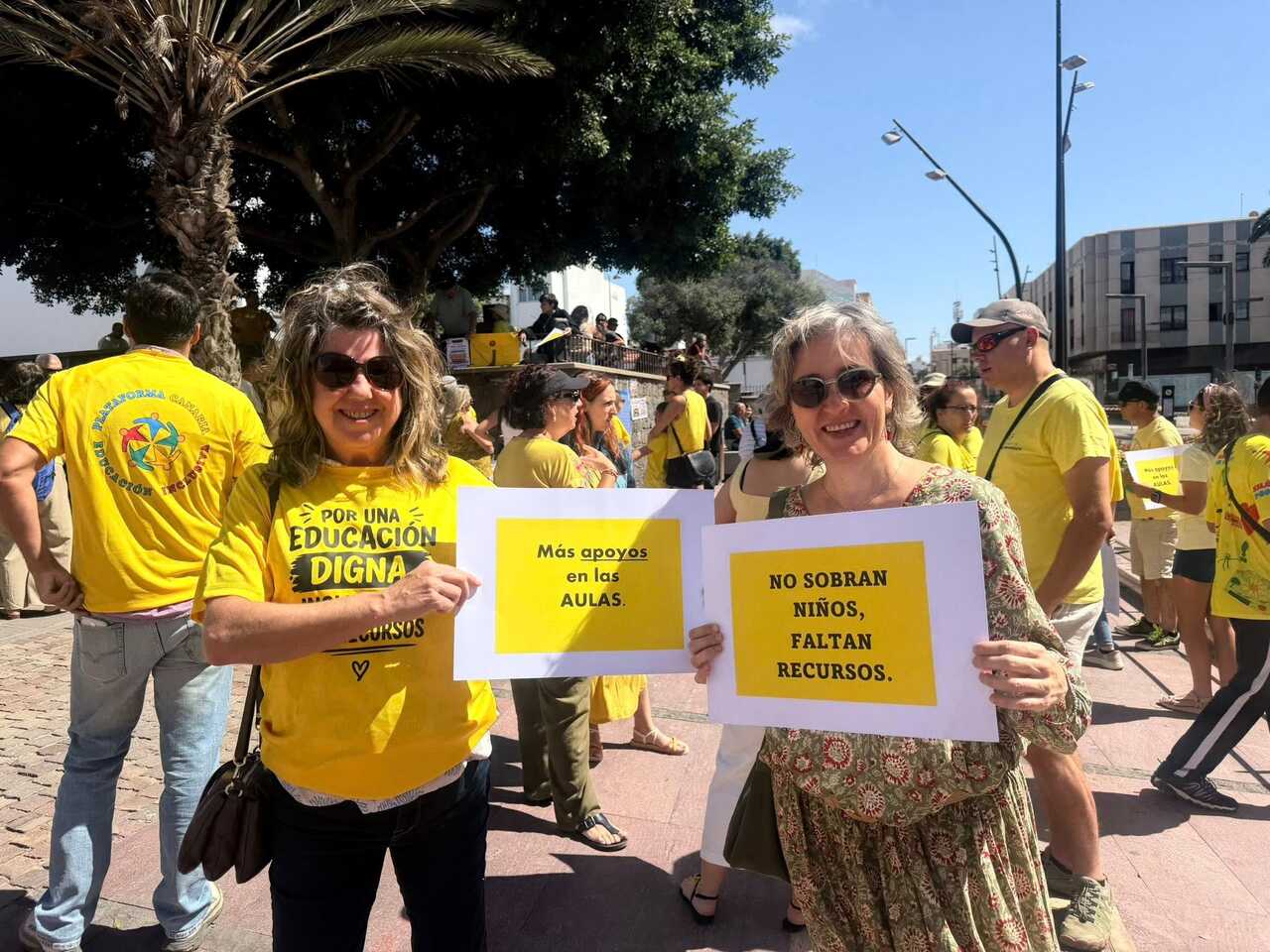
This past Sunday, Fuerteventura resonated with the energetic beats of the batucada ensemble Bloco Da Ilha, as it participated in a significant mobilization across the Canary Islands, advocating for the need for dignified, inclusive education filled with tangible resources.
The Mobilization: Voices Coming Together
The rally, featuring families, educators, students, and various community organizations, kicked off around 11:00 am near the Church of Nuestra Señora del Rosario in the capital city. It aimed to shed light on critical issues affecting education, primarily focusing on the lack of resources in classrooms, the overwhelming fatigue experienced by educators without proper support, and the challenges faced by students who require specific educational assistance.
Many protest signs echoed a powerful sentiment: “No sobran niños. Faltan recursos” (There are no surplus children; there is a lack of resources). This slogan encapsulated the organizers’ message that no child should be sidelined, have their right to learn restricted, or be negatively impacted due to shortages in personnel, materials, accessibility, or specialized attention.
A Message of Love
One of the rally’s most impactful moments came from Alejandra Rodríguez, the president of the Canary Island Platform for Inclusive Education in Fuerteventura. Her emotional speech emphasized that their fight didn’t stem from division or animosity, but rather from a profound love—love for their children. “Today we raise our voice not from conflict, but from the greatest love that exists, the love for our children,” she declared passionately.
Rodríguez highlighted the urgency of the issue, stating, “Childhood doesn’t wait. Each day represents lost opportunities, learning that doesn’t occur, and children who feel they don’t belong or are burdens.” She argued that no child should have to grow up feeling this way, as they are not mere statistics or administrative cases but vibrant individuals with dreams and potential.
Rights and the Need for Inclusion
Rodríguez underscored that children with specific needs have the right to experience school as a space that is safe and worthy. “Inclusion is not a favor; it is not a privilege. Inclusion is a right,” she affirmed, stressing that the rights of children should not be contingent on inadequate budgets or unfulfilled promises.
Core Demands for Quality Education
The event brought forth several key demands. One primary request was the increase in support teachers within classrooms, as well as more specialists in therapeutic pedagogy and language. Additional calls included the need for counselors, adequate educational support staff, and stable non-educational personnel, all while addressing teacher-student ratios and solidifying teaching teams across all educational stages.
Organizations also demanded that figures in Special Education and Language Therapy no longer operate on an itinerant basis, ensuring consistent support for students.
Enhancing Infrastructure for Accessibility
An essential aspect of the protest was the demand for improved educational infrastructure. Advocates highlighted that genuine inclusion cannot exist if schools are not accessible or adapted to meet the needs of all students. They called for educational environments that allow every child to navigate, communicate, participate, learn, and thrive equitably.
Ongoing Support and Specialized Training
Furthermore, the call for specialized and continuous training for teachers and all staff interacting with students was imperative. A demand for a safeguarding educational inspection system was presented, advocating for compliance with regulations and genuine protection of student rights.
A Unified Vision
The rally emphasized that defending the most vulnerable students equates to defending a better school for all. Attendees championed a vision for a public education system that is dignified, accessible, inclusive, and guarantee real support for every student.
By spotlighting these issues, the mobilization resonated with the collective desire for a more equitable and supportive educational environment, underscoring a movement fueled by compassion, urgency, and solidarity for all children.