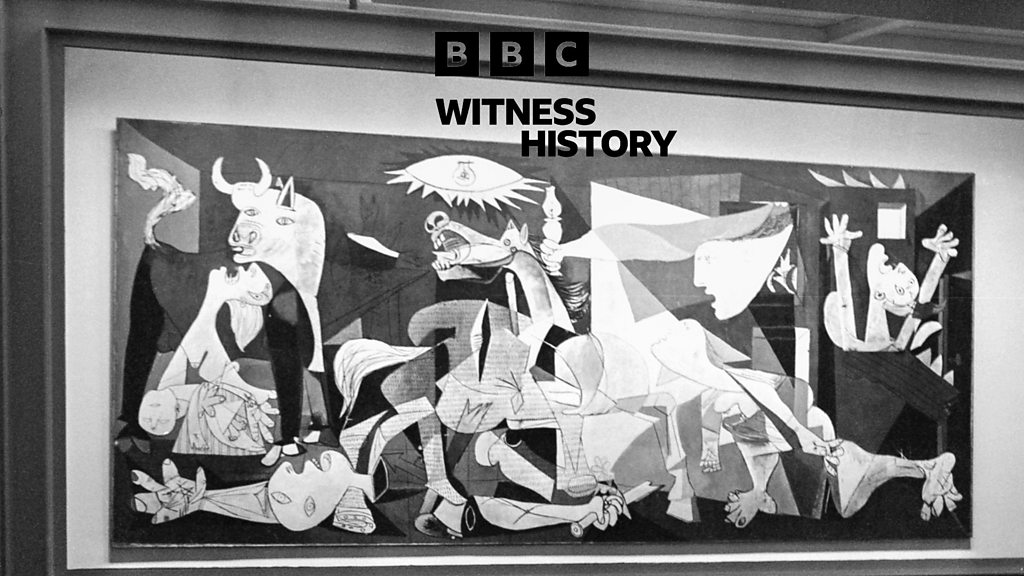
The Return of Guernica: A Journey from Exile to Home
In 1981, one of the world’s most iconic works of art, Pablo Picasso’s Guernica, finally returned to Spain after a 44-year exile. This monumental painting, created in response to the tragic bombing of the Basque town of Guernica during the Spanish Civil War in 1937, symbolizes the horrors of war and the suffering it inflicts on innocent lives. Its journey from creation to its eventual homecoming is a tale of art, politics, and resilience.
The Birth of a Masterpiece
Guernica was born out of a moment of profound tragedy. On April 26, 1937, the town of Guernica was bombed by Nazi German and Italian Fascist air forces, supporting Francisco Franco’s Nationalist forces during the Spanish Civil War. Picasso, deeply affected by the news, created the mural as a powerful political statement against the brutality of war. The painting, measuring 11 feet tall and 25.6 feet wide, is a chaotic composition filled with distorted figures, anguished faces, and symbols of suffering, all rendered in a stark palette of black, white, and gray.
A Global Tour and a Promise
After its completion, Guernica was first exhibited in Paris, where it garnered significant attention and acclaim. Following its Parisian debut, the painting embarked on a tour across Europe and America, captivating audiences and raising awareness about the Spanish Civil War and the broader implications of fascism. During this time, Picasso made a solemn vow: Guernica would never return to Spain until the country was restored to democracy. This promise underscored the painting’s role not just as a work of art, but as a symbol of hope and resistance against tyranny.
The Exile and Political Landscape
For decades, Guernica remained in exile, housed at the Museum of Modern Art (MoMA) in New York City. The painting became a powerful emblem of the struggle for freedom in Spain, especially during the long dictatorship of General Francisco Franco, who ruled from 1939 until his death in 1975. The political climate in Spain during this period was fraught with repression, and discussions about the painting’s return were virtually nonexistent until Franco’s passing.
Negotiating the Return
Following Franco’s death, Spain began its transition to democracy, paving the way for discussions about the return of Guernica. Ambassador Rafael Fernandez-Quintanilla played a crucial role in these negotiations. His diplomatic efforts were instrumental in facilitating the painting’s return, symbolizing a new era for Spain—one marked by freedom and artistic expression. The negotiations were complex, involving not just the logistics of transferring such a significant piece of art but also the emotional weight it carried for the Spanish people.
The Homecoming
In 1981, after years of anticipation, Guernica was finally handed over to Spain. The moment was historic, as the painting was unveiled in Madrid, where it would be displayed at the Museo Reina Sofía. The return of Guernica was not just a homecoming for a piece of art; it was a poignant reminder of the resilience of the Spanish people and their enduring spirit in the face of oppression. The painting now stands as a testament to the horrors of war and a call for peace, resonating with audiences around the world.
Witnessing History
The story of Guernica is not just about a painting; it is about the people who lived through the events that shaped its existence. The BBC’s Witness History series delves into these narratives, bringing to life the experiences of those who witnessed the impact of the Spanish Civil War and the significance of Guernica. Through eye-witness accounts and archival footage, the series explores the broader historical context, connecting the dots between art, politics, and human experience.
A Legacy of Reflection
Today, Guernica continues to inspire and provoke thought. It serves as a powerful reminder of the past and a call to reflect on the ongoing struggles against violence and oppression. The painting’s journey from exile to home is a testament to the enduring power of art to transcend time and place, resonating with generations far beyond its initial creation. As we explore the stories behind such iconic works, we gain a deeper understanding of the human condition and the complexities of our shared history.
In this way, Guernica remains not just a masterpiece of modern art, but a vital part of the narrative of humanity’s quest for justice and peace.


