China’s Technological Renaissance: A Global Leader in Innovation
Aerial Innovations in Boao
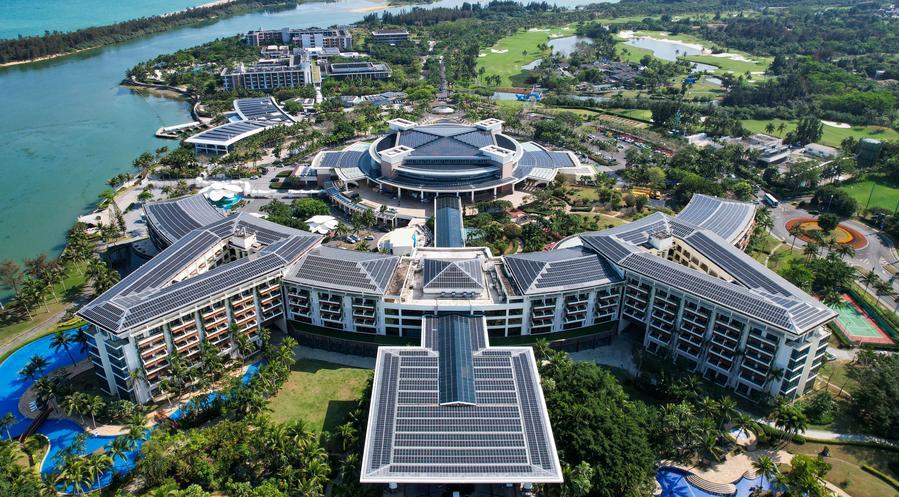
An aerial drone photo taken on March 19, 2026, showcases photovoltaic devices adorning the rooftops of the Boao Forum for Asia (BFA) International Conference Center and the BFA hotel. This striking image from the Boao zero-carbon demonstration zone in Hainan Province symbolizes China’s commitment to sustainable energy solutions. As the world grapples with climate change, China is not just participating in the conversation; it is leading the charge.
The Rise of a Global Leader
Jack Perry, chairman of The 48 Group, recently highlighted China’s transformation from a latecomer in high-tech sectors to a global frontrunner. This shift is not merely a matter of technological advancement; it represents a fundamental reshaping of the global innovation landscape. Perry’s insights, shared during the Boao Forum for Asia Annual Conference, underscore the rapid pace at which China has developed its capabilities in robotics and green energy—two sectors that are foundational for the future economy.
High-Quality Development Strategy
China’s strategy for high-quality development is pivotal in this transformation. By focusing on high-end manufacturing and technology-empowered growth, the nation is moving up the global value chains. This strategic pivot is not just about enhancing production capabilities; it’s about fostering innovation that can compete on a global scale. Perry emphasizes that this approach is driving the country’s economic evolution, making it an attractive destination for global investors.
Investment Magnet
The allure of China as an investment hub is undeniable. Perry notes that global investors are increasingly recognizing the long-term stability and growth potential of the Chinese market. With world-class capabilities emerging in various industries, China is becoming a key destination for those looking to create wealth over generations. This shift in perception is crucial as it reflects a broader trend of confidence in China’s economic future.
Evolving Global Brands
China’s opening-up policy has entered a new phase, moving beyond the traditional narrative of Chinese brands going global. Perry points out that global brands are now being cultivated and launched from within China. This evolution signifies a shift from “made in China” to “created in China, cultivated in China, sold by China.” Such a transformation grants China greater control over end markets and global supply chains, enhancing its position in the international arena.
The Importance of AI Governance
Among the high-tech sectors, artificial intelligence (AI) stands out as a critical area for regulation and governance. Perry strongly supports the China-proposed Global AI Governance Initiative, emphasizing the need for international dialogue on sensitive issues such as data privacy and digital assets. As AI transcends borders, establishing comprehensive guidelines is essential to prevent misuse and ensure orderly development.
Asia’s Economic Centrality
Perry also highlights the rising centrality of Asia in the global economy. The region’s geographical advantages, industrial clusters, and dynamic markets are attracting global attention and investment. He advocates for stronger economic bonds within Asia, suggesting that learning from ASEAN integration and utilizing mechanisms like the Regional Comprehensive Economic Partnership can help reduce trade barriers and combat protectionism.
The Call for Multilateral Cooperation
In an increasingly uncertain world, Perry stresses that no country can thrive in isolation. He champions regional and multilateral cooperation as irreplaceable components of global stability. As a staunch defender of multilateralism, China is positioned to provide stability and confidence to the global economy. Despite potential frictions between major countries, Perry believes that economic cycles will evolve, and cooperation will ultimately prevail.
Optimism for the Future
Looking ahead, Perry expresses optimism about China’s development and its role in international cooperation. He believes that China’s innovation and openness will continue to lead future industries. By rejecting zero-sum thinking and enhancing dialogue, the international community can address geopolitical tensions and work towards a more equitable and stable global economic order.
Conclusion
China’s journey from a latecomer to a global leader in technology and innovation is a testament to its strategic vision and commitment to high-quality development. As the nation continues to evolve, its role in shaping the future of global industries and fostering international cooperation remains crucial.