The Rise of AI Hardware: Insights from the 2026 Mobile World Congress
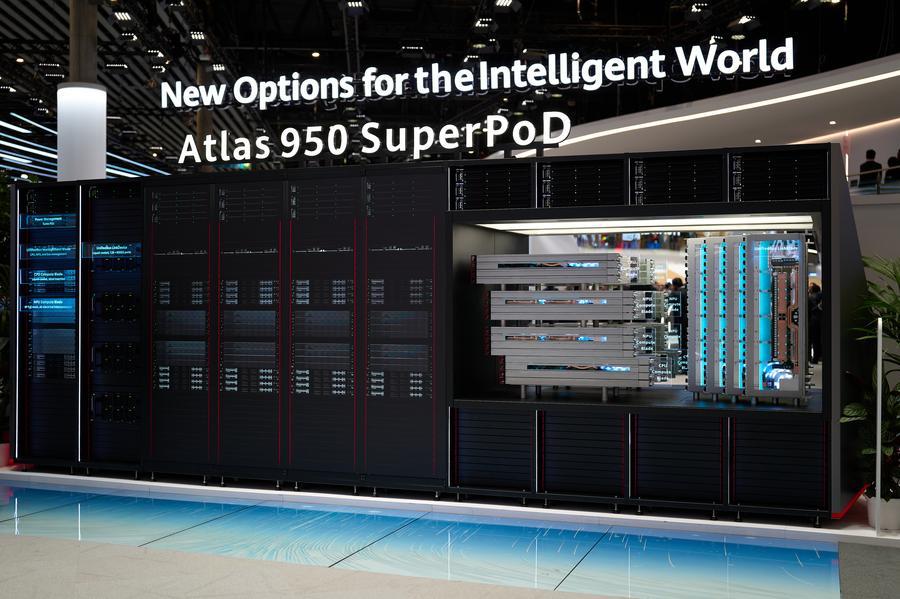
This photo taken on March 2, 2026 shows Huawei’s Atlas 950 SuperPoD at the 2026 Mobile World Congress in Barcelona, Spain. (Xinhua/Meng Dingbo)
AI’s Transition from Software to Hardware
Artificial intelligence (AI) has long been a buzzword in the tech industry, primarily associated with software applications. However, recent developments indicate a significant shift: AI is increasingly being integrated into hardware. This transformation was a key theme at the 2026 Mobile World Congress in Barcelona, where industry leaders gathered to showcase innovations that blend AI with physical devices.
Insights from Industry Leaders
Francisco Jeronimo, Vice President for Data and Analytics at the International Data Corporation (IDC), highlighted this trend during an interview at the event. He noted that Chinese brands are leading the charge in this area, moving beyond software-centric innovations to create hardware that incorporates AI capabilities. For instance, the emergence of “robot phones” exemplifies how AI can enhance user experiences in ways previously unimaginable.
China’s Role in AI Hardware Innovation
China’s robust industrial foundation and deep talent pool position it as a frontrunner in AI hardware innovation. Jeronimo emphasized that the country has cultivated advantages in its supply chain that are difficult for other nations to replicate. This unique ecosystem allows for rapid development and deployment of AI technologies across various sectors, from consumer electronics to enterprise solutions.
Expanding AI Applications
The integration of AI is not limited to consumer devices; it is also making inroads into communications infrastructure and enterprise workflows. Jeronimo pointed out that as AI becomes an enabling technology for telecom networks, it opens up new avenues for monetization and business scenarios that were once challenging to realize. This evolution is set to redefine how companies operate and interact with their customers.
Intelligent User Experiences
One of the most exciting aspects of AI integration is the emergence of intelligent interfaces that can automatically capture user intent. Jeronimo noted that context-aware task automation and AI-driven experiences are rapidly becoming standard features in smartphones and other smart devices in China. This shift not only enhances user satisfaction but also sets a new benchmark for what consumers can expect from technology.
Consumer Enthusiasm as a Catalyst
The rapid pace of innovation in China can be attributed, in part, to the strong enthusiasm of Chinese consumers for adopting new technologies. This eagerness drives companies to continuously innovate and push the boundaries of what is possible. As consumers embrace these advancements, they create a feedback loop that further accelerates technological development.
Resilience Amidst Challenges
Despite facing unilateral technology restrictions from the U.S., Jeronimo observed that Chinese companies have not only persisted but have also adapted and thrived. These challenges have prompted a shift in the dynamics of China’s technology industry, fostering a spirit of independent innovation. Jeronimo remarked that while some countries may attempt to hinder China’s progress, they cannot ultimately succeed in stifling its technological advancements.
China’s Global Technological Impact
Reflecting on nearly two decades of the Mobile World Congress, Jeronimo noted that China has played a significant enabling role in global technological development. The country’s unmatched speed and execution capabilities have been instrumental in the rapid adoption of new technologies worldwide. This influence is evident in the growing recognition of Chinese products in international markets, where they are celebrated for their quality and technological prowess.
The New Landscape of High-Tech Manufacturing
Jeronimo also addressed misconceptions about high-tech manufacturing in China, stating that the barriers extend far beyond labor costs. It is no longer merely about cheap labor; companies are increasingly aware that they can achieve higher product quality and skill levels in China than in many other regions. This realization is reshaping the landscape of global manufacturing and positioning China as a leader in high-tech production.
As the integration of AI into hardware continues to evolve, the implications for consumers, businesses, and the global technology landscape are profound. The insights shared at the 2026 Mobile World Congress underscore a pivotal moment in the tech industry, one that promises to redefine our relationship with technology in the years to come.


