Fuerteventura’s Eco-Tourism Boom: A Gateway to Sustainable Growth
Harnessing nature’s allure can redefine local economies and protect our environment.
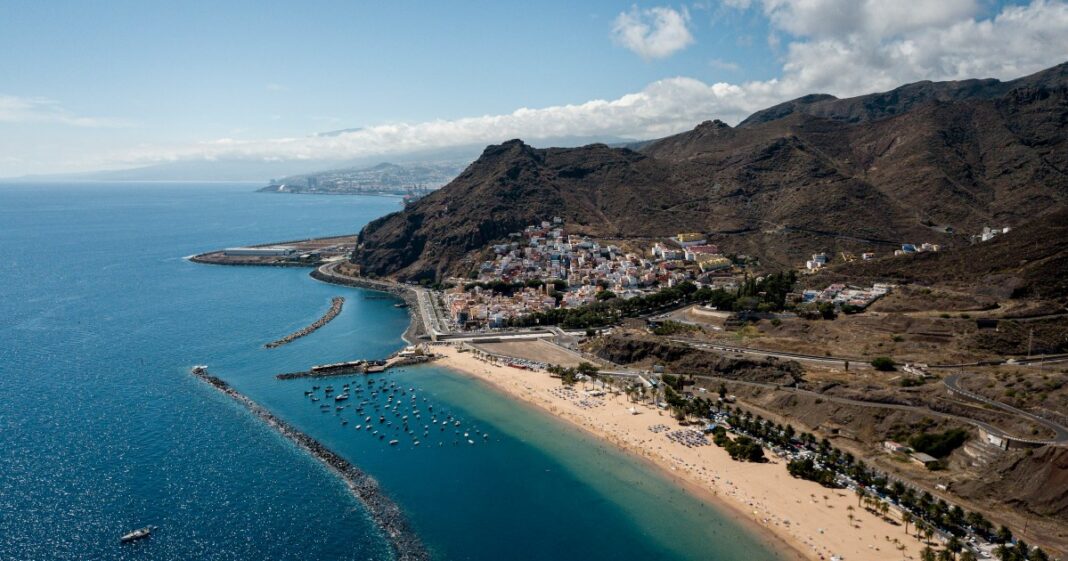
As the picturesque island of Fuerteventura attracts increasing numbers of tourists seeking eco-friendly experiences, local entrepreneurs are strategically positioning themselves to capitalize on this growing trend. The rise of eco-tourism offers a unique opportunity for businesses to thrive while simultaneously promoting sustainability and safeguarding the island’s remarkable natural beauty. With its pristine beaches and stunning landscapes, Fuerteventura is becoming a hotspot for environmentally conscious travelers who prioritize conservation and responsible travel options.
Innovative startups are sprouting up across the island, from organic farms offering farm-to-table dining experiences to eco-lodges that highlight Fuerteventura’s unique flora and fauna. Businesses like these not only provide local jobs but also foster a sense of community as residents and tourists unite over shared values of sustainability and preservation. The infusion of green practices into traditional industries paves the way for a more resilient economy, effectively positioning the island as a leader in eco-friendly tourism.
Moreover, the government’s support for eco-tourism initiatives is creating a conducive environment for growth. By investing in infrastructure and resources that encourage sustainable practices, Fuerteventura can establish itself as a model for other regions pursuing similar economic pathways. As businesses continue to embrace environmentally friendly practices, the future of the island’s economy appears bright. It stands as a testament to the fact that profitability and sustainability can coexist harmoniously, fostering both economic development and ecological responsibility.
Source: Gobierno de Canarias
Foreign demand to buy a home in Spain continues to be concentrated on the Mediterranean coast and the islands, with Alicante (32.3%), the Balearic Islands (28.2%), Malaga (27.1%) and Santa Cruz de Tenerife (26.5%) as the main destinations of interest, according to data on visits to properties for sale from idealista. In up to a total of 14 provinces, all coastal, the weight of interest from foreigners exceeds 10% of all demand for finding a home to own, exceeding 25% in the four mentioned. In these notable provinces, the interest of British, German, French and Dutch predominates. Follow idealista/news on the WhatsApp channel. Along with this quartet, Girona (22.5%) and Las Palmas (20.3%) still appear with more than 20% of foreign demand. Between 15% and 20% there are three provinces such as Almería (17.4%), Murcia (15.8%) and Granada (15%), while between 10% and 15% there are regions as diverse as Tarragona (13.4%), Valencia (11.7%), Cádiz (11.5%) and Huelva (11.1%). By nationality, Germans dominate in the two archipelagos: they are the most active group both in the Balearic Islands, where they account for 43.5% of all foreign visits, and in Tenerife (22.4%) and Las Palmas (21.3%). The British, on the other hand, concentrate their search in the south of the peninsula: they lead in Almería, Málaga, Murcia and Granada, provinces that have historically formed the core of the Anglo-Saxon residential market in Spain, along with the Valencian Community. The Dutch appear strongly in Alicante and have a significant presence in almost the entire Mediterranean arc, according to the study carried out by idealista/data during the first quarter of the year. The border with France explains the French prominence in Girona (32.8% of foreign demand), Castellón and Tarragona, while Portugal becomes the first market in Huelva, the Spanish province closest to the Portuguese country, with 25.2% of foreign visits.In the large residential markets, such as the province of Barcelona (8.1%), Seville (4.7%) or Madrid (3.9%), the weight of interest in buying a home from foreigners is diluted among the enormous national demand. In the three provinces, Americans appear prominently, with 8%, 4.7% and 3.9% of foreign demand, along with the British, Germans and French. These 20 municipalities attract the greatest foreign interest in having a home. Zooming in on the demand for housing for sale, there are towns where the interest of foreigners in finding a home is greater than that of potential national buyers. In some, like these three Majorcan towns, interest shoots up to over 60%. These are Canyamel, Cala d’Or and Cala Ratjada. Germans dominate foreign interest with more than 50%, even 80%, in the three destinations, confirms the analysis of idealista/data. Outside of the Balearic Islands, in the Malaga town of Competa, demand also exceeds 60%. Behind them, between 50% and 60% appear Oria, in Almería; Nerja or Frigiliana, in Malaga; Moraira, Benitachell and Benissa, in Alicante; or the Canary Island towns of Tijarafe, in Tenerife, or Pájara, in Fuerteventura. The British dominate demand in the Andalusian provinces, while the Dutch overtake them in Alicante. But it is the Germans who prevail in the Canary Islands. Until this ‘top 20’ is completed, the coastal towns of Girona appear, such as Empuriabrava and Roses, with extensive French dominance in foreign demand, along with the Canary Islands of Mogán or Antigua, where the Norwegians stand out in the first destination, and the British and Italians in the second. Iznajar, in Córdoba, and the Murcian cities of Abanilla, Fuente-Álamo and Los Alcázares, with between 30% and 40% of foreign demand, complete the list. Alicante, Palma and Málaga: the most sought-after capitals for foreign home buyersAlicante tops the ranking of capitals with the greatest international attraction, with 21.8% of visits to homes for sale made by foreigners. Its buyer profile is diverse: no nationality clearly dominates, and the podium is shared by the French, Germans and British, which reflects a demand distributed between northern Europe and the neighboring country. Palma occupies second place with 18.5%, but with a radically different pattern: the Germans concentrate 44% of all foreign demand, an unparalleled hegemony among the large Spanish capitals. They are followed at a great distance by the Swedes (11.7%) and the British (5.9%), which shows a residential market with a marked Germanic accent. Málaga closes the capital podium with 14.8% and a significant novelty: the United States becomes the main issuing market, ahead of the British and the Dutch. The city is consolidating itself as a preferred destination for an American buyer with high purchasing power. Among other capitals, Valencia (13.6%) and Barcelona (12.1%) share the North American leadership: in both, the United States leads foreign demand. In Barcelona, however, the market is more cosmopolitan, with Italians and French practically equal with Americans. Girona (11.8%) and Tarragona (11.1%) also keep the Americans in the lead, while France occupies second place in both cities, reflecting the influence of geographical proximity to the Pyrenean border. Cádiz (10.9%) completes the cities with more than 10% of foreign demand with an Atlantic profile: the American buyer once again leads, followed by Germans and the British. Below 10%, Santa Cruz de Tenerife (9.8%) and Las Palmas de Gran Canaria (8.8%) reproduce the Canarian pattern already visible at the provincial level: Germany leads the demand, followed by Italy and the United Kingdom. Castellón de la Plana (9.4%) combines the French presence with the American one and, strikingly, Romania appears among the first three nationalities, an atypical profile compared to the rest of the capitals. Almería (8.2%) maintains the British dominance that is already observed in the province, with French and Germans as second and third options.
Originally reported by www.idealista.com, rewritten by the Fuerteventura Times AI Editorial Desk.