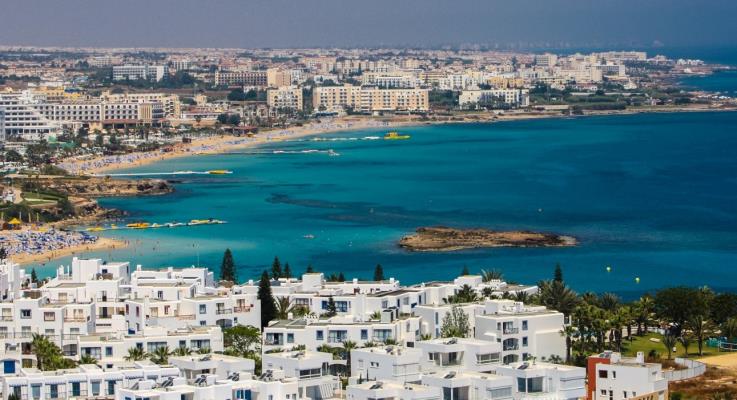
Cyprus: A Mediterranean Gem with Competitive Prices
Cyprus, the sun-kissed island in the eastern Mediterranean, is often seen as a luxurious getaway. While it may not be the cheapest holiday destination in the region, it still offers a more affordable experience compared to many of its well-known rivals, especially when it comes to two key aspects of travel: hotel accommodations and dining out.
Price Index Insights
According to the latest Eurostat data, Cyprus boasts a restaurant and accommodation price index of 85.2, compared to the EU average of 100. This places Cyprus slightly below Spain and Greece, making it a more budget-friendly option than Slovenia, Croatia, Malta, Italy, and France. For those looking for even cheaper alternatives, Portugal stands out as a bargain in the western Mediterranean, while countries like Albania and Montenegro offer lower prices further east.
When looking beyond the Mediterranean, Cyprus remains competitive. Countries such as Bulgaria, Romania, Serbia, Bosnia and Herzegovina, and North Macedonia all have lower general consumer prices and hospitality costs. In contrast, Germany, Austria, Belgium, the Netherlands, and the Nordic countries are significantly more expensive.
A Broader Economic Perspective
The overall economic landscape in Cyprus reveals that prices across a full household basket—including groceries, clothing, transport, and services—are 10.8% below the EU average. While Cyprus is cheaper than Spain, Malta, Italy, and France, it still trails behind Greece, Portugal, and Croatia in terms of affordability.
A separate analysis by Euronews highlights that countries like North Macedonia, Bosnia and Herzegovina, Romania, Bulgaria, Montenegro, Serbia, and Albania rank among the lowest-priced destinations in Europe. On the flip side, Iceland and Switzerland are at the higher end of the spectrum, alongside several northern and western European economies.
Grocery Prices and Dining Out
When it comes to grocery shopping, Cyprus aligns closely with the European average. While Greece, Croatia, and Malta tend to be pricier, Spain offers slightly better value. This disparity underscores the fact that “cheap” is subjective and largely depends on individual spending habits. A self-catering family, a couple dining out nightly, and an all-inclusive guest will all experience the island differently.
Everyday holiday purchases can yield significant price variations. For instance, Euronews reports that alcoholic drinks in Greece are 54% above the EU average, while Croatia is over one-third higher. Conversely, Italy is 18.1% below the European benchmark for alcohol, and Spain is 9.9% cheaper. Even soft drinks show a stark contrast, with Italy being the least expensive at 18.2% below the EU average, while Croatia is 33.5% higher.
Seafood prices are relatively stable, ranging from 4.6% below the EU average in Portugal to 12.7% above it in Greece.
Transportation Costs
Transportation costs present a different scenario. France is the only country in the comparison where public transport exceeds the EU average. In contrast, Portugal, Spain, and Croatia are around 20% cheaper, while Greece remains just below the European benchmark.
Family-Friendly Destinations
Recent research from the Post Office highlights Paphos as one of Europe’s 10 best-value family resorts. The cost of meals, drinks, and everyday holiday purchases in Paphos totals £177.18. While this is pricier than the Algarve and several Spanish resorts, it remains cheaper than popular destinations like Rhodes, Corfu, and Crete, as well as Croatian resorts like Porec and Zadar, and Italian locales such as Puglia and Sorrento. Thus, while Paphos may not be the cheapest option, it holds its own against competitors vying for the same sun-and-sea market.
Currency Considerations
Currency fluctuations have also played a role in making Cyprus more accessible for British visitors. With the strengthening of the pound against the euro, families are less likely to feel the full impact of local price increases. Laura Plunkett, head of Post Office Travel Money, noted that “families will not face the full brunt of the local price rises,” making Cyprus a more appealing option.
Tourism Outlook
Cyprus’s tourism authorities have consistently marketed the island as a value-for-money destination. Tourism Deputy Minister Kostas Koumis expressed optimism about summer visitor numbers from the UK, emphasizing the island’s affordability.
However, the hospitality industry has adopted a more cautious stance. Yiannos Pantazis, president of the Cyprus hoteliers association, acknowledged concerns regarding rising prices and minimum stay requirements. He noted that while hotels are encouraged to offer reasonable packages, demands for three- or four-night bookings have drawn justified criticism.
Rising Prices and Demand
Despite these concerns, demand for travel to Cyprus appears to be recovering. Jet2 has reported that Cyprus is among the destinations experiencing a strong rebound in bookings, with CEO Steve Heapy noting that “there is still a massive amount of people who want to go away.”
It’s important to remember that price comparisons don’t fully capture what residents or visitors can afford. Professor Robert Inklaar from the University of Groningen pointed out that “figures should always be read together with earnings,” as the same price can feel very different depending on income and purchasing power.
Conclusion
In summary, while Cyprus may not be the cheapest Mediterranean destination, it offers a competitive and relatively affordable holiday experience compared to many of its neighbors. Rising hospitality prices could pose challenges, but for now, Cyprus remains an attractive option for travelers seeking sun, sea, and value.