Fuerteventura’s New Tourism Tax: A Game-Changer for Sustainable Growth
Paving the way for eco-friendly development and enhanced visitor experiences.
Fuerteventura, renowned for its stunning beaches and vibrant tourism sector, is on the brink of a significant innovation: the introduction of a tourism tax. This initiative aims not only to boost the island’s revenues but also to reinvest those funds in preserving its unique environment and infrastructure. By implementing this tax, the local government seeks to ensure that tourism contributes to the long-term sustainability of the island while enriching the visitor experience.
The expected revenue from the tax will be directed towards environmental conservation efforts, improved public services, and cultural initiatives. As tourists flock to Fuerteventura for its natural beauty, the financial support garnered from this measure could be instrumental in addressing the challenges posed by over-tourism. The investment into local ecosystems and community projects promises to create a more balanced approach to tourism—one that respects the island’s natural resources and cultural heritage.
As Fuerteventura navigates this new chapter in its tourism strategy, stakeholders from various sectors—including local businesses and service providers—are encouraged to view the tax as an opportunity rather than an obstacle. With a collective commitment to sustainable practices, the island’s economy can flourish while safeguarding the very attributes that draw millions of tourists each year. Fuerteventura is poised to demonstrate that responsible tourism can indeed coexist with economic growth.
Source: Gobierno de Canarias.
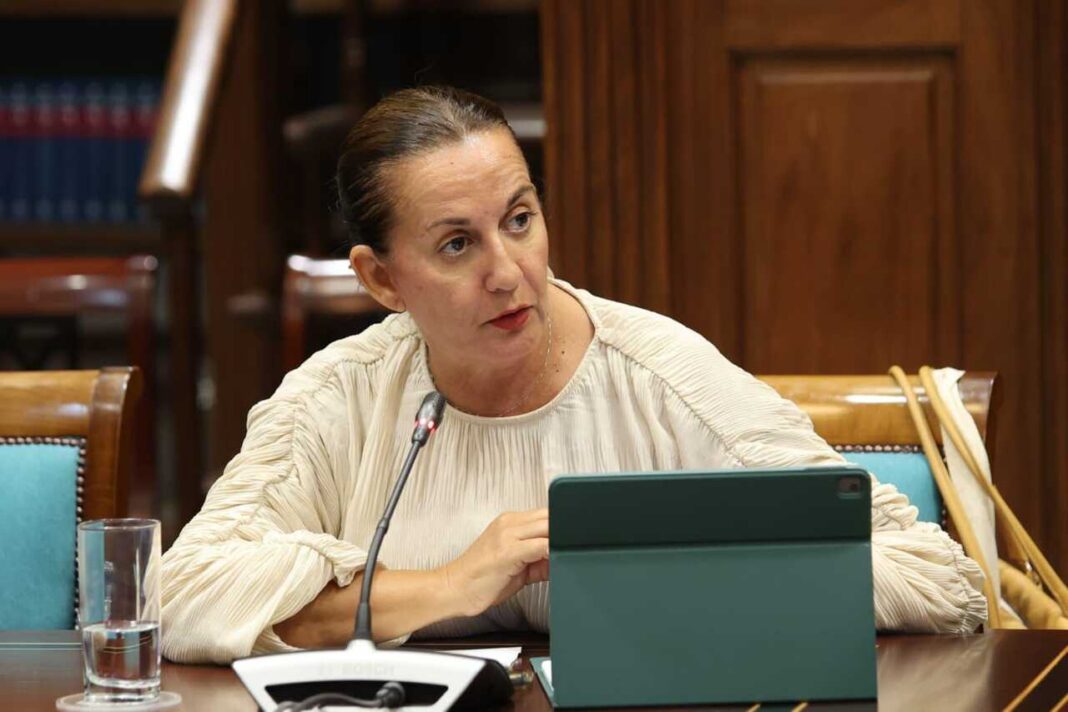
The regional deputy of the Popular Party, María Saavedra, today addressed a question in the Parliamentary Commission to the Minister of Universities, Science and Innovation and Culture to find out in detail what actions the Government of the Canary Islands plans to value the spaces of democratic memory of the archipelago, taking as a starting point the recent recognition of Tefía, in Puerto del Rosario, as a place of LGTBIQ+ memory. Saavedra defended that democratic memory is part of the collective heritage. For this reason, “any initiative aimed at its conservation will always have the commitment of my training,” said María Saavedra, who defended that “preserving it does not mean living anchored in the past, but rather knowing our history to strengthen the values of freedom, equality, respect and coexistence that support our democracy today.” However, the popular parliamentarian stressed that institutional support for these enclaves must be translated into concrete actions and highlighted the importance of these resources by ensuring that “spaces of memory are much more than physical places: they are spaces that help us understand what happened, to recognize the dignity of those who saw their rights violated and to transmit to new generations the importance of always defending freedom, respect for diversity and human rights.” For this reason, and with the purpose of optimizing historical memory policies in the archipelago, the PP deputy highlighted the milestone of Fuerteventura hosting the first space for the historical memory of the Canary Islands, defending the declaration of Tefía as “a space deeply linked to the history of our island and the Canary Islands, which reminds us of a stage that should never have occurred and that we must know from historical rigor, institutional respect and the commitment that it will never be repeated.” During her intervention, María Saavedra also emphasized that the old shelter today represents a story of transformation and hope, having become a space for coexistence where young and old share experiences through camps, meetings, cultural, training and leisure activities. “Preserving this space is not only an exercise in memory; it is a firm commitment to human rights, to the dignity of people and to the democratic values that today support our coexistence,” said Saavedra, who recalled that preserving the memory of Tefía is “also an act of justice towards the LGTBI+ group, which for decades suffered discrimination, repression and silence. Remembering that reality is recognizing the suffering of those who were victims and reaffirming that in a democratic society there can be no space for hatred, intolerance nor persecution based on sexual orientation or gender identity.” For this reason, she vindicated the role played by the Tefía Democratic Place of Memory, a center that “shows us that spaces can also transmit a message of the future. Where one day there was exclusion,” said the regional deputy, “today there is coexistence; where there was silence, today there is participation, and where there was suffering, today there is a place that contributes to strengthening the social fabric of Fuerteventura.” For all this, he concluded by reaffirming that “conserving and valuing these spaces not only contributes to preserving our history, but also to educating democratic values, especially our young people, favoring a freer, more respectful society and more committed to human rights.”
Originally reported by www.lavozdefuerteventura.com, rewritten by the Fuerteventura Times AI Editorial Desk.