Navigating Fuerteventura’s Performing Arts Scene: A Blend of Culture and Commerce
Boosting the local economy through artistic innovation.
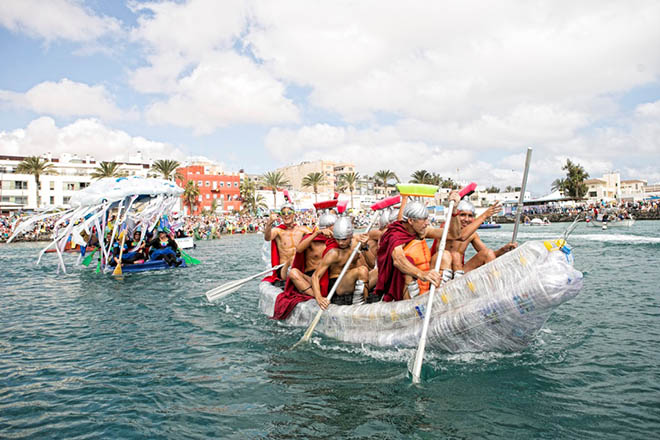
Fuerteventura is more than just sunlit beaches and vibrant landscapes; it is emerging as a noteworthy hub for performing arts. The island’s unique cultural tapestry is drawing not only artists but also investors, eager to tap into the rich, creative potential that Fuerteventura offers. Recent initiatives, including local festivals and workshops, have begun to lay the groundwork for a lucrative arts sector. This growing investment in creative endeavors is not just about entertainment; it’s forging a pathway for sustainable economic growth.
The island’s commitment to fostering a dynamic performing arts community is evident through various collaborations between local government, cultural institutions, and entrepreneurs. These partnerships pave the way for educational programs and festivals that not only celebrate the arts but also attract visitors. The influx of tourists drawn to Fuerteventura’s artistic offerings appears poised to bolster the local economy, creating jobs and stimulating various sectors, from hospitality to retail.
As Fuerteventura continues to nurture its performing arts scene, the long-term vision remains clear: transforming the island into a cultural beacon in the Canary Islands. With a strategic focus on innovation and community engagement, the potential for sustainable business growth shines brightly, promising a prosperous future for the island’s artistic landscape and its economy alike.
Source: Gobierno de Canarias.
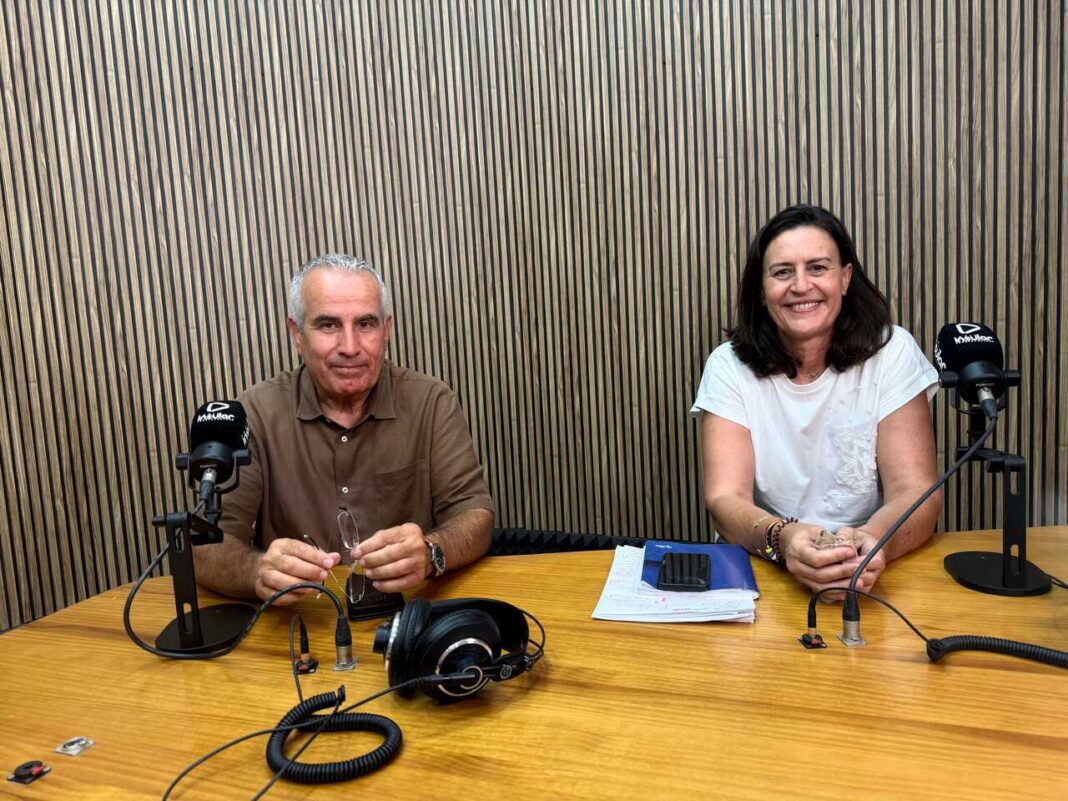
Port Authority for Fuerteventura and Lanzarote, number 11 in the state ranking The general secretary of the Majorera Assembly-Canary Coalition and regional deputy, Mario Cabrera, defended the creation of its own Port Authority for Lanzarote and Fuerteventura, based on the volume of goods and passengers moved by the ports of Arrecife and Puerto del Rosario. “Today there are numbers in tons of movement of merchandise, of passengers, that guarantee its economic validity, its economic survival,” he stated during an interview on the program La Voz de Fuerteventura, on Radio Insular, together with deputy Natalia Évora. Cabrera assured that there are conversations with Lanzarote to advance this claim. “The conversations we also have with Lanzarote are along those lines. This is a necessity and has to be an achievement for Fuerteventura and Lanzarote,” he said. According to the data provided, to support the initiative, it is indicated that Arrecife moved 103,130 tons and Puerto del Rosario 83,342 during January 2026. The combined volume, 186,472 tons, would place a hypothetical Port Authority of both islands in position number 11 in the state system, according to the study cited by Cabrera. Until February, the two ports together accumulated 594,455 tons. Puerto del Rosario Dock “These are ports that today have a surplus to be able to survive, to be able to grow and to make decisions,” he said. The proposal contemplates that Lanzarote and Fuerteventura have their own Board of Directors and the capacity to plan investments without depending on the decisions taken in Gran Canaria. Cabrera denounced that Puerto del Rosario has advanced for decades “in tow, in crumbs” and contrasted its shortcomings with the actions carried out in the Port of La Luz. “You can’t talk about the fact that we are going to build a beautiful garden in Puerto de La Luz, with a wonderful playground and a wonderful aquarium, and set up a tent in Fuerteventura to receive cruise passengers,” he reproached. The connection with Cádiz, the PIF and Tarfaya Beyond the creation of its own authority, the deputy directed responsibility to the Ministry of Transport for the loss of the direct connection between Cádiz and Puerto del Rosario. He stressed that it is the State that decides the Public Service Obligations and demanded that the Majorera scale appear as a requirement in the next tender, not as a voluntary improvement by the shipping companies. “Who gives and who takes away the OSP is the Ministry,” he stressed. According to him, the diversion of goods through Lanzarote or Gran Canaria has made some routes more expensive by 78%, an increase that will end up having an impact on the shopping basket. On the other hand, Cabrera assured that the recovery of the route with Tarfaya is not ruled out. He explained that the Government of the Canary Islands and the Cabildo have maintained contacts with Baleària to analyze the company’s possible interest. The opening of this line requires completing the Puerto del Rosario Border Inspection Point. It continues to not materialize despite the fact that, as Cabrera recalled, an investment of two million euros has been announced. Along these lines, he wanted to make it clear that no company will transport goods or passengers from Morocco “until we have the maximum guarantees.” At this point, however, he also questioned that, for years, health risks were invoked to stop the connection with Tarfaya while a route between Agadir and Gran Canaria is now being promoted. “Do the pathogens not enter from Agadir to Las Palmas, they only come to Fuerteventura?” he stated. “A large piece of Fuerteventura that has been stolen from us” In relation to the Pájara shooting range, Cabrera defended recovering the approximately 4,700 hectares occupied by Defense and returning them to their owners. He recalled that the land was not acquired through a sale, but rather expropriated about half a century ago. Maneuvers at the Pájara shooting range “We still have a large piece of Fuerteventura that has been stolen from us,” he stated. As he recalled, it is a space used by families on the island for its agricultural, livestock and fishing resources before the State imposed its military use. The initiative approved in the Parliament of the Canary Islands establishes a five-year horizon to begin decontaminating the land, removing the remains of the maneuvers and finding a formula for their return. Cabrera assured that in the area there is “a lot of war scrap” and that the effects of military activity on its environmental, archaeological and ethnographic values are unknown. The deputy rejected the argument raised by the insular director of the General State Administration, María Jesús de la Cruz, about the protection that its belonging to Defense currently provides to the land and the risk that it could be exposed to other interests when the shooting range disappears. Cabrera denied that there is any intention to develop the space and recalled that the land is included in the proposal for the Arid Zones National Park. On another note, the declaration as a National Park would not absolutely prevent a possible extraction of rare earths, he acknowledged, due to the changes introduced in European regulations on strategic raw materials. However, it would considerably hinder any extractive project and would turn the space into one of the last areas susceptible to exploitation. “That is why we are in a hurry and that is why we are wanting to accelerate,” said Cabrera, who asked to resolve the doubts raised by the Government of the Canary Islands and the Ministry so that the file can continue. More ambulances and support for service technicians Cabrera and Natalia Évora finally valued the announcement of two new advanced life support ambulances for Gran Tarajal and Corralejo and one basic life support ambulance for the central El Castillo-Antigua area. With their incorporation, Fuerteventura would double the advanced units, until it has four, and would go from seven to eight basic ambulances. The training also supported health technicians’ claims about salaries, materials, staffing, and shift coverage. Cabrera demanded an “exhaustive control” over the winning company to verify compliance with the contract. Given the labor conflict, professionals have proposed that the Canarian Health Service directly assume medical transportation, to which Cabrera responded: “I am a defender of the public.” He showed his support for labor improvements and for analyzing the internalization of the service. However, at this point, he recognized that reversing the current outsourced model presents legal and economic difficulties. The incorporation of the entire staff to the Canarian Health Service would mean a significant growth in the personnel chapter, conditioned by budgetary rules and spending limits. “It is not easy to reverse this situation. It is necessary for the legal services of the Canary Islands Government itself and the economic part to allow it,” he concluded.
Originally reported by www.lavozdefuerteventura.com, rewritten by the Fuerteventura Times AI Editorial Desk.