Summary of the Announcement
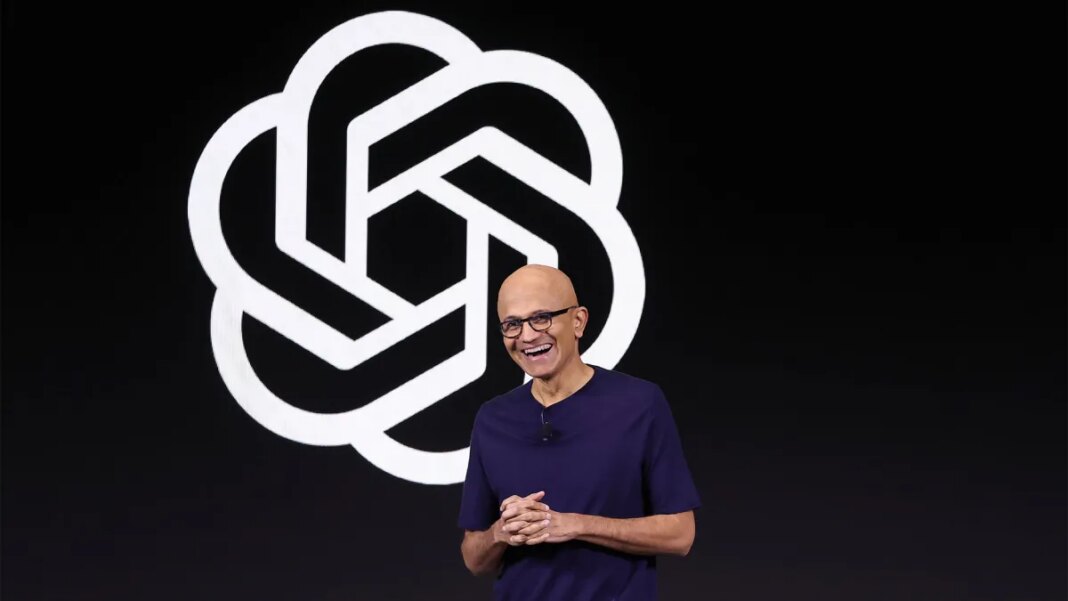
On Sunday, Microsoft Chief Executive Officer Satya Nadella reinforced his earlier warning to businesses about the potential perils of relying exclusively on proprietary AI solutions. He asserts that companies that fail to maintain control over their own data and AI models are unlikely to thrive in the rapidly evolving technology landscape. During an engaging discussion on CNN’s Fareed Zakaria GPS, Nadella elaborated on the risks associated with sharing extensive data and prompts with AI model providers, emphasizing the importance of retaining metadata for future model training.
Nadella urged companies to refrain from depending entirely on built-in coding tools offered by AI labs, such as OpenAI’s ChatGPT Codex and Anthropic’s Claude Code. He highlighted the necessity for businesses to create a distinct layer of AI infrastructure, known as AI gateways. This architecture would enable companies to utilize multiple AI models while safeguarding their operational integrity and flexibility.
Why it Matters
Nadella’s insights underscore a critical shift in how businesses engage with AI technologies. In an environment where reliance on a single AI model could lead to strategic vulnerability, this update carries significant economic implications. By advocating for greater control over AI resources, companies can diversify their technological capabilities, ultimately fostering innovation and competition. This approach not only safeguards intellectual property but also promotes a more resilient business model, reducing dependence on AI providers who may also serve as competitors in the marketplace.
The advice to maintain ownership of data and model training methodologies emerges as an essential strategy as enterprises recognize the need for various affordable AI solutions. This landscape shift is particularly vital in light of increasing concerns surrounding model duplication and competitive risks.
Impact on Residents, Businesses, or Visitors
The implications of Nadella’s recommendations are noteworthy for local businesses and residents alike. Enhanced control over AI models enables enterprises to operate more independently, which may result in improved efficiency and innovation within the local economy. Businesses could leverage bespoke AI capabilities tailored to their specific needs, thereby enhancing customer service and operational processes.
For visitors and holidaymakers, the ripple effects of these changes in business strategy could translate into better digital experiences. As local enterprises invest in personalized applications powered by proprietary AI, tourists may witness more efficient services and tailored offerings that align with their needs. Moreover, the proactive adaptation toward diverse AI models could spur job creation in the tech sector on the island, fostering a more dynamic workforce.
Municipality Affected
All Municipalities / Archipelago-wide. Nadella’s overarching message resonates throughout the Canary Islands, emphasizing that local businesses across all municipalities face the imperative to rethink their AI strategies. The structural benefits of decentralized AI capabilities can bolster regional operations, enhancing the overall technological landscape within the archipelago.
Related Projects or Previous Developments
This viewpoint aligns with a broader trend in the tech sector advocating for multi-faceted AI applications rather than singular reliance. Businesses are increasingly gravitating toward open-weight models—software whose foundational code is publicly accessible. As enterprises strive for greater autonomy over their AI capacities, they also confront the necessity of managing a diverse range of AI solutions, reflecting an evolution in digital strategy that mirrors past transformations in the technology landscape.
Internal Links
[placeholder_internal_links]
SEO Title and Metadata
SEO Title: Satya Nadella Warns Enterprises Against Sole AI Reliance
Meta Description: Microsoft’s CEO issues a strong message to businesses: maintain control over AI models to thrive. Explore the implications for local enterprises.