Transforming the Future: How Renewable Energy is Reshaping Fuerteventura’s Economy
Harnessing the sun and wind, Fuerteventura is poised to lead a green economic revolution.
As one of the sunniest Canary Islands, Fuerteventura is embracing its natural advantages by transitioning to renewable energy sources. The island has set ambitious goals to increase its self-sufficiency in energy production while dramatically reducing its carbon footprint. With new investments in solar and wind farms, local businesses and government entities are collaborating to turn Fuerteventura into a model for sustainable energy initiatives.
The economic implications are significant. By fostering an environment ripe for green startups and innovation, Fuerteventura is attracting not only local entrepreneurs but also international investors keen to seize emerging opportunities in the renewable sector. This shift is expected to create jobs, boost local businesses, and stimulate tourism, as eco-conscious travelers seek destinations that prioritize sustainability. The financial benefits of a thriving renewable energy market could redefine the island’s economic landscape for years to come.
In this vibrant arena, the synergy between public and private sectors is crucial. Local governments are facilitating initiatives, while startups in areas like energy storage, efficiency solutions, and sustainable transportation are paving the way for a greener future. As Fuerteventura continues to innovate and push boundaries, it stands at the forefront of an economic transformation, set to inspire other regions to follow suit.
Source: Gobierno de Canarias.
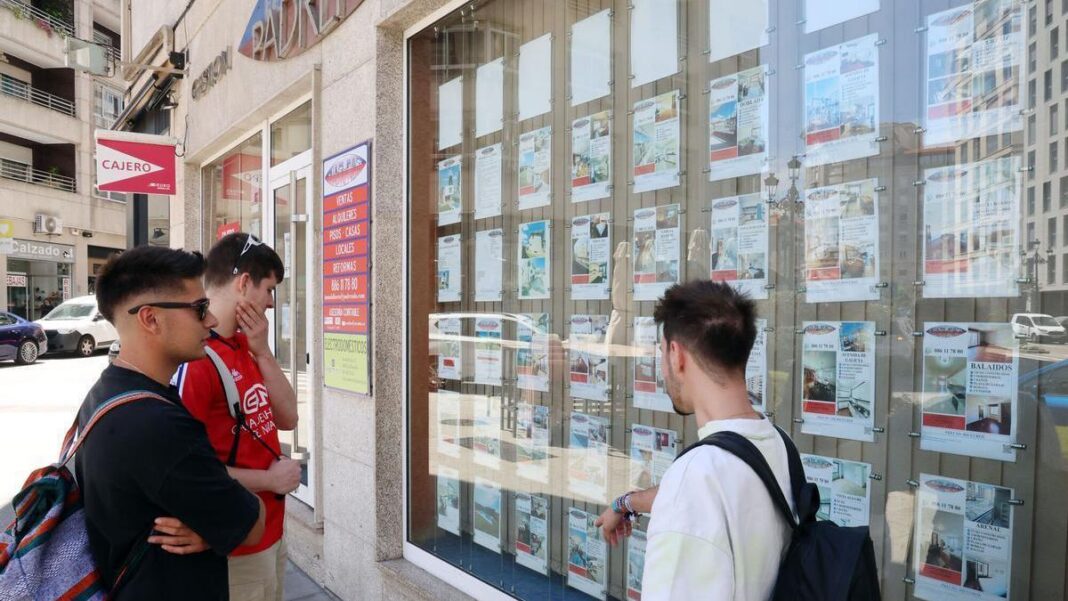
Home sales in the Archipelago are keeping pace despite the lack of supply and resisting the decline that the market is experiencing at a national level. Transactions of apartments and houses in the Canary Islands increased by 2.1% in year-on-year terms in July, reaching 2,289 transactions, while the housing market contracted, on the other hand, in most of the rest of the autonomous communities, with which, at the state level, sales and purchases fell by 5.1%, according to the latest data from the National Institute of Statistics (INE). An evolution that, according to the island real estate sector, responds to the dynamics of supply (very little) and demand (very much). That is to say, ‘everything’ that is put up for sale is sold because the potential buyers far exceed the number of properties on the market. The Archipelago carried out 2,289 residential transactions in the month of July The Archipelago is one of the six autonomous communities, together with the Region of Murcia, Navarra, Galicia, Castilla y León and Castilla-La Mancha, that registered a positive variation in sales during the month that opens summer, a period in which the activity of the sector is usually rather scarce (most communities are around negative double digits). In total, the records recorded 6,850 property transfers (of all types of properties) in the Islands, 5.5% more year-on-year, of which 3,614 corresponded to homes. Within homes, buying and selling was the majority route, with those 2,289. Donations, inheritances and other operations complete the rest of the property changes. Boiling market The market is currently in a moment described as “boiling” by professionals. 2026 is a year in which there have been months with fewer operations, but also others in which activity has recovered, says the manager of the Remax real estate agency Martín Hernández. In their experience, homes that come on the market with a price that is, let’s say, adjusted to the real value, remain available for a short time and end up finding a buyer in relatively short terms. “The properties are on the market for a short time if they are priced, and the reality is that quite a few transactions are made,” he points out. For Hernández, the main problem continues to be the lack of supply. “In the Canary Islands there are thousands of homes missing to meet people’s needs because they are not being built,” he maintains. The consequence, he explains, is that buyers end up competing for a limited number of properties. “As long as new homes are not promoted, we are going to have to distribute the existing ones,” he points out. ForeignersOn the other hand, the weight of the foreign buyer constitutes one of the elements that explain the complexity of the residential market of the Islands. Almost a third (29.9%) of purchases made in the autonomous community are made by foreign citizens, the third autonomous community with the highest percentage, only behind the Balearic archipelago and the Valencian Community, according to data from SpainStats. Although the presence of foreign buyers varies significantly according to the different areas of the islands. “It is true that there is a foreign presence in the operations, but especially in the coastal area, in the most touristic municipalities,” says the manager. The foreign population makes almost a third (29.9%) of the purchases on the islands. Sven Wetterau, manager of Miyabi Homes, assures that in his work area, mainly the north of Gran Canaria, the foreign buyer has a significantly reduced weight. “In my case, 90% or even 95% of my clients are from the Canary Islands or from the Peninsula,” he explains. The situation, therefore, cannot be extrapolated to all the territories of the Islands, but rather the most touristic municipalities are the ones that, for obvious reasons, bear the greatest weight of the foreign buyer. Price increaseHowever, in a majority or limited way, the truth is that the presence of foreign buyers adds pressure on a market that, in addition, suffers from this very scarce supply. Foreign demand contributes to raising prices because it introduces more competition for available homes. “They are buyers who are entering the market and who inevitably cause prices to also rise, because there is more competition to buy,” explains Hernández. With this scenario, activity is expected to gain strength again in the last months of 2026, after the ‘routine’ decline of the summer, although on this occasion it has not greatly affected the sector in the Archipelago, not at least in July. August is traditionally a break for the market because “people worry about other things,” says Wetterau. Despite this, the search for housing picks up again quickly after the holidays. “Demand has increased a lot after the holidays. Suddenly everyone has woken up,” he explains. Added to this seasonal recovery is another factor that can further boost operations by the end of the year. Investment decisions linked to the fiscal closure encourage some investors and businessmen to concentrate their purchases in recent months to complete certain investments before the end of the year. For example, a company that has to materialize the Reserve for Investments in the Canary Islands (RIC) before the end of the year could benefit from tax incentives on certain properties or assets linked to its economic activity. The sector’s forecast is, therefore, that sales will increase during the last part of the year and continue to rise after the summer ‘break’.Subscribe to continue reading
Originally reported by www.laprovincia.es, rewritten by the Fuerteventura Times AI Editorial Desk.