The Enigmatic Legend of Gustav Winter and His House in Cofete
Introduction to a Legend
The tale of Gustav Winter, a German who built an isolated house in Cofete, Fuerteventura, has been shrouded in mystery and myth for decades. After years of obscuring the truth like grains of sand, recent findings shed light on Winter’s life, revealing a narrative vastly different from popular beliefs. This isolated chalet has been associated with the Third Reich, rumored to have been a retreat for Hitler and a hideout for Nazi officials fleeing to South America. However, the intricate tapestry of Winter’s life is much more than these sensationalized narratives suggest.
The Rise of Urban Legends
The legends surrounding Winter’s home gained traction in the 1980s, following his death in 1971, fueled by sensationalist journalism and speculative tales amidst a backdrop of newfound media. As the internet took off in the late 2000s, the myths surrounding the house spread like wildfire, with fresh stories calculated to amplify existing rumors circulating on social media and websites. Thus, a simple narrative morphed into a full-fledged tapestry of intrigue, laden with inaccuracies.
A New Perspective: Insights from Gustav Winter’s Son
In response to the swirling rumors, Gustav Winter’s son, also named Gustav, has penned a revealing book titled Casa Winter Cofete: Un alemán, un lugar, una casa… (Winter House Cofete: A German, a Place, a House…). This work is the result of years of painstaking research that involved consulting various official archives from Spain, Germany, France, Britain, and the USA. By tapping into historical documentation, personal diaries, and testimonies from local witnesses, he aims to bring forth the truth—one that is often obscured by misunderstandings and folklore.
The Man Behind the Myths: A Glimpse into Winter’s Life
Despite what rumors may suggest, Gustav Winter’s life is remarkable in its own right, warranting a biopic of triumph rather than a storyline drenched in war secrets. Born in 1893 in Zastler, in Germany’s Black Forest, Winter exhibited traits of resilience and keen intellect from a young age. His academic prowess, particularly in drawing, mathematics, physics, and chemistry, hinted at the capabilities that would allow him to reinvent his life multiple times.
During World War I, he narrowly escaped captivity by the British Navy and later established the Insular Colonial Company of Electricity and Irrigation (CICER) in Gran Canaria. His entrepreneurial pursuits spanned selling luxurious Mercedes-Benz vehicles, oranges, and even patenting various inventions. Amidst the backdrop of these dramatic life events, Winter managed to settle in no less than 30 locations worldwide, each time embodying an indomitable spirit of reinvention.
Falling in Love with Jandía
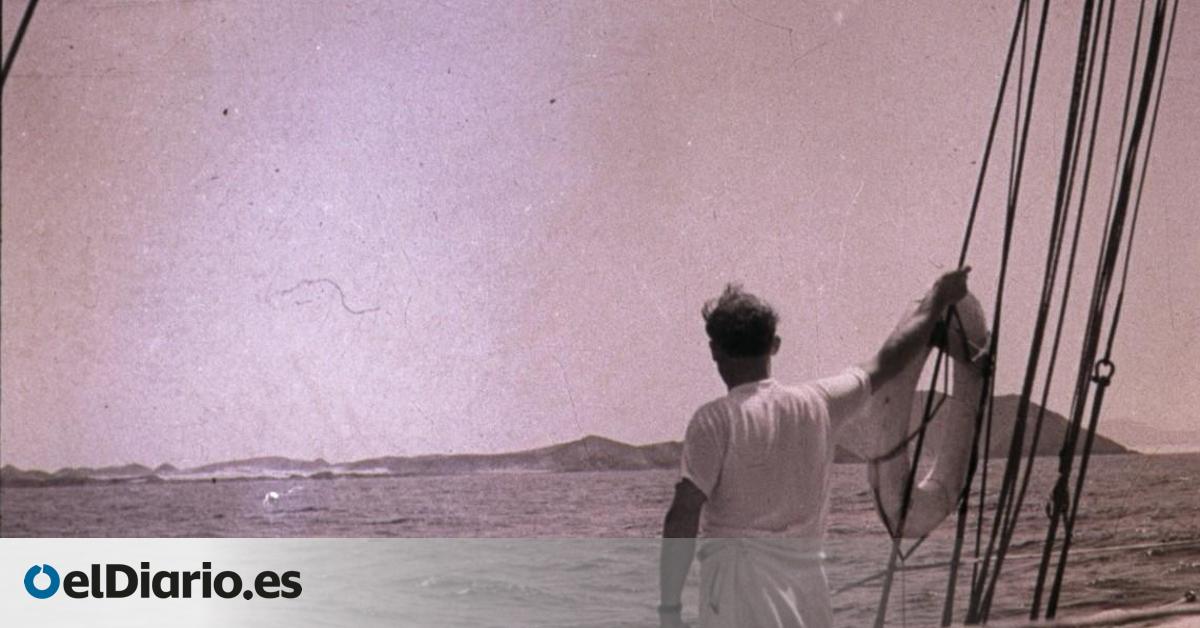
Gustav Winter’s adoration for the Jandía Peninsula is noteworthy; it’s a love story marked by time and perseverance. In 1927, he discovered its enchanting landscapes from a sailboat, an epiphany that would catalyze his future aspirations. Despite enduring personal tragedies and professional setbacks—like the loss of a child and the passing of his parents—his yearning for Jandía never wavered. By 1937, he reached a pivotal agreement to lease the peninsula, marking the first tangible step toward his dream.
The House That Was Never a Nazi Hideaway
One of the most enriching contributions in Gustav Winter’s son’s book pertains to the house’s construction timeline. Contrary to what many believe, the inception of the Cofete house only began in 1946, a year after World War II concluded. This fact alone dismantles the swirling myths linking the property to Nazi submarines and conspiracy theories.
Documentation traces the arrival of the contractor tasked with building the house to September 1946, solidifying that construction began amidst a post-war landscape. A letter from January 1947 details the early stages of construction, contradicting the narratives of clandestine operations.
Sunshine or Submarines? The Truth About Nazi Conspiracy Theories
Another captivating legend surrounding Winter’s home ties to supposed Nazi submarine supply routes. In the summer of 1938, he announced plans to develop a fishing project on the Jandía Peninsula, leading British authorities to suspect hidden German military intentions. However, all investigations conducted during the war found no evidence supporting these theories.
Historical analyses point to established German submarine bases situated near vital ports along the Atlantic coast rather than on isolated, rugged terrain like Jandía. Thus, further dismantling the conjectures built around this narrative.
Who Was Gustav Winter?
Perhaps the most intriguing aspect lies in defining who Gustav Winter truly was beyond the myths. To put it simply, he was not a general, a Nazi, or a war spy. Instead, he was a visionary man endowed with ingenuity that set him apart from the ordinary. His life’s story, brimming with resilience and innovation, offers a rich tapestry of human experience, reflective of the complexities of existence rather than the straightforward tales echoed through rumor and myth.
In the end, the real saga of Gustav Winter is one that deserves recognition not from sensationalism but rather from a deeper understanding of the individual behind the legend.