The Digital Dilemma in Antigua: A Collaborative Approach to Telecommunication Infrastructure
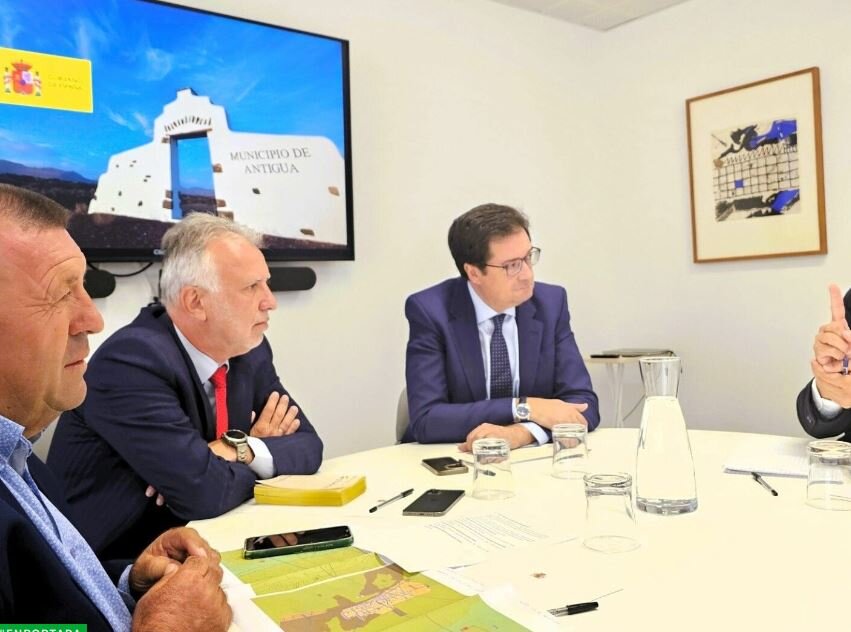
In a significant meeting held in Madrid, ministers from the Spanish government came together with local leaders to address a pressing issue affecting the municipality of Antigua. Óscar López, the Minister for Digital Transformation and Public Function, Ángel Víctor Torres, the Minister of Territorial Policy and Democratic Memory, and Antonio Hernando, the Secretary of State for Telecommunications and Digital Infrastructures, all joined forces with Matías Peña, the mayor of Antigua, and Patrick Farges, CEO of the telecommunications infrastructure company TOTEM. Their goal? To mediate a solution regarding a new site for telecommunications antennas, which are crucial for residents to regain mobile phone coverage.
The Impact of Infrastructure Changes
Recently, the town’s original telecommunication site became non-operational, causing significant disruption for the 14,800 residents who rely on mobile communication. The cessation of service stemmed from the termination of an existing lease for the location housing the antennas, leaving the whole municipality without connectivity—a vital asset in today’s digital age.
The situation has emphasized the critical role that telecommunication infrastructure plays in daily life, especially in smaller communities. “This was the only infrastructure of its kind in the area,” noted a government communiqué, highlighting just how dependent the local populace had become on this singular service.
Proposed Solutions Lead to Tensions
Following the initial disruption, discussions began over alternative locations to ensure that mobile coverage could be restored without compromising the quality of service. However, resistance emerged regarding the proposed new site, particularly from community members concerned about the impact on their homes.
In the wake of increasing public outcry, residents voiced their frustrations, stressing the need for a solution that would not place the new infrastructure too close to residential areas. Many residents had been advocating for this since the crisis began, urging local authorities to explore more suitable alternatives.
Government and Community Collaboration
The local government, led by Mayor Peña, claimed they had exhausted efforts to secure a new location. However, confusion lingered: the urban planning councilor, David Alberto, stated that they were only made aware of TOTEM’s proposal in June—nearly nine months after the initial application was submitted to the municipality. This underscores the complexities that can arise when multiple stakeholders are involved in urban and digital planning.
The Canary Islands’ regional political party, CC-AM, stepped in, urging the involvement of higher government echelons, namely the Cabildo de Fuerteventura and the Government of the Canary Islands. They sought to mediate and identify a solution, which ultimately led to a commitment from TOTEM to reassess potential locations for the antennas.
A Promising Outcome
During the ministers’ meeting, the atmosphere shifted positively. Torre and López took the opportunity, despite their busy agenda that included discussions on national issues like labor rights and housing crises, to prioritize the telecommunication dilemma in Antigua. Their willingness to engage speaks volumes about the importance assigned to community concerns by the government.
“The agreement we reached is encouraging,” Torres expressed. “We responded positively to the mayor’s request, and it’s fulfilling to find common ground that serves our citizens better.” Their collaborative spirit highlighted the essential nature of ongoing dialogue amidst conflicting interests while underlining the government’s commitment to address local needs.
López further emphasized the importance of enabling access to digital advantages for all citizens, reinforcing the government’s investment exceeding 100 million euros in enhancing connectivity across the Canary Islands since 2018. Such financial backing has a direct impact on the local economy and residents’ quality of life.
The Path Forward
The collaborative meeting resulted in a consensus on postponing the original infrastructure plan, opting instead to gauge alternative locations that would not disturb nearby residents. This strategic pivot is a testament to the power of dialogue and cooperation among various stakeholders—an approach that many hope will pave the way for a satisfactory resolution for the residents of Antigua.
While the situation remains sensitive, with ongoing worries from the community about antenna placement, the engagement of governmental figures showcases a proactive step toward fostering connectivity without compromising resident well-being. As discussions continue, the focus remains on finding a viable solution that respects both the needs of the community and the necessity of reliable telecommunication services.


