
How Sustainable Tourism is Redefining Fuerteventura’s Economic Landscape
Balancing ecological integrity with economic growth is the new blueprint for success on the island.
In recent years, Fuerteventura has been at the forefront of innovative tourism practices that not only celebrate its stunning landscapes but also prioritize sustainability. The island, renowned for its breathtaking beaches and unique ecosystems, is now leveraging these natural assets to attract eco-conscious travelers. Local businesses are embracing sustainable practices, from eco-friendly accommodations to responsible tour operators, creating an inviting environment for visitors who prioritize environmental stewardship.
The impact of this shift is profound. By promoting responsible tourism, Fuerteventura’s local economy is diversifying beyond traditional offerings. Entrepreneurs are tapping into the demand for sustainable experiences, leading to the emergence of new business models that focus on organic farming, renewable energy initiatives, and waste reduction strategies. This transformation is not just beneficial for the environment; it also enhances the island’s appeal, positioning Fuerteventura as a progressive leader in sustainable tourism within the Canaries.
As this transformation unfolds, the collaboration between local authorities, businesses, and the community has proven to be vital. Efforts such as promoting local products and supporting community-driven initiatives have helped forge a stronger identity for Fuerteventura, centered around sustainability and innovation. This collective approach ensures that the island not only maintains its natural charm but also cultivates a prosperous economic future.
Source: Gobierno de Canarias.
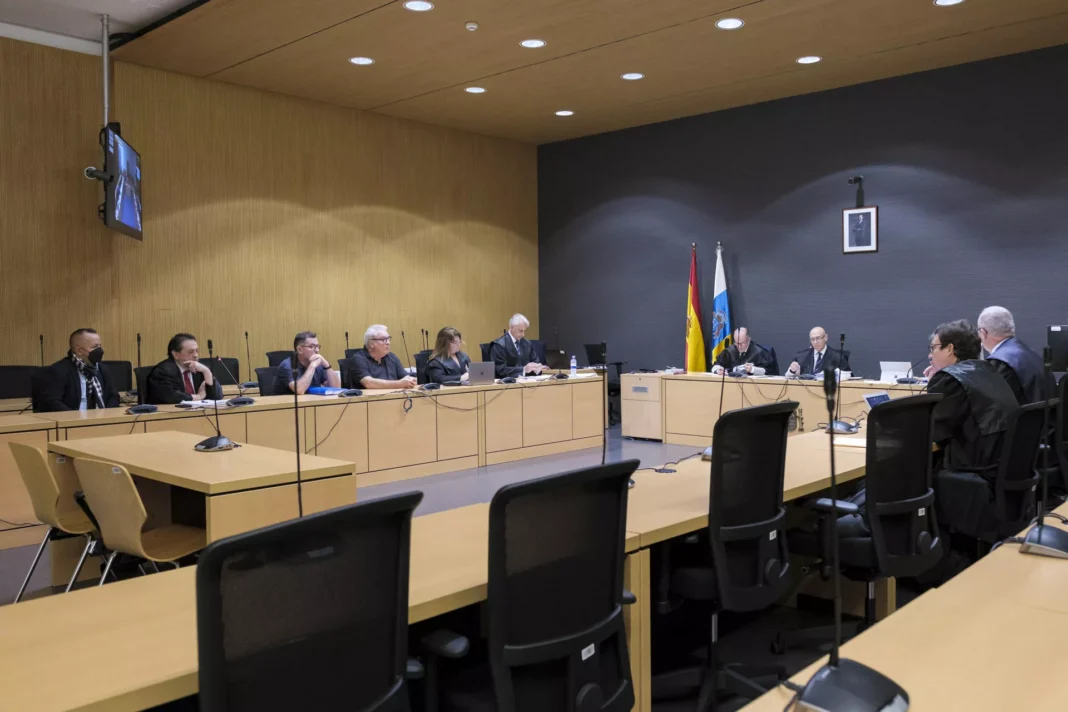
The main defendant in the ‘Cadastro case’, an alleged plot dedicated to falsifying records to appropriate properties in Gran Canaria, Fuerteventura and Lanzarote, has admitted this Tuesday before the Las Palmas Court the events attributed to him and that occurred between 2011 and 2016. Santiago Ramón MM, who initially faced a request for 17 years in prison for continuous falsification of public documents, fraud, money laundering and group membership criminal, has assumed all the charges formulated by the prosecution. During his interrogation, the defendant acknowledged that he was part of a plot that modified the ownership of dozens of properties and properties without the knowledge of their owners to obtain an economic benefit. He has also admitted that he altered purchase and sale contracts to present them to the Territorial Management of the Las Palmas Cadastre. An agreement with the Prosecutor’s Office Sources from his defense have explained that the confession occurs after reaching an agreement with the Prosecutor’s Office so that the sentences requested for each of the crimes are less than two years in prison. Four other defendants initially appeared in the proceedings. Two have died, while José OM and José María CF face requests for 13 and nine years in prison, respectively, for the same crimes, except for fraud. Their defense requests acquittal and both will testify at the end of the trial. According to the Prosecutor’s indictment, 47 high-end vehicles, luxury watches and jewelry, as well as farms and other real estate, were seized during the investigation. Files without hearing procedure During the first session of the trial, a civil guard from the Heritage group who participated in the investigation from the beginning also testified. According to his testimony, the case began following a complaint from an injured person from Fuerteventura. The agent has identified the accused and official Jesús OM as the person who acted in the Cadastre, while the deceased Roque MM would be the one who intended to benefit from that first operation in Fuerteventura. The files investigated presented, according to the agent, common characteristics: they lacked the hearing procedure, some were completed in a single day even though they usually require more time and did not contain acknowledgment of receipt from the interested parties. The witness has also explained that 158 files were altered thanks to the privileged information that they allegedly obtained through the official Jesús OM, who had access to the Cadastre database. Contracts with deceased owners According to the Civil Guard’s account, those investigated used properties that appeared in the Cadastre as pending investigation. To do this, they falsified sales contracts and dated them mainly to the 1980s and 1990s, taking advantage of the fact that in many cases the legitimate owner had died. The majority of the affected properties were rural properties, according to the testimony provided in court. Santiago Ramón MM’s mission would have included recruiting people who acted as front men to use private contracts and subsequently convert them into a public deed before a notary. The agent has defined him as the “getter of straw men and women.” These people, according to the investigation, were used repeatedly and subsequently sold the properties that had been awarded to them to commercial companies linked to the defendants. The defense questions the searches During the session, two other civil guards who participated in the entries and searches carried out in the offices and homes of the accused, as well as at the headquarters of the May Day Cadastre, also testified. Jesús OM’s lawyer, Sergio Armario, has requested the annulment of the registration carried out in the Cadastre and in the management office of José María CF. The defense maintains that the agents exceeded their judicial authorization and that computer material was seized without authorization and without the presence of the notary public. The lawyer has stated that “the Civil Guard collected what they wanted” and has also questioned that the judicial order did not mention the search of a lawyer’s office located in the agency. The defense has requested that all seized material, both on paper and in computer format, be removed from the case, including that seized in the lawyer’s office. The court must rule on these issues in the ruling. The lawyer has also maintained that there are no indications that his client has committed any crime and has pointed out that since 2012 Jesús OM held a position as a Plant Health inspector in the offices of the port of Las Palmas, without connection with the Cadastre office. Add AtlánticoHoy as a preferred Google source for free Stay informed with the latest news. Activate now
Originally reported by www.atlanticohoy.com, rewritten by the Fuerteventura Times AI Editorial Desk.