Unveiling the Mysteries: UFO Sightings and Historical Collaborations
In recent months, the release of U.S. government documents has reignited interest in the enigmatic world of unidentified flying objects (UFOs). Among the 162 files made public by the Trump administration, two reports specifically highlight intriguing sightings in Spain and suggest potential military collaborations involving German scientists during Franco’s regime. This article delves into these revelations, exploring their historical context and implications.
The Pursue Program and Its Significance
The documents are part of the Pursue program (Presidential System for Declassification and Reports on Encounters with Unidentified Aerial Phenomena), coordinated by the Office of the Director of National Intelligence (ODNI). This initiative aims to centralize decades of secret intelligence regarding UFOs, offering a glimpse into the complexities of aerial phenomena that have puzzled both scientists and the public for generations. Notably, the documentation includes transcripts from NASA’s Apollo missions (1969-1972), detailing inexplicable occurrences on the Moon, further emphasizing the breadth of the investigation.
Reports Referencing Spain
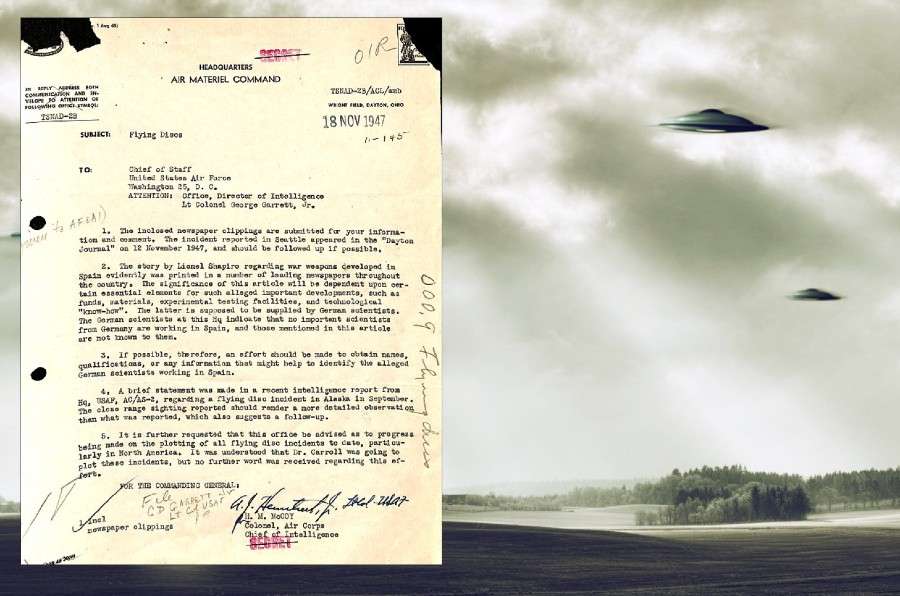
Among the released files, two documents stand out for their references to Spain. The first is a report dated November 14, 1947, authored by the Chief of Staff of the U.S. Air Force. The second is a study titled UFOs and Defense: What Should We Prepare For?, prepared by the French association Cometa. This study presents findings from the Institute of Higher Studies of National Defense, shedding light on the historical context of UFO sightings and defense strategies.
The 1947 Report: A Closer Look
The 1947 report, addressed to Lieutenant Colonel George Garrett, Jr., discusses an article by journalist Lionel Shapiro that details war weapons allegedly developed in Spain. The report emphasizes that the significance of these developments hinges on critical elements such as funding, materials, experimental testing facilities, and technical expertise—factors believed to have been supplied by German scientists.
Interestingly, the report notes that German scientists at U.S. headquarters claimed there were no significant German figures in Spain and expressed ignorance regarding those mentioned in Shapiro’s article. However, it suggests that efforts should be made to identify any supposed German scientists working in Spain, hinting at a possible collaboration between post-Nazi Germany and Franco’s regime.
Historical Context: Franco’s Spain and German Collaborations
The period in question raises questions about the nature of Franco’s Spain and its connections to former Nazi scientists. Following World War II, many German scientists sought refuge in various countries, including Spain, where they could continue their work away from the scrutiny of Allied forces. This collaboration could have implications for military technology and research during Franco’s rule, suggesting a complex interplay of politics, science, and secrecy.
UFO Sightings in the 19th Century
The second document, UFOs and Defense: What Should We Prepare For?, provides a fascinating historical overview of UFO sightings, particularly in the late 19th century. It posits that many citizens in the U.S. and Europe may have mistaken airships for UFOs during this time. Between 1880 and 1900, numerous sightings of airships were reported, with tens of thousands of witnesses claiming to have seen flying machines resembling modern airships—vehicles that would not be manufactured for another two decades.
The report notes that most sightings in the U.S. occurred between 1896 and 1897, with additional reports from Spain, Germany, Sweden, and Russia. While the initial explanation for these sightings leaned towards genuine airships, the document suggests that this rationale becomes increasingly difficult to uphold upon closer examination.
The Evolution of UFO Sightings
As the 19th century transitioned into the 20th, the phenomenon of UFO sightings evolved. The report indicates a second wave of sightings in Great Britain at the beginning of the century, further complicating the narrative surrounding aerial phenomena. Researchers continue to grapple with the implications of these sightings, questioning the boundaries between reality and perception.
The Ongoing Quest for Understanding
The release of these documents not only sheds light on historical UFO sightings and potential military collaborations but also underscores the ongoing quest for understanding the unknown. As we continue to explore the skies and our past, the intersection of science, history, and mystery remains a captivating subject that invites both curiosity and skepticism.

