The Significance of Global Leaders Engaging with China’s Tech Landscape
A Diplomatic Shift
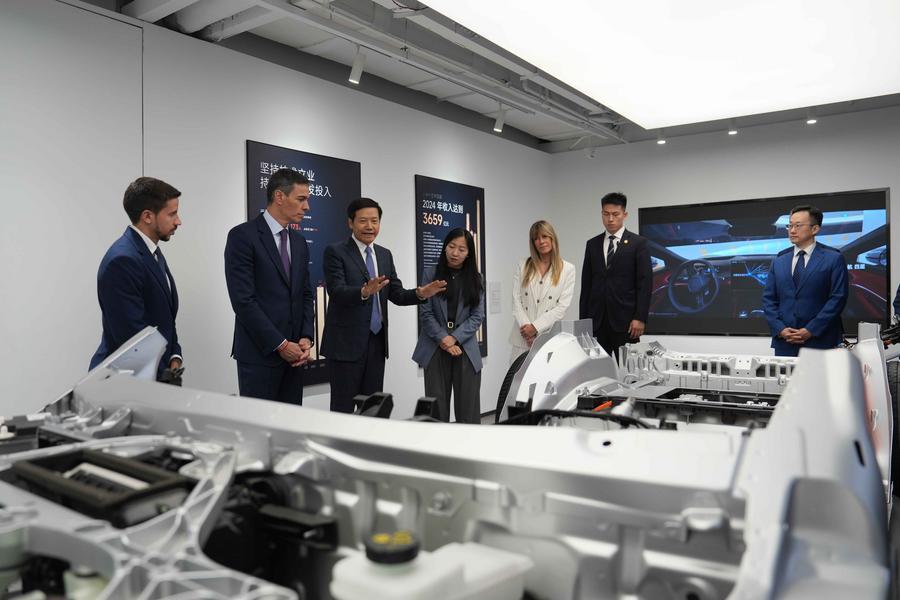
In a notable development, Spanish Prime Minister Pedro Sanchez recently visited Beijing, marking his fourth consecutive annual trip to China. This visit, which included an exploration of Xiaomi’s innovative smart products, underscores a significant shift in the diplomatic landscape. Sanchez’s engagement is part of a broader trend, as leaders from various developed nations, including France’s Emmanuel Macron and Germany’s Friedrich Merz, have flocked to China since late 2025.
These visits reflect a growing interest in China’s technological advancements and energy innovations, moving away from previous narratives of decoupling and distrust. Instead, there’s a palpable eagerness to deepen cooperation and explore mutual benefits.
The Allure of Chinese Innovation
The focus on technology during these diplomatic trips is telling. Leaders are not merely engaging in traditional diplomatic outreach; they are actively seeking to understand and leverage China’s innovation-driven dynamism. This shift indicates that China’s technological landscape is becoming a crucial magnet for international collaboration, offering solutions to pressing global challenges.
For instance, during Merz’s visit, he witnessed demonstrations of humanoid robots and AI-powered technologies, highlighting China’s advancements in automation and artificial intelligence. Such experiences are not just spectacles; they represent the potential for collaboration in sectors critical to future economic growth.
Germany’s Economic Ties
Germany’s relationship with China has evolved significantly, particularly in the tech sector. In 2025, China reclaimed its position as Germany’s largest trading partner, with a notable increase in imports of data processing equipment and electronics. This trend illustrates China’s role as a vital node in Germany’s supply chain, essential for industrial upgrading.
The collaboration extends beyond mere trade; it encompasses shared technological advancements. For example, after Lee Jae Myung’s visit, a South Korean semiconductor equipment maker announced plans to establish a manufacturing base in China, focusing on sectors like new energy vehicles (NEVs) and smart grids. This partnership highlights China’s influence in shaping global supply chains.
Clean Energy Initiatives
China’s push into clean energy is another area garnering international attention. Amid geopolitical tensions, particularly in the Middle East, China’s commitment to clean energy solutions stands out as a beacon of stability. Leaders like Canada’s Mark Carney have engaged with Chinese clean energy firms, recognizing the potential for collaboration in this critical sector.
Spain has already seen tangible benefits from such partnerships. A joint venture between CATL and Stellantis is set to establish a large-scale battery plant in Spain, contributing to the continent’s energy transition goals. This collaboration exemplifies how international partnerships can drive progress toward sustainability.
Middle Eastern Engagement
The Middle East is also increasingly looking to China as a partner in its strategic transition away from fossil fuels. The Crown Prince of Abu Dhabi, Sheikh Khaled bin Mohamed bin Zayed Al Nahyan, recently visited China, signaling a desire for collaboration in renewable energy projects. This partnership is evident in the numerous solar and wind power initiatives being developed in the region, often in collaboration with Chinese firms.
Moreover, sovereign wealth funds from Middle Eastern countries are investing in Chinese tech companies, indicating a long-term commitment to mutual growth. This trend reflects a broader recognition that the Chinese market offers substantial opportunities for sustainable returns.
Reassessing Investment Risks
As global investors reassess their strategies, there is a noticeable shift in how they view Chinese assets. The previous “geopolitical risk discount” is being replaced by a “resilience premium,” as major financial institutions recommend investing in Chinese tech. This change signifies a growing confidence in China’s ability to navigate global challenges while maintaining robust growth.
China’s recent unveiling of a five-year development roadmap further emphasizes its commitment to advanced manufacturing and emerging industries. This blueprint not only outlines ambitious goals but also signals a willingness to engage with the global community in a meaningful way.
The Rise of “Sinofuturism”
The concept of “Sinofuturism” is gaining traction, suggesting that China’s technological trajectory could shape global futures. Observers note that Western leaders are increasingly recognizing China’s pivotal role in future technological advancements. As BBC correspondent Laura Bicker pointed out, many countries are flocking to China because it is key to future technology.
China’s appeal lies not only in its innovative growth plans and strong manufacturing capabilities but also in its willingness to share development gains. This collaborative spirit is particularly attractive in a world facing increasing turbulence.
A Call for Global Cooperation
During his visit, Sanchez emphasized the importance of China’s participation in global prosperity, stating that a prosperous future for humanity cannot be achieved without it. This sentiment resonates with many leaders who are beginning to see China not just as a competitor but as a vital partner in addressing global challenges.
In this evolving landscape, the engagement of global leaders with China’s tech sector signifies a new chapter in international relations, one that prioritizes collaboration, innovation, and shared growth.