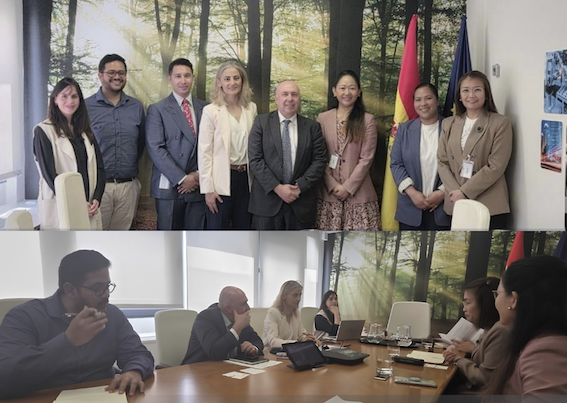
The Philippines is embarking on an exciting journey to deepen its innovation and technology cooperation with Spain, aiming to expand economic ties that go beyond their rich historical and cultural connections. This initiative reflects a growing recognition of the potential benefits that can arise from collaboration in the fields of technology and innovation.
On April 28, 2026, the Philippine Trade and Investment Center in Madrid (PTIC-Madrid), under the leadership of Commercial Counsellor Althea Karen P. Antonio, engaged in significant discussions with officials from Spain’s innovation agency, the Centro para el Desarrollo Tecnológico y la Innovación (CDTI). This meeting, also attended by Consul Dyan Kristine Miranda Pastrana from the Philippine Embassy in Spain, set the stage for exploring collaborative opportunities in various sectors.
The discussions centered on key areas such as research and development (R&D), digitalization, renewable energy, advanced manufacturing, and support for startups and small and medium enterprises (SMEs). These sectors are crucial for both nations as they seek to enhance their economic resilience and competitiveness in an increasingly interconnected world.
This engagement is part of the Department of Trade and Industry’s broader strategy to strengthen the Philippines’ innovation ecosystem. By focusing on capacity building, technology transfer, and international collaboration in science and innovation, the Philippines aims to create a robust environment for growth and development.
Despite the warm and stable diplomatic ties between the Philippines and Spain, their economic relations have historically been modest. Bilateral trade has hovered around US$590 million to US$650 million in recent years, with Spain ranking approximately 26th among destinations for Philippine exports. This underdevelopment stands in stark contrast to the rich shared history that spans over three centuries.
In recent years, however, both governments and business groups have intensified efforts to expand cooperation in various sectors, including manufacturing, information and communications technology (ICT), tourism, infrastructure, clean energy, agribusiness, and SME development. A notable milestone occurred in 2024 when the Philippine Chamber of Commerce and Industry and the Spain Chamber of Commerce signed a memorandum of understanding aimed at strengthening collaboration in these vital areas.
Spain has also played a supportive role in Philippine development initiatives through concessional financing and technical cooperation. A notable example is the €300 million facility allocated for infrastructure, agri-food, and tourism projects, which underscores Spain’s commitment to fostering growth in the Philippines.

The recent engagement is particularly significant as Madrid positions itself as one of Europe’s leading innovation and startup hubs. The city has emerged as a strong performer in global innovation rankings, particularly in research and scientific output. Notably, Madrid has overtaken Barcelona in several technology and startup indicators, including the number of tech firms, startups, and scaleups.
Currently, Madrid hosts approximately 30 percent of Spain’s startups and accounts for nearly a third of the country’s startup investment volume. It also channels around 36 percent of total corporate investment in innovation nationwide. This concentration of innovation and entrepreneurial activity presents a unique opportunity for the Philippines to tap into Spain’s vibrant ecosystem.
Madrid has developed notable strengths in biotechnology, advanced manufacturing, and renewable technologies, bolstered by a highly educated workforce and robust R&D institutions. For the Philippines, deeper engagement with Spain’s innovation ecosystem could unlock opportunities for Filipino startups, researchers, and SMEs to access cutting-edge technology, expertise, and potential investments.
Moreover, this collaboration could position the Philippines as a gateway to the broader ASEAN market for Spanish companies, enhancing trade and investment flows between the two nations. Officials have emphasized that discussions with CDTI reflect a shared commitment to advancing innovation, trade, and investment, signaling a potential shift toward a more technology-driven phase in Philippines-Spain relations.