Vigilance in the Waters: La Guardia Civil’s Major Tuna Intervention in Fuerteventura
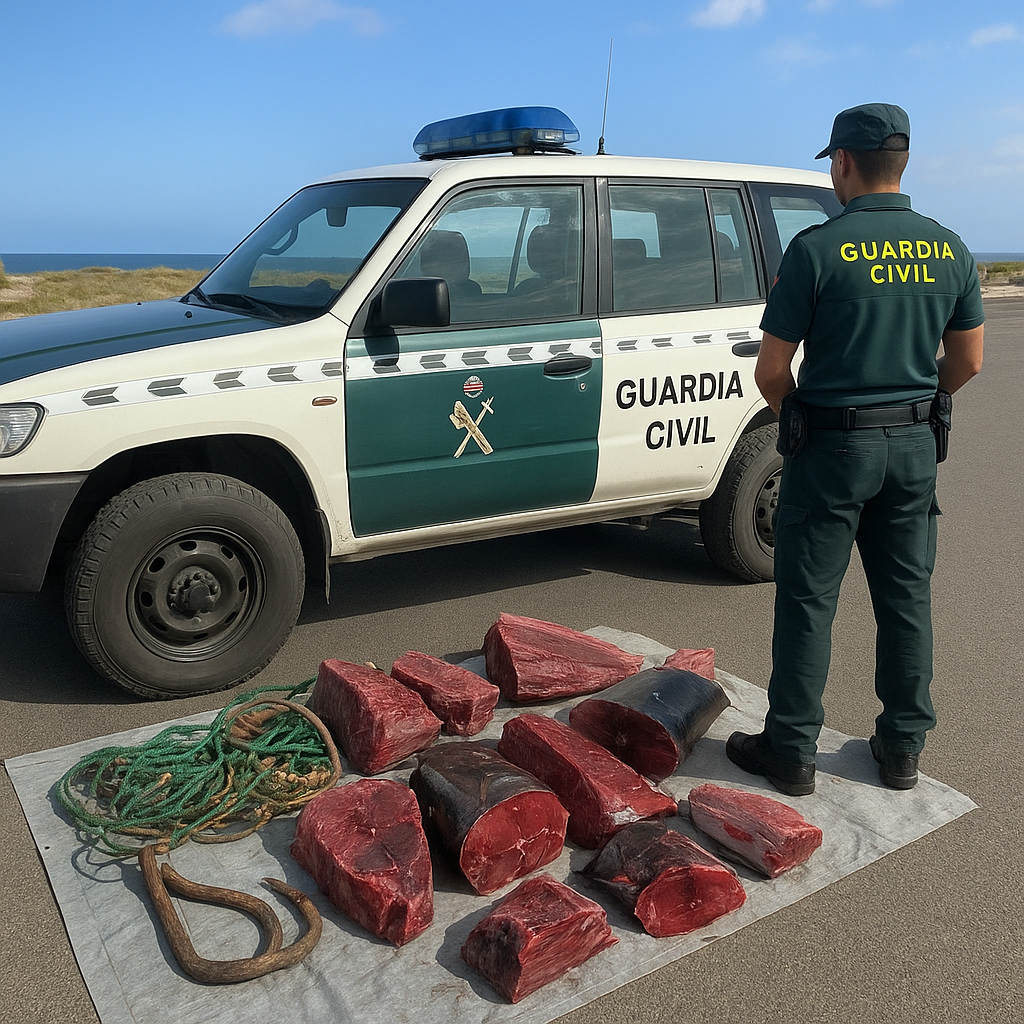
On April 18th, La Guardia Civil conducted a significant operation on the eastern coast of Fuerteventura, leading to the intervention of 126.15 kilos of red tuna. This incident highlights the ongoing issues of illegal fishing practices in Spain, particularly around vulnerable species, and the stringent regulations that govern them.
The Suspicious Vehicle
The events unfolded when agents from La Guardia Civil detected a suspicious off-road vehicle navigating a dirt path near the coastline. Observing the vehicle’s unusual behavior, officials decided to intercept it for further investigation. This decision proved critical in uncovering illegal fishing activities that could have significant environmental implications.
Discovery of Illegal Catch
Upon stopping the vehicle, officers discovered various fragments of a red tuna that had already been butchered, alongside cutting tools and equipment typically used for deep-sea fishing. The presence of such items raised immediate suspicions about the legality of the catch. During questioning, the occupants admitted to catching the tuna just hours prior, yet they were unable to provide the necessary permits required for recreational fishing of this species.
Regulatory Framework and Conservation Efforts
Red tuna, renowned for its culinary value, is subject to stringent international conservation regulations. Due to overfishing concerns, strict controls have been implemented worldwide to protect this vulnerable species from further decline. The absence of an official permit not only indicated a violation of these regulations, but it also raised questions about the potential commercial intent behind the catch, which would contravene established laws against the sale of recreationally caught fish.
Potential Commercialization: A Serious Offense
The ongoing investigation suggested that the occupants may have intended to sell the tuna, which carries severe penalties under current Spanish fishing laws. The prohibition on the sale of recreational catches serves to ensure that fish populations remain sustainable and that the food supply chain remains safe and traceable. Lack of proper documentation could lead to public health risks, as the fish could be introduced into marketplaces without any accountability for its source.
Seizure and Legal Proceedings
Following the intervention, the confiscated tuna was moved to official storage facilities, where it was weighed and confirmed to be 126.15 kilograms. This quantity raises both legal concerns and scrutiny from environmental watchdogs, as the authorities now work to ascertain the appropriate penalties and determine the tuna’s final destination. The harsh reality is that the consequences extend beyond just a fine; they reflect the broader issue of wildlife conservation.
Implications for Future Fishing Practices
This recent operation underscores the importance of vigilant enforcement in coastal areas, where illegal fishing activities are prevalent. As global resources become increasingly strained, the role of enforcement agencies like La Guardia Civil becomes paramount in educating fishermen about sustainable practices and the legal requirements for fishing in protected waters.
With the enforcement of strict regulations designed to protect dwindling fish populations, incidents such as this can serve as a critical reminder of the collective responsibility to uphold marine conservation efforts, ensuring that future generations can enjoy both the ocean’s bounty and its delicate ecosystems.