Preserving Heritage and Creating Jobs: The “Memoria Viva 2025” Initiative in Fuerteventura
The “Memoria Viva 2025” employment plan, spearheaded by the Cabildo of Fuerteventura, is making significant strides in conserving and rehabilitating the island’s rich cultural heritage. This initiative aims not only to preserve important historical sites but also to create job opportunities for local residents, demonstrating a thoughtful blend of cultural preservation and economic development.
Focus on Cultural Heritage
At the heart of the “Memoria Viva 2025” initiative is the commitment to protecting spaces that hold historical and cultural significance. The project prioritizes sites such as the former unitary school of Tesjuate, which is undergoing extensive restoration. This approach reflects a broader mission to maintain Fuerteventura’s identity and memory, ensuring that future generations can connect with their roots.
Institutional Collaboration
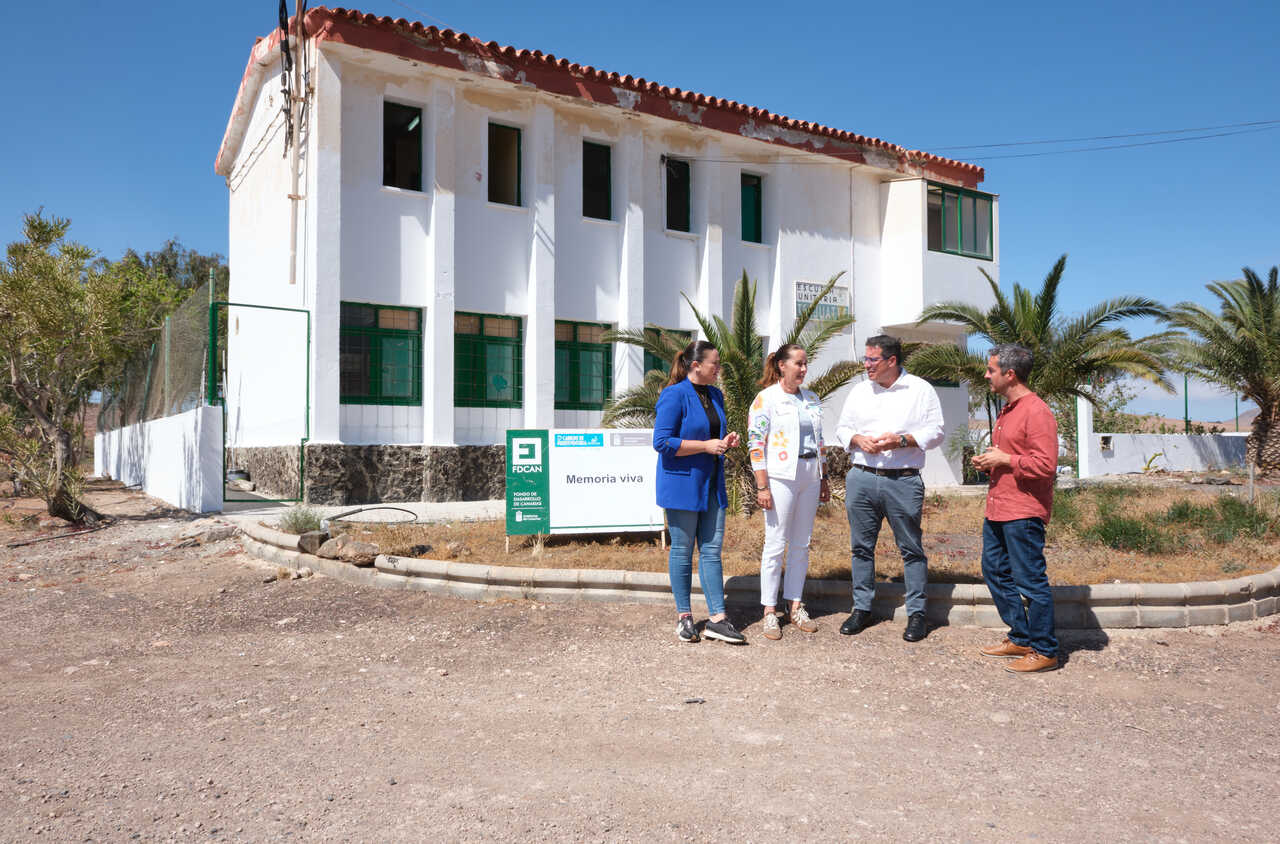
Recently, representatives from both the Cabildo and the municipality of Puerto del Rosario visited the restoration site at Tesjuate, observing the ongoing work. This collaborative effort underscores the importance of partnerships in preserving public heritage. The president of the Cabildo, Lola García, remarked on the over 472,000 euros allocated to this employment program, highlighting its dual focus on historical conservation and local employment.
Job Creation and Local Employment
The initiative employs 17 workers, all drawn from the local community, effectively channeling resources back into the island’s economy. According to Nuria Cabrera, the councilor for Employment Promotion, the combination of public space rehabilitation and local job creation is a key feature of the “Memoria Viva 2025” plan. The collaboration extends to various local municipalities and Fuerteventura’s museums, enhancing the project’s impact.
Progress at the Tesjuate School
Specific developments at the former school include completed exterior painting and wall conditioning. Restoration efforts are ongoing, with tasks such as facade restoration, structural reinforcement, gardening, and site cleaning currently underway. Inside the building, workers are busy restoring doors and refreshing various interior spaces, ensuring the school maintains its historical integrity while serving a functional purpose.
Broader Impact Across the Island
Beyond Tesjuate, the “Memoria Viva 2025” plan extends its reach to other significant sites, including the Campo de Lucha in Casillas del Ángel. This venue will also benefit from a range of improvements, including cleaning, painting, and rehabilitation work aimed at enhancing its public accessibility and usability. These efforts are critical not just for preserving the sites but also for invigorating community engagement.
Economic Support from Higher Authorities
The “Memoria Viva 2025” program is co-financed by both the Cabildo of Fuerteventura and the Government of the Canary Islands through the Canary Islands Development Fund (FDCAN). This financial backing is crucial, enabling the initiative to achieve its ambitious goals while supporting the island’s economic revitalization.
Conclusion: A Model for Future Initiatives
The “Memoria Viva 2025” initiative stands as a shining example of how cultural heritage can be preserved while simultaneously stimulating local economies. With its commitment to local employment, institutional collaboration, and the preservation of Fuerteventura’s rich history, this program not only safeguards the past but also builds a promising future for the island’s residents.