Exploring the Thriving Ecotourism Market in Spain
Introduction to Spain’s Ecotourism Landscape
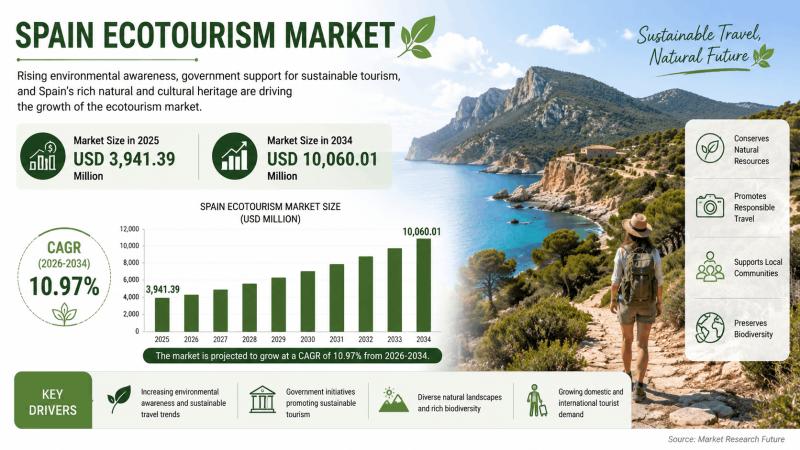
Spain, known for its rich cultural heritage and stunning landscapes, is rapidly emerging as a leading destination for ecotourism. The Spain Ecotourism Market, valued at approximately USD 3,941.39 million in 2025, is projected to soar to USD 10,060.01 million by 2034, reflecting a robust compound annual growth rate (CAGR) of 10.97% during the period from 2026 to 2034. This growth is fueled by a rising awareness of environmental issues, a demand for sustainable travel experiences, and government initiatives aimed at promoting eco-friendly tourism.
Key Market Drivers
Rising Environmental Awareness
One of the primary drivers of the ecotourism market in Spain is the increasing environmental consciousness among travelers. As concerns about climate change and biodiversity loss grow, more tourists are seeking eco-friendly options that align with their values. This shift in consumer behavior has led to a surge in demand for eco-certified accommodations, wildlife watching programs, and low-impact travel experiences.
Government Support for Sustainable Tourism
The Spanish government has significantly ramped up its investments in sustainable tourism initiatives. Funding for conservation projects, cleaner transportation options, and renewable energy programs has not only enhanced the tourist experience but also contributed to environmental protection. These investments are particularly beneficial for rural and remote areas, integrating them into the ecotourism economy while preserving their natural resources.
Growth of Rural and Community-Based Tourism
Tourists are increasingly drawn to the authenticity of rural experiences. Many are opting for village tourism, cultural immersion programs, and agritourism, which not only provide unique experiences but also support local economies. Community-based tourism initiatives are gaining traction, allowing travelers to engage with local cultures while ensuring that tourism benefits the communities involved.
Expansion of Eco-Friendly Accommodation Options
The rise of eco-lodges, sustainable resorts, and green hotels is another significant factor driving the market. These accommodations often utilize renewable energy, minimize waste, and source local products, appealing to environmentally conscious travelers. The availability of such options enhances the overall appeal of Spain as a destination for sustainable tourism.
Emerging Trends in Ecotourism
Engaging Travel Experiences
Today’s travelers are seeking more than just sightseeing; they desire immersive experiences that allow them to connect with local communities and wildlife. This trend has led to a rise in wildlife observation tourism, particularly in Spain’s national parks and protected areas. Activities such as birdwatching and marine conservation tours are becoming increasingly popular among both domestic and international visitors.
Technological Integration
The integration of technology into the ecotourism sector is transforming how travelers plan and experience their trips. Mobile apps, e-travel guides, and eco-tourism booking platforms are making it easier for tourists to access information and services that align with their sustainable travel goals. This technological shift is enhancing the overall travel experience and making eco-friendly options more accessible.
Wellness Tourism
The wellness tourism sector is also experiencing growth, with an increasing demand for nature retreats and mindfulness experiences. Eco-resorts that offer wellness programs in natural settings are becoming popular, catering to travelers looking to rejuvenate both physically and mentally.
Market Segmentation Analysis
By Traveler Type
The market is predominantly driven by group travelers, who accounted for 81.12% of the market share in 2025. Organized eco-tours provide professional guidance and educational experiences, making them particularly attractive to this demographic.
By Age Group
Generation Y, or Millennials, leads the market with a 59.52% share in 2025. This age group is characterized by a strong interest in sustainable travel and authentic experiences, making them a key target for ecotourism initiatives.
By Sales Channel
Travel agents play a crucial role in the ecotourism market, accounting for 77.34% of sales. Their expertise in organizing eco-friendly travel packages and ensuring compliance with sustainability standards makes them invaluable to travelers seeking responsible tourism options.
By Region
Spain’s diverse regions offer unique ecotourism opportunities. Northern Spain is known for its lush landscapes and protected parks, while Eastern Spain boasts coastal ecosystems and marine conservation areas. Southern Spain is recognized for its biosphere reserves, and Central Spain is gaining popularity through agritourism and wellness retreats.
Regional Insights
Northern Spain
This region is a haven for ecotourism, featuring extensive hiking networks and opportunities for wildlife observation. The lush landscapes and protected natural parks make it an attractive destination for eco-conscious travelers.
Eastern Spain
With its coastal ecosystems and cycling routes, Eastern Spain offers a variety of nature-based recreational activities. Sustainable beach tourism initiatives are drawing eco-conscious visitors to this region.
Southern Spain
Southern Spain is celebrated for its unique desert landscapes and biosphere reserves. The region’s favorable climate supports year-round tourism, making it a popular choice for ecotourists.
Central Spain
Central Spain is becoming increasingly popular for agritourism and wellness retreats. The focus on environmentally friendly rural experiences is attracting travelers looking for sustainable options.
Latest Industry Developments
A notable development in the Spanish ecotourism sector occurred in 2025 with the introduction of La Reserva Ecoturista by Green Spain. This sustainable tourism platform promotes slow travel and responsible tourism across northern Spain, featuring over 118 ecotourism experiences and participation from more than 100 nature tourism companies. This initiative underscores Spain’s commitment to sustainable tourism development and environmental conservation.
Competitive Landscape
The Spain Ecotourism Market is characterized by a diverse array of participants, including specialized tour operators, eco-certified accommodations, and local tourism boards. Companies are increasingly focusing on sustainable tourism packages, community engagement, and environmental certification programs to enhance their market presence. Strategic collaborations between public authorities, conservation groups, and private tourism operators are essential for strengthening Spain’s reputation as a premier ecotourism destination.
About IMARC Group
IMARC Group is a leading market research and consulting company that provides management strategy and market research worldwide. The company assists organizations in identifying growth opportunities, evaluating market potential, conducting competitive assessments, and developing strategic business plans. Their comprehensive service portfolio includes market research studies, feasibility studies, and business consulting services across diverse industries.
For more insights into the Spain Ecotourism Market, visit IMARC Group.