The Roman Settlement at Isla de Lobos: A Dive into Antiquity
Isla de Lobos, a serene island located off the coast of Fuerteventura, has recently become the center of significant archaeological interest. Discovered in 2012, the site reveals a thriving Roman settlement primarily engaged in the extraction of Stramonita haemastoma, a mollusk that was highly prized during antiquity for its ability to produce a vivid purple dye. This dye was sought after for fabric dyeing, particularly to enhance the sumptuousness of garments and signify prestige.
A Workshop of Purple
The archaeological findings indicate the existence of a “taller de púrpura,” or purple workshop, right at the site of the original operations. Here, the remnants of tools, processing materials, and the critical remains of the mollusks have been unearthed. This site served as a processing hub where the vibrant color derived from these marine snails was harvested to be traded across the Mediterranean. The end products became synonymous with luxury; purple-dyed tunics were a mark of power and social status, making them a highly coveted commodity in the ancient world.
Insights into Roman Trade and Culture
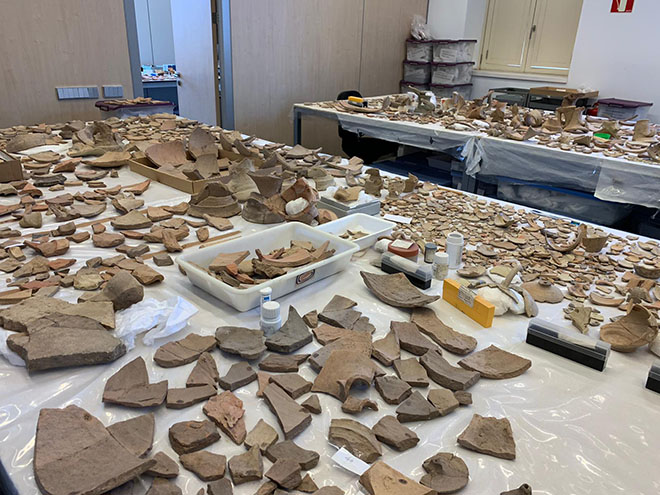
The range of artifacts discovered at Isla de Lobos includes various types of amphorae and ceramic fragments that bear a striking resemblance to materials from the lower Guadalquivir region. These finds suggest a robust trade network and cultural exchange during the early Roman Empire, particularly from the 1st century BCE to the 1st century CE. Such evidence emphasizes how the island was not just a remote outpost, but an integral part of the broader economic activities that defined the Roman Mediterranean.
Collaboration and Future Excavations
Recently, a meeting took place involving notable figures in heritage preservation, including Andrés Briansó, the Historical Heritage Counselor of the Cabildo of Fuerteventura. Representatives from the Archaeological Museum of Fuerteventura and the Autonomous Organization of Museums and Centers of the Cabildo of Tenerife gathered to review the archaeological work conducted at the site. Their discussions highlighted the findings that could potentially alter current historical narratives regarding the islands, sparking interest in further excavations in various locations.
Commitment to Heritage
Briansó’s determination shines through in his commitment to promoting ongoing excavation efforts at Isla de Lobos. He believes that the site is the most significant Roman archaeological find in the Canary Islands to date. Its strategic position suggests that Isla de Lobos acted as a boundary for Roman interests along the western Atlantic façade, especially concerning the provisioning and exploitation of purple dye. This insight not only showcases the historical significance of the island but also points to exciting future possibilities for research and exploration.
As work continues at Isla de Lobos, the archaeological findings are set to enrich our understanding of Roman colonial practices, trade networks, and social hierarchies in the ancient world. Each discovery uncovers layers of history that continue to shape the legacies of today, underscoring the timeless connection between past and present.