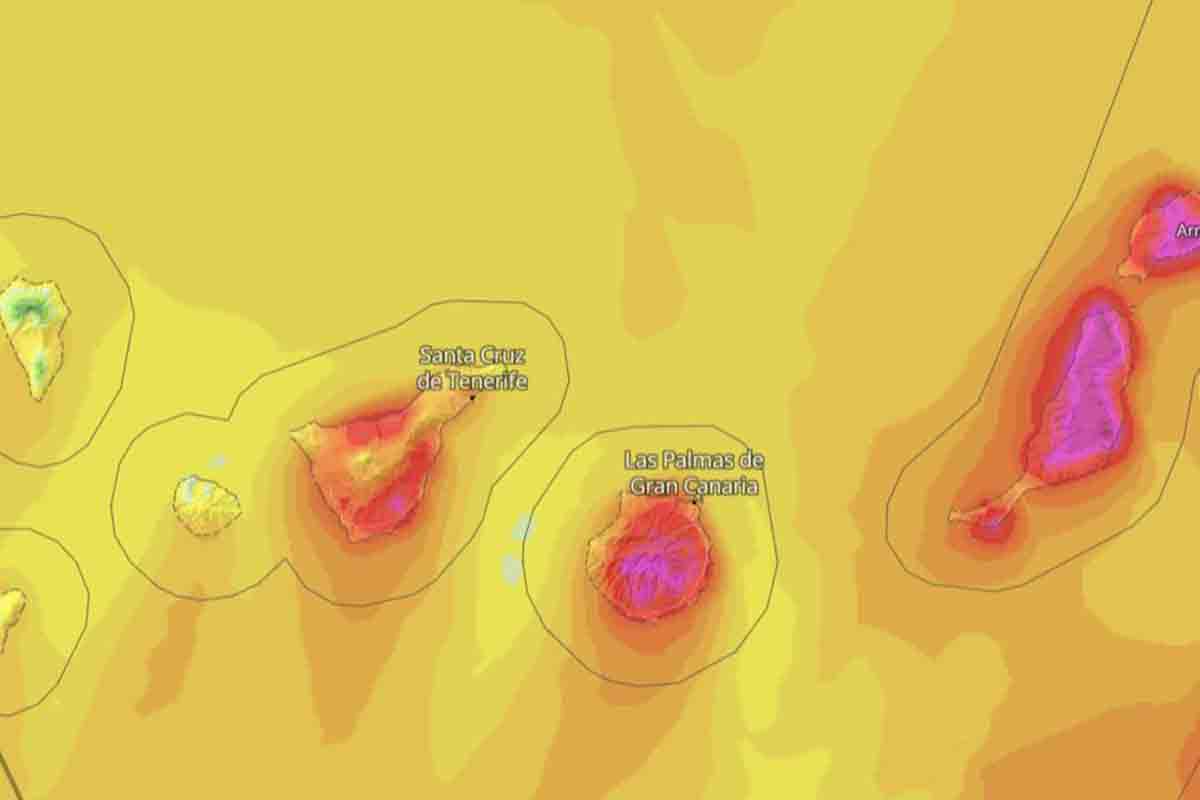
The extreme heat sweeping across Canary Islands has prompted the State Meteorological Agency (AEMET) to issue its first-ever red alert for high temperatures across all the islands. This unprecedented episode, described as “exceptional” by AEMET, set a national record this past Saturday, with temperatures soaring to 43.5 degrees Celsius in Tasarte, located in La Aldea de San Nicolás (Gran Canaria) at 6 PM. This surpassed Montoro (Córdoba), which recorded 42.3 degrees, marking a significant moment in Spain’s weather history.
As the heatwave continues, AEMET warns that Sunday will see even worse conditions, with rising temperatures expected due to an increase in calima—dust and sand in the atmosphere—affecting Lanzarote and Fuerteventura, along with the high areas of Gran Canaria and Tenerife. The agency’s data indicates that many regions within the archipelago experienced suffocating heat, with Gran Canaria’s Lomo Pedro Afonso reaching an unsettling 40.1 degrees. Fuerteventura wasn’t far behind, as Antigua recorded a high of 41.8 degrees, the second highest temperature of the day. Meanwhile, Lanzarote saw Tinajo hitting 40.9 degrees and Tías at 40.6, temperatures deemed “extremely unusual” for August.
A Rising Tide of Heat and Calima
AEMET has been vocal not just about the unbearable daytime highs but also about the unusually high nighttime temperatures. Saturday morning was a test of endurance for countless Canarians. In Suerte Alta (Agaete), thermometers registered 34.5 degrees at 1 AM, while Agüimes saw 33 degrees, Lomo Pedro Afonso had 31.1 degrees, and Tejeda recorded 30 degrees. Such tropical and equatorial nights can pose significant health risks, as they hinder the body’s ability to recover during sleep.
This extreme weather has notably emptied the mountain and midland areas of Gran Canaria. Following AEMET’s recommendations, the Cabildo has closed all recreational areas, including Tamadaba, along with shelters, roadside rest areas, camping sites, and access to forests and mountainous terrains, banning any grazing activity in these regions. In Agüimes, where previous days had already brought notable heat, the town hall decided to shut the recreational area of El Milano for the entire weekend. Similarly, in the San Lorenzo district of Las Palmas de Gran Canaria, a livestock fair planned for Sunday was canceled, while other social events were also called off, such as the market dance in San Mateo.
AEMET emphasizes that these preventative measures are necessary due to the extreme risk of wildfires under these weather conditions. However, some cultural traditions remain intact. The popular Water Festival in Lomo Magullo in Telde is still set to go ahead on Sunday at noon, albeit with double the amount of water flowing through the ditches to mitigate the effects of the heat.
The community’s response has largely aligned with AEMET’s recommendations: avoiding prolonged sun exposure, staying well-hydrated, and refraining from intense physical activity during peak heat hours. Health centers have ramped up their services in anticipation of potential heatstrokes, while Civil Protection personnel have activated their emergency protocols.
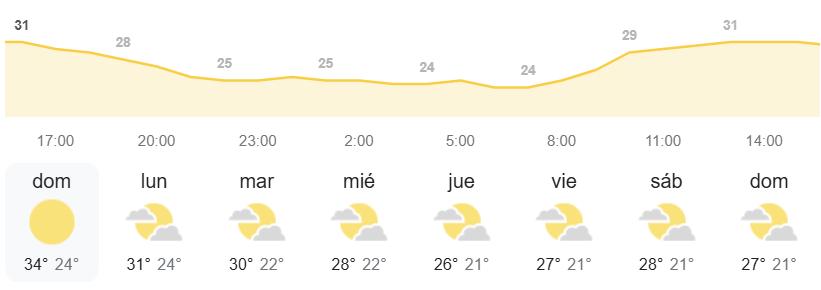
AEMET forecasts that this intense heat episode will last several more days, with temperatures potentially exceeding 44 degrees in interior areas of Gran Canaria, Fuerteventura, and Lanzarote. Moreover, the increasing calima—already visible on the horizon—will further deteriorate air quality, which poses additional risks for individuals with respiratory issues.
The Canary Islands are facing an unprecedented heat phenomenon, with AEMET closely monitoring the situation and providing regular updates as the weather conditions evolve. All signs suggest the archipelago will experience critical days ahead, where prevention and caution will serve as crucial allies against a meteorological event that marks a significant turning point in the islands’ recent climatic history.


