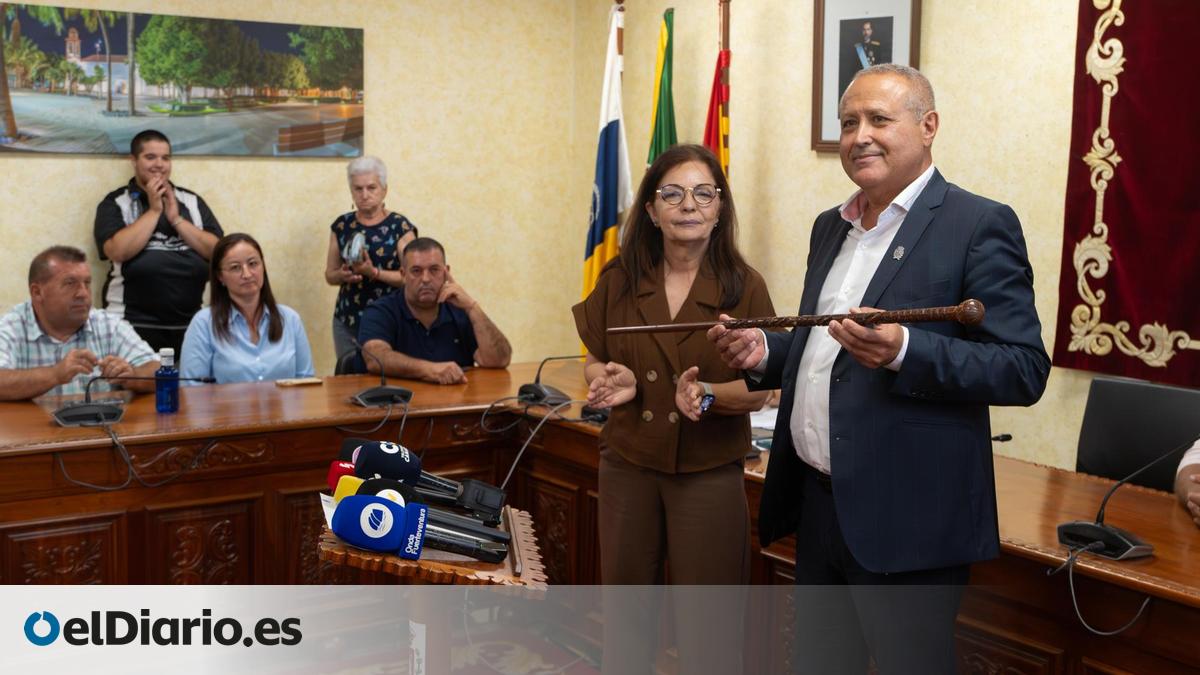
Juan Cabrera Becomes the New Mayor of Antigua
In a significant political shift, Juan Cabrera, a councilor from the Asambleas Municipales de Fuerteventura (AMF), has been appointed as the new mayor of Antigua. This change follows a successful motion of no confidence against the previous mayor, Matías Peña, who held the position since 2019. The decision to unseat Peña reflects the deep-seated issues and criticisms surrounding his administration.
The Vote of No Confidence
The motion passed with nine votes in favor, which included two from AMF, three from the Partido Popular (PP), three from Coalición Canaria (CC), and one from the independent councilor representing Contigo. In contrast, Peña’s supporters, consisting of seven members from Alternativa por Antigua and a representative from the Partido Socialista Obrero Español (PSOE), opposed the motion. Cabrera officially took over the mayor’s office shortly after 1:20 PM on the day of the vote.
Critiques of Matías Peña’s Leadership
The motion’s proponents cited several reasons for their actions. They accused Peña of being unable to manage the escalating insecurity in the municipality and criticized his handling of personnel policies within the local government. They also highlighted a concerning trend of stalled investments that they attributed to Peña’s leadership style, which was characterized as lacking in inclusivity and proactivity.
Cabrera’s Vision and Commitments
During his first address as mayor, Juan Cabrera urged collaboration among local government and stakeholders, emphasizing the importance of working hand-in-hand with public administrations. He laid out his plans to prioritize projects such as the resurfacing of roads and improvements to children’s parks, pledging to do so with transparency and integrity. Cabrera underscored his commitment to putting residents of Antigua first, proclaiming that genuine democracy would henceforth be restored to the municipality.
Reactions from Matías Peña
Following the vote, Matías Peña chose not to speak to the press, leaving the council chamber promptly instead. During his time at the podium, he took a different tack, expressing gratitude towards the workers in the local government, rather than entering into the fray of political controversy.
Background of the Political Landscape
Peña’s party, Alternativa por Antigua, was the most voted in the last municipal elections with 33.6% of the votes, which allowed them to secure seven council seats. However, to establish a governing coalition, Peña was compelled to seek partnerships, ultimately managing to assemble a four-party government with AMF, Contigo, and CC. Unfortunately, tensions emerged within this coalition, leading to a departure of the CC councilors from the governing structure earlier this year.
Concerns Voiced by Opposition
David Alberto, the spokesperson for CC, stood firm on his allegations that Peña’s leadership was marked by discrepancies and failures, resulting in a “presidential” style of governance that lacked proper dialogue with other councilors. He also discussed the rising insecurity within the municipality and emphasized the challenges facing the local police force, which is expected to lose ten officers the following year due to retirements and other absences.
Furthermore, Alberto lamented the halted investment initiatives and the deteriorating state of municipal sports infrastructures, criticizing Peña’s refusal to engage with other administrations to secure funding and support.
The New Era of Governance
In light of the change in leadership, PP spokesperson Joana Verde remarked that the new administration carried the weighty responsibility of rekindling community spirit and advancing essential projects for Antigua. She expressed optimism about embarking on a new chapter filled with dialogue, teamwork, and commitment to the residents.
Giuseppe Signorino, a councilor from Contigo, echoed similar sentiments, affirming that a fresh approach to governance is on the horizon for the people of Antigua.
This political transition marks a pivotal moment for the municipality as it navigates towards new frameworks of leadership and community-oriented governance.


