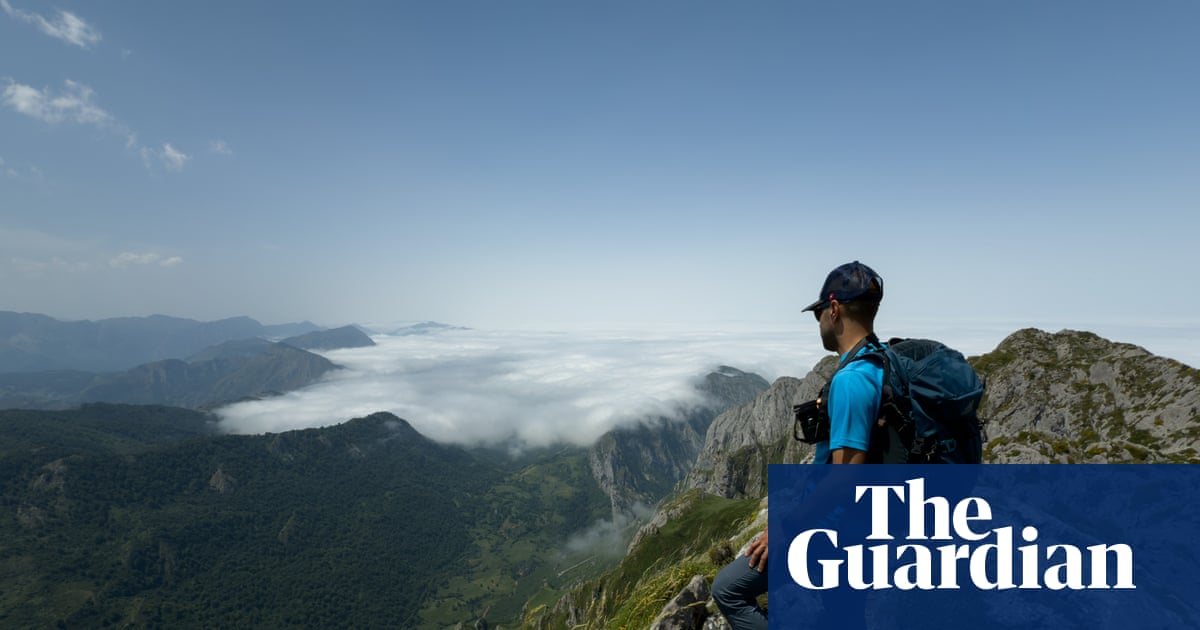
Exploring the Picos de Europa: A Journey Through Nature’s Majesty
A Glacial Wonderland
Halfway across the first glacial depression, I step off the footpath and onto a snow patch, startling a spider that scurries across the frozen crystals. Just a few yards ahead, the mountainside bursts into a riot of color, with tiny Alpine flowers buzzing with bees and crickets, all framed by jagged peaks. A pair of chamois observe me from a crag before bounding up an almost vertical face. As I pause to take in the scene, the cool mountain air envelops me, prompting me to don a jacket. Here I am, in Spain, amidst a European heatwave.
The Picos de Europa: A Mountainous Marvel
As I tear myself away from the captivating wildlife, I notice my hiking group becoming distant dots on a winding path that ascends a steep rock wall. This is the Picos de Europa mountain range in northern Spain, a cluster of peaks soaring over 2,500 meters, renowned for their steepness and breathtaking views. I pick up my pace, eager to catch up with my companions, who are scrambling over a ridge to reveal an unexpected sight: a gun turret from a World War II aircraft carrier, now transformed into a mountain refuge hut. The Cabin Verónica, salvaged from the USS Pulau in 1961, has been repurposed and dragged up here by mule.
A Unique Mountain Refuge
The hut’s custodian, Jorge, has made it his summer home for the past eight years, adding solar power and water tanks to the gleaming aluminum dome. “I love it,” he beams while brewing coffee in the tiny kitchen. “Why would I need cities and crowds when I have this?” The panoramic views are nothing short of spectacular. Below, a bearded vulture soars gracefully, one of the few successfully reintroduced to the area in 2005. Although the hut can accommodate only six, it remains a popular spot for climbers and solo walkers seeking refuge in the mountains.
Contradictions of Nature and History
This trip is a tapestry of contradictions and improbabilities. On the ferry from Portsmouth to Bilbao, I found myself alone on deck at 5 a.m., enveloped in a cold fog so thick that the waves below were invisible. We seemed suspended in the cosmos until, suddenly, three dolphins burst from the swell, reminding me of my earthly surroundings. This ferry route crosses an oceanic canyon nearly 4,000 meters deep, making cetacean sightings a common delight. Onboard expert André shares tales of orcas and rare whale species, including the elusive Cuvier’s beaked whale.
A Rich Historical Tapestry
The Picos mountains, west of Bilbao, have a storied history, serving as a bastion of resistance against Roman rule and later the Moors. The region is home to unique flora and fauna, including rare butterflies and a distinct subspecies of chamois. Beneath the soaring peaks lies another surprise: an intricate network of rivers and vast caverns that plunge nearly a mile deep.
Hiking Through the Heart of the Picos
Our hike begins in the north, leading us to the mountain hut Vegarredonda at 1,410 meters. Scattered throughout the Picos, these huts are mostly off-grid and stocked by mule, offering hearty meals and a chance for good conversation. I find myself grateful for the generosity of Arten, a fellow hiker, who shares his silica gel earplugs, saving me from a night of snoring companions. I wake the next morning to find everyone already at breakfast, eager to continue our adventure.
A Culinary Encounter
Food plays a significant role in the Picos experience. That morning, we trek to a few stone cabins by Lake Ercina, where a handwritten sign advertises homemade cheese. Our guides, Bruno and Cristina, are visibly excited. Inside a quaint stone-walled workshop, an elderly woman named Maria sits on a rustic milking stool, dressed in a nylon housecoat, waiting for customers.
“My grandfather built this cabin in 1944 when I was three years old,” she reminisces. “Everyone would come up here for summer, bringing their animals. Now there’s only me.” The walls are adorned with her ancestors’ drinking horns and wooden platters, while shelves boast wheels of cheese made from a blend of sheep, cow, and goat milk. “I feared this tradition might die,” Maria confides, “but my son is interested, so there is hope it will continue.”
Ascending to New Heights
After leaving Maria and savoring the delicious cheese, we venture up a side valley, steadily ascending past boulders that cradle tiny gardens of saxifrage and stonecrop. A wallcreeper flits away, one of the rarer birds that inhabit this region. The chamois, too, remain close by, though their habitat is shrinking as Spain’s heatwaves push higher into the mountains. I’m relieved to have traveled by ferry, as my carbon footprint was significantly lower than if I had flown.
A Night in the Mountains
Our night is spent at the Refugio Vega de Ario, known for its exceptional cooking and as a base for the Oxford University caving team. After over 60 years of exploration, they are on the brink of connecting two extensive cave networks. I promise to return and witness the marvel once the stairs are installed.
The Rio Cares and Beyond
The following day, we cross one of the few places where cars can be seen in the Picos, the village of Poncebos, and embark on a scenic gorge walk alongside the Rio Cares. As we ascend through flower-strewn meadows and abandoned farmhouses, the clouds envelop us. Just as the mist begins to thicken, it parts dramatically to reveal the awe-inspiring Picu Urriellu, a towering 2,529-meter pinnacle of rock, beneath which lies one of Europe’s most remarkable mountain huts, the Vega de Urriellu.
A Social Hub in the Mountains
This hut, accommodating 96 guests, buzzes with activity, as climbers gather to discuss their plans. The atmosphere is friendly and sociable, with small groups huddled together, sharing stories and strategies. The south face of Urriellu is a popular choice for guided groups, while the west face presents a daunting 750-meter challenge.
A Magical Evening
As the sun sets, I find myself drawn back to the glacial depressions, where the world is painted in hues of orange. I stroll along a mountain track, seeking more breathtaking views, but the landscape below is shrouded in clouds. Perched on a boulder, I become aware of a chamois watching me from a ledge above, its delicate horns silhouetted against the twilight. I watch as the last rays of sunlight fade from Urriellu’s summit, but when I glance back, the chamois has vanished into the shadows.
This journey through the Picos de Europa is not just a hike; it’s an exploration of nature, history, and the enduring spirit of a region that continues to captivate all who venture into its embrace.


