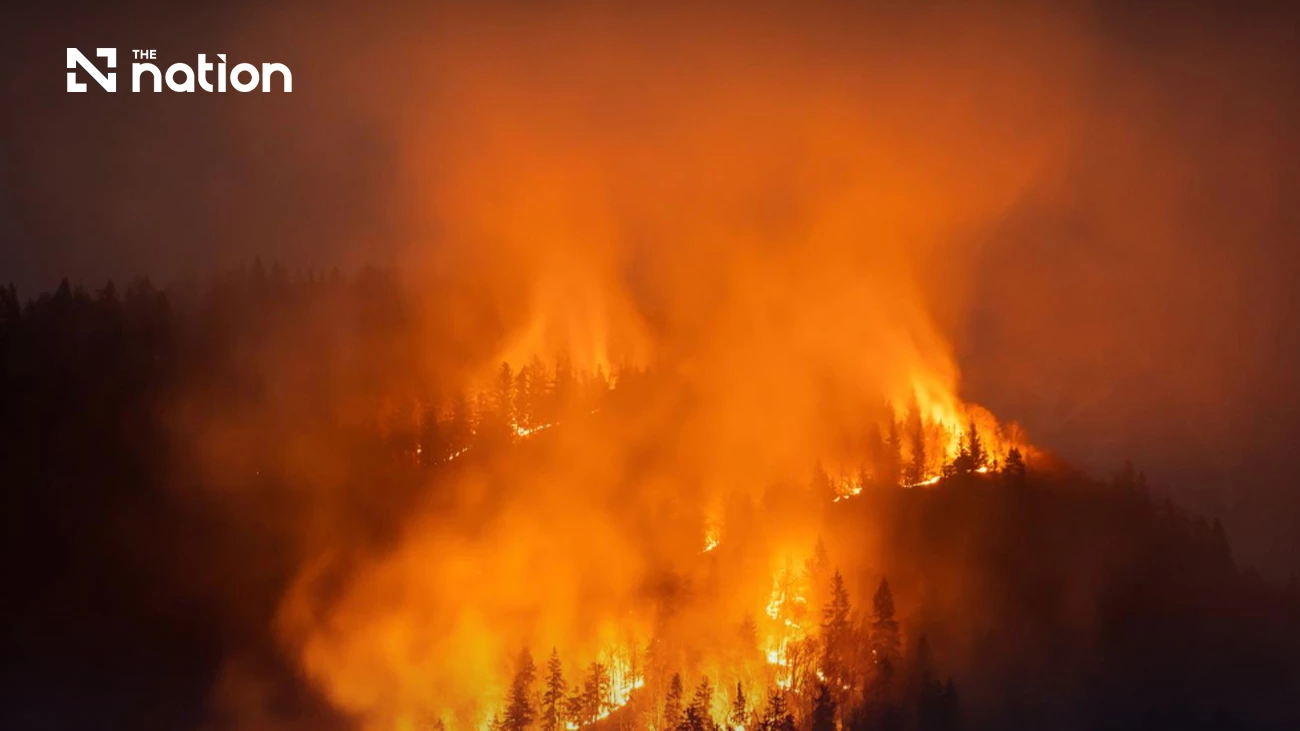
In a dramatic turn of events, wildfires have wreaked havoc across France and Spain, forcing over 300,000 people to evacuate their homes. French Prime Minister Sébastien Lecornu described the scale of the fires as unprecedented, highlighting the urgency and severity of the situation. Interior Minister Laurent Nuñez echoed these sentiments, warning that firefighters are facing a long and arduous battle against the flames.
To combat the crisis, France has mobilized approximately 1,500 military personnel to assist with evacuations, medical support, and logistical operations. The armed forces have deployed essential resources, including bulldozers, helicopters, drones, and an A400M military transport aircraft, which has been adapted to drop fire retardant. This multi-faceted approach underscores the seriousness of the emergency and the need for a coordinated response.
Spain Battles Merged Fires and New Eastern Blaze
Meanwhile, Spain has declared its first national emergency specifically in response to wildfires, placing the Interior Ministry in charge of coordinating resources from regional authorities, security agencies, and the Military Emergency Unit. The situation is dire, with two fires west of Madrid merging into a single large front, while another blaze rages in Ávila. Approximately 70,000 people have been evacuated from central Spain, with an additional 28,000 advised to stay indoors due to heavy smoke and flames.
A separate fire around La Vall d’Uixó in Castellón has prompted the evacuation of around 15,000 residents from 14 municipalities. Firefighters have described this blaze as beyond their immediate capacity to extinguish, necessitating the deployment of hundreds of emergency personnel. Prime Minister Pedro Sánchez characterized the situation around Madrid as “complex,” noting that while lower temperatures have provided some relief, the unpredictable direction and strength of the wind remain a significant concern.
In light of the hazardous conditions, Spain’s Health Ministry has advised residents in Madrid to avoid outdoor exercise, as smoke has pushed fine-particle pollution levels above recommended thresholds. This precautionary measure highlights the broader health implications of the wildfires, affecting not just those directly in harm’s way but also the general populace.
European Aircraft Reinforce National Fire Crews
In a show of solidarity, France activated the European Union Civil Protection Mechanism, receiving support in the form of two Canadair aircraft from Croatia, two Air Tractor planes from Portugal, and heavy helicopters from Czechia and Slovakia. Spain is also expecting additional water-dropping aircraft from Italy and Greece, joining the efforts of planes already sent by the Netherlands and Portugal. This coordinated response marks a significant step in addressing the escalating crisis.
The European Commission has entered the 2026 fire season with its largest coordinated response capacity to date, arranging for 777 firefighters from 14 countries to be positioned in high-risk areas, supported by 22 firefighting aircraft and five helicopters available for deployment. This collaborative effort underscores the importance of international cooperation in tackling such widespread disasters.
Fires Stretch Emergency Services Across Europe
The crisis is not confined to France and Spain; hundreds of fires have been reported in Sicily, prompting evacuations and a large regional emergency response. In Scotland, a wildfire in Cairngorms National Park has continued to burn for an 11th day, leading to the evacuation of homes near Nethy Bridge. Scotland’s First Minister has even requested military assistance from the UK government to help combat the flames.
Data from the European Forest Fire Information System reveals that France has already surpassed its previous annual record for land burned, with more than 130,000 hectares affected in Spain this year alone. The combination of repeated heatwaves, dry vegetation, and strong, shifting winds has complicated efforts to contain the fires. Scientists warn that climate change is exacerbating the severity of heat and drought conditions, creating an environment ripe for wildfires to spread rapidly.
The immediate focus remains on preventing the French fire from advancing toward Bordeaux and stopping the Spanish fire fronts from reaching additional communities, as changing wind conditions continue to pose challenges. The situation remains fluid, with emergency services stretched thin and the threat of wildfires looming large over Europe.