Rethinking Al-Andalus: The Discovery at Cerro de la Virgen de Calasparra
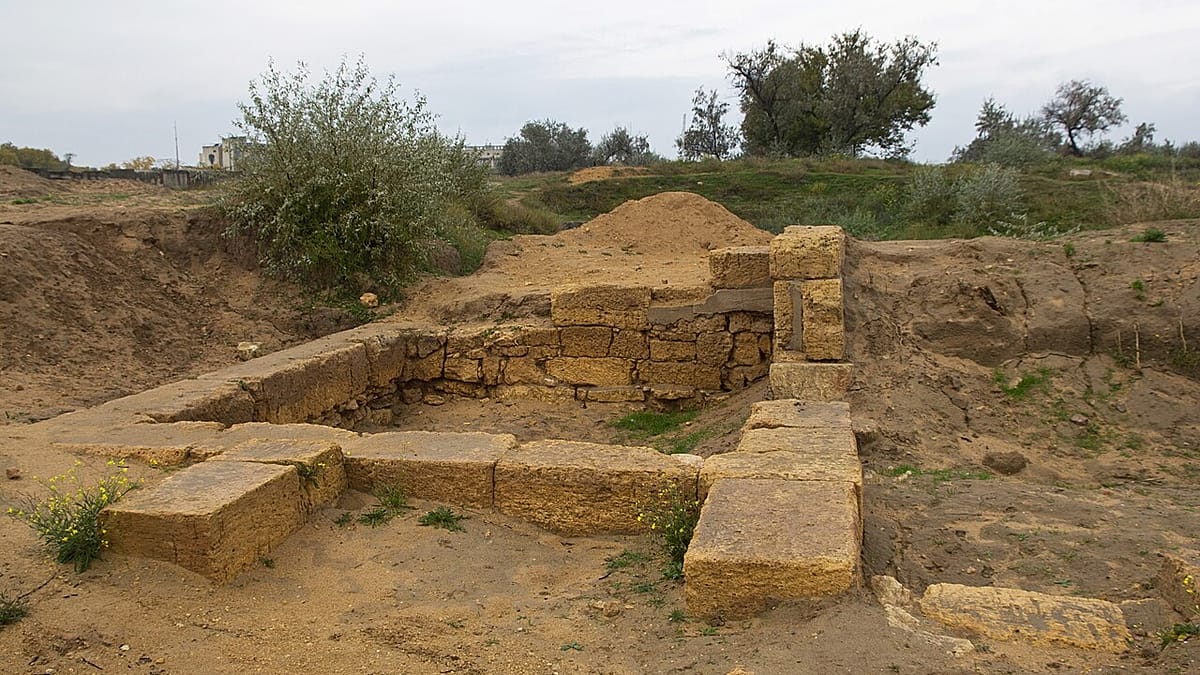
In the northwest of Murcia, a hill known as Cerro de la Virgen de Calasparra is challenging long-held beliefs about the early centuries of Al-Andalus. Recent excavations have uncovered an early Christian church that not only survived the Muslim conquest of 713 but continued to function for nearly two more centuries. This discovery is prompting historians to reconsider the narrative surrounding the transition from Visigothic rule to Islamic governance in the Iberian Peninsula.
The Church’s Historical Significance
A study published in the scientific journal Salduie by researchers David Martínez and Rubén Fernández reveals that the church was founded in the first half of the 5th century. If confirmed, this would provide compelling evidence of the continuity of Christian worship during the initial years of Moorish occupation. The church’s architectural design—a single-nave structure with a tripartite chancel—aligns with characteristics of late antique churches, drawing parallels to Visigothic examples like Santa Cristina de Lena in Asturias.
Architectural Insights
The architectural features of the church are noteworthy. The layout, including sacristies and apses, shows similarities to parochial and episcopal churches in Syria, indicating a shared architectural language across the Mediterranean during late antiquity. This connection highlights the cultural exchanges that were occurring even before the Muslim conquest, suggesting that the church was part of a broader network of early Christian architecture.
Radiocarbon Dating and Prolonged Occupation
Radiocarbon dating places the construction of the church between 410 and 440 AD. This timeline is supported by ceramic and stratigraphic analyses, which indicate a prolonged occupation of the site. Previous excavations had already drawn attention to the area, particularly after the discovery of an early Christian bronze lamp shaped like a eucharistic dove, a significant find in the European context.
Continuity Amid Conquest
Perhaps the most striking aspect of this research is the church’s survival after the Muslim conquest. Traditional historical narratives often depict the arrival of Moorish troops as a sharp break from Visigothic traditions. However, the findings at Calasparra suggest a more nuanced reality. The researchers found no evidence that the church was converted into a mosque or that it immediately lost its religious function. Instead, they argue that the presence of various materials, including cooking pottery, indicates continued use for community practices that blended worship with daily life.
The Role of Taxation and Economic Integration
The study also highlights the economic dimensions of the site. Among the artifacts recovered were scales, weights, and other objects related to economic control and tax collection. One weight even bears an Arabic inscription translating to “justice belongs to God.” This suggests that Cerro de la Virgen was not merely a religious site but also a center for territorial and economic organization. The Christian community that utilized the church was actively engaged in the fiscal mechanisms of the new Andalusi power.
A Complex Transition
The findings at Calasparra contribute to a broader understanding of how the islamization of the Iberian Peninsula unfolded. Rather than a sudden replacement of populations or institutions, the transition appears to have been marked by decades of adaptation and coexistence. The Christian population found itself navigating two converging dynamics: the growing capacity of the Andalusi state to reorganize territory and extract taxes, and the gradual process of social and legal accommodation that came with islamization.
The Gradual Disappearance of Christian Communities
The study posits that the decline of Christian communities did not result from violent expulsion or destruction by the Moors but rather from a slow process of integration into the new Andalusi society. The ecclesiastical hierarchy struggled to maintain the favorable agreements established during the conquest, while the increasing centralization of fiscal structures and the urban allure of Córdoba eroded the foundations of churches and Christian elites.
A New Perspective on Iberian History
More than 13 centuries later, the ruins of Cerro de la Virgen offer a fresh perspective on a pivotal period in Iberian history. They suggest that the transition from the Visigothic world to Al-Andalus was, in many respects, a gradual and negotiated process, challenging the simplistic narratives that have dominated historical discourse for decades. The findings at Calasparra invite us to rethink the complexities of cultural and religious continuity in a time of significant change.


