Spain Accelerates Repatriations
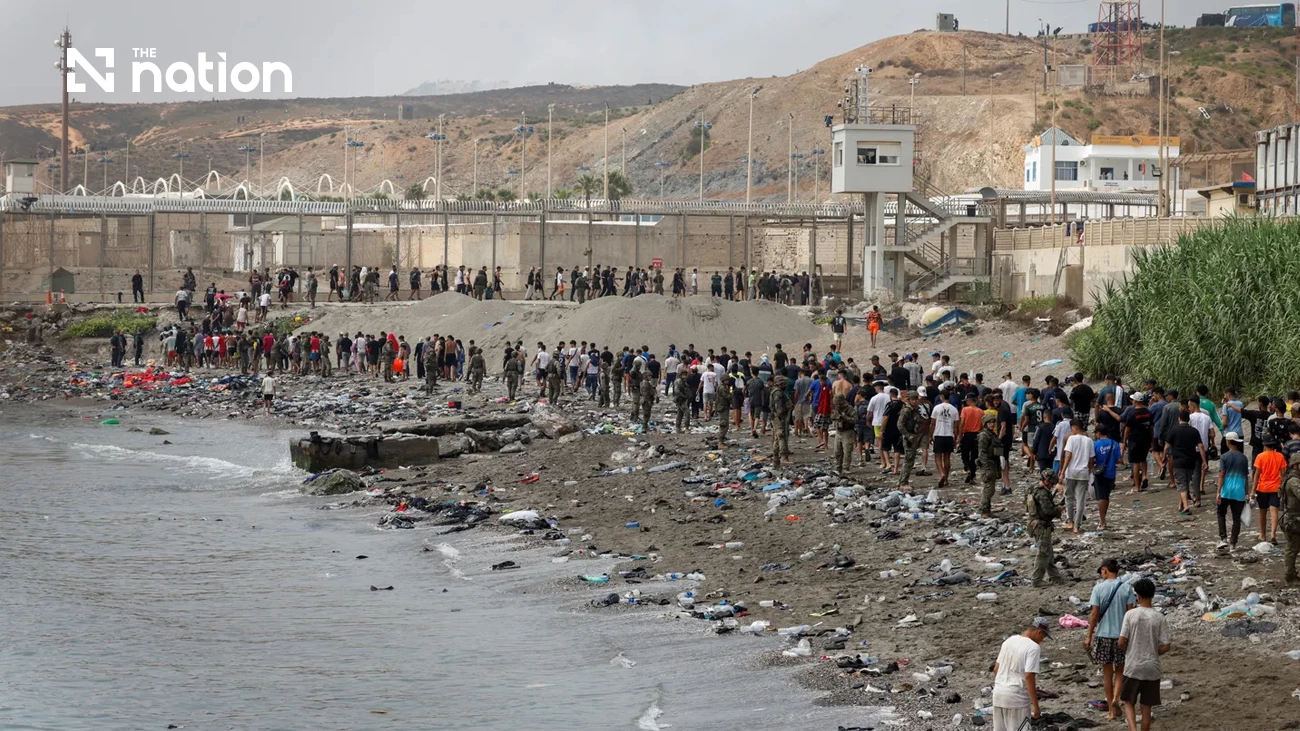
Prime Minister Pedro Sánchez’s recent visit to Ceuta has sparked significant attention and controversy. As he arrived, he was met with a chorus of protesters hurling insults, reflecting the tension surrounding Spain’s migration policies. Sánchez characterized the recent surge of migrants crossing into Ceuta as a violation of Spanish sovereignty and announced an expedited effort to repatriate individuals who entered the territory without authorization. He emphasized that Morocco was cooperating fully with Spanish authorities in this operation.
Ceuta and Melilla, two autonomous Spanish cities located on Morocco’s northern coast, represent the only land borders between the European Union and Africa. These enclaves have long been focal points for migration attempts, with periodic surges in crossings. However, the recent influx has been described as unprecedented, raising alarms about the effectiveness of current border controls and migration policies.
Political Backlash and International Relations
The situation has ignited a political firestorm, particularly among right-wing parties across Europe. Critics have pointed fingers at Spain’s migration policies, especially an amnesty granted earlier this year to hundreds of thousands of undocumented migrants. This amnesty has been cited as a potential catalyst for the recent surge in crossings. In a notable diplomatic incident, Spain summoned Italy’s ambassador after Italian Foreign Minister Antonio Tajani suggested that the amnesty had inadvertently encouraged human trafficking.
The political ramifications extend beyond Spain’s borders. Italy has announced the suspension of Schengen border arrangements with Spain, impacting air and sea travel between the two nations. Madrid has responded by asserting that this decision violates European Union treaties, highlighting the delicate balance of cooperation and tension within the EU regarding migration issues.
Heightened Security Measures Across Europe
In response to the situation, France has also ramped up its border security, planning to increase police presence fivefold along its border with Spain. French Interior Minister Laurent Nuñez has announced additional aerial surveillance and increased patrols on trains, signaling a broader trend of tightening controls among Schengen member states. Typically, these countries do not conduct checks at internal borders, but exceptional circumstances have led to the reinstatement of temporary controls.
The international discourse surrounding the Ceuta crossings has even reached the United States. Former President Donald Trump likened the situation to an invasion during a Cabinet meeting, framing it within the context of the upcoming midterm elections. The U.S. State Department has echoed concerns about Spain’s migration policies, indicating that Washington is contemplating measures to protect American interests while supporting European allies in similar situations.
Challenges in Border Management
Amidst the political and diplomatic turmoil, questions have arisen regarding the adequacy of Spain’s border management. The Unified Association of Civil Guards (AUGC) has criticized the deployment of security personnel, claiming that insufficient officers were stationed along the fence when the crossings began. This lack of manpower left security forces overwhelmed and unable to effectively manage the influx.
Additionally, a recent ruling by the Spanish Supreme Court has been identified as a contributing factor to the surge. The court determined that individuals intercepted at sea while attempting to reach Ceuta or Melilla could not be immediately turned back at the border. Legal experts have noted that while this ruling does not prevent Spain from expelling these individuals later, it has complicated the immediate response to migration attempts.
Ongoing Migration Attempts
Despite reinforced security measures, thousands of individuals have continued to gather in the Moroccan border town of Fnideq, hoping to cross into Ceuta. Reports indicate that while major crossing routes have been effectively sealed, smaller groups are still attempting to navigate around the border fence.
Brahim, a 32-year-old man from Tangier, shared his experience of arriving with hopes of passing through a border gate, only to find it effectively closed. His story underscores the desperation and determination of many migrants seeking a better life, highlighting the human aspect of this complex issue.
As Spain grapples with the challenges of migration, the situation in Ceuta serves as a microcosm of broader European struggles with border control, international cooperation, and the humanitarian implications of migration policies.