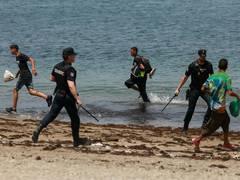
Spain’s Response to the Migrant Surge in Ceuta
On August 2, 2026, Spain’s Ministry of Foreign Affairs issued a statement clarifying the situation regarding the recent influx of migrants into Ceuta, a Spanish exclave located on the northern coast of Africa. On July 30, approximately 50,000 individuals crossed into Ceuta irregularly, prompting immediate action from Spanish authorities. Within 48 hours, more than 48,000 of these migrants were returned to Morocco, showcasing Spain’s swift response to the crisis.
Official Statements and Reassurances
Spain’s Foreign Minister, José Manuel Albares, took to social media platform X (formerly Twitter) to emphasize the importance of facts over opinions in this matter. He reassured the public that the integrity of the Schengen Area remains intact, stating, “Enough of this deliberate confusion.” Albares highlighted that it is not possible to travel from Ceuta and Melilla to mainland Spain without proper identification at police checkpoints, reinforcing the measures in place to manage the situation effectively.
European Leaders Weigh In
The migrant surge has raised concerns among various European leaders. Italian Prime Minister Giorgia Meloni expressed urgency in addressing illegal immigration, citing the images from Ceuta as a call to action for Europe. She noted that Italy, in collaboration with Denmark, has initiated a letter signed by 22 EU member states advocating for joint measures to strengthen external borders, combat human trafficking, and enhance the effectiveness of migrant returns. Meloni emphasized that safeguarding the EU’s external borders is a collective responsibility, not just that of individual nations.
Ireland’s Role in the EU Response
Amid these developments, Ireland, which currently holds the rotating presidency of the EU, announced plans to convene a meeting of the EU Justice and Home Affairs Council. Irish Justice Minister Jim O’Callaghan stated that Ireland stands in solidarity with Spain and is closely monitoring the situation. He outlined the agenda for upcoming meetings, which aim to discuss the developments in Ceuta and coordinate a unified European response.
EU Leadership’s Perspective
Ursula von der Leyen, the President of the European Commission, also addressed the situation, confirming that the majority of those who entered Ceuta illegally have been returned to Morocco. She commended the effective collaboration between Spanish and Moroccan law enforcement agencies, noting that not a single individual reached mainland Spain or other parts of the EU. This statement aims to alleviate fears regarding the potential spillover of the migrant crisis into other European nations.
Humanitarian Concerns and Tragic Outcomes
Despite the swift actions taken by authorities, the migrant surge has not been without tragedy. Reports indicate that at least 57 individuals lost their lives during the chaotic attempts to cross the border between Morocco and Ceuta. Many fatalities occurred as people drowned while attempting to navigate the overwhelmed border guards along both land and sea routes. This tragic loss of life has drawn international attention and criticism, including remarks from U.S. President Donald Trump, who linked the events in Spain to broader immigration issues in the United States.
The Broader Implications
The situation in Ceuta underscores the ongoing challenges faced by European nations in managing migration and ensuring border security. As countries grapple with the complexities of irregular immigration, the need for a coordinated and humane response becomes increasingly apparent. The developments in Ceuta serve as a reminder of the delicate balance between national security and humanitarian obligations, a challenge that will likely continue to shape discussions within the EU and beyond.