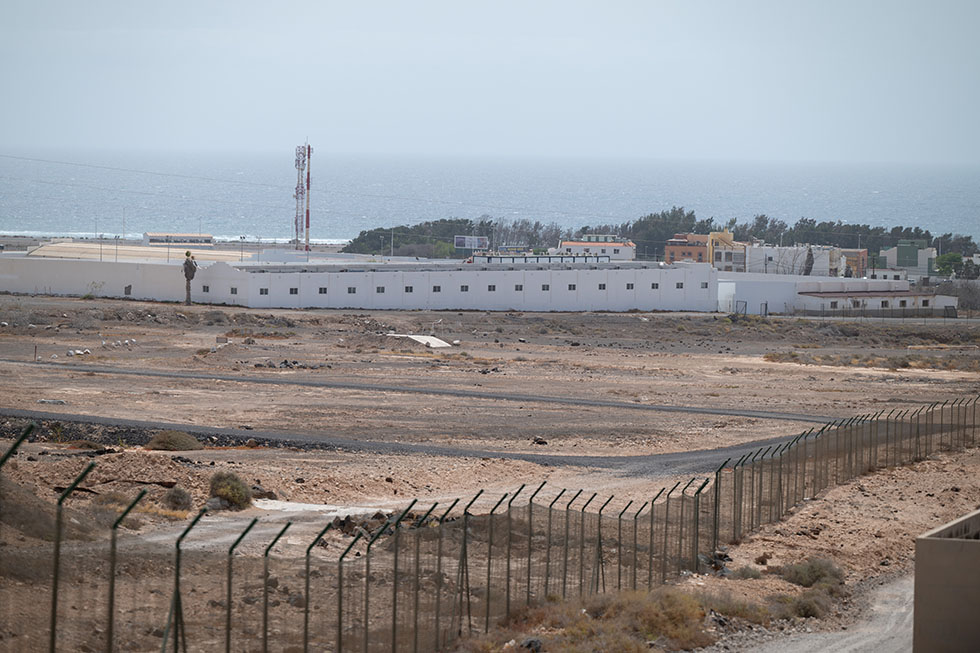
The New El Centro de Atención Temporal de Extranjeros in El Matorral
Overview and Purpose
El Centro de Atención Temporal de Extranjeros (CATE) in El Matorral is set to be fully operational by the end of the year. This important facility, with a capacity for 300 individuals, is designed to manage the influx of migrants arriving on the island. Significantly, it has the flexibility to double its capacity if necessary. The establishment of this CATE will allow the Spanish Ministry of the Interior to close down the ‘Nave del Queso,’ a temporary facility that has been serving similar functions until now.
Government Investment and Construction
On October 24, 2024, the Spanish Council of Ministers approved an emergency expenditure of €7.4 million for the construction of CATE facilities in both Fuerteventura—set to accommodate 600 individuals—and Adeje, Tenerife, which will house 350 people. The Adeje site is designed as a modular facility on property owned by the Ministry of the Interior, while the Fuerteventura center aims to offer essential services for accommodating migrants during their initial stages of processing.
Functioning of the CATE
CATE centers serve as crucial support locations for initial reception and processing of migrants. Retention times in these facilities are limited to a maximum of 72 hours, ensuring that individuals are assessed and transitioned swiftly. The goal is to alleviate pressures faced by temporary accommodation centers and improve the overall management of migrant arrivals.
Construction Challenges and Developments
The construction of the El Matorral center has faced delays due to various logistic issues, notably related to site access. Initially, plans required expropriating land from private owners to create an accessible entry point, which proved unfeasible. After negotiations, the Ministry of Defense agreed to cede land to the Ministry of the Interior, enabling an alternative access route to the center. Work has been ongoing for over a year, and while some challenges persist, the completion of the facility is anticipated by year-end.
Infrastructure and Historical Context
The new CATE repurposes existing structures from the old Centro de Internamiento de Extranjeros (CIE) at El Matorral, which was operational from 2003 until its closure in 2012. The old facility was criticized for its high maintenance costs and ultimately decommissioned in 2018 after concerns arose about its operational expenditures, which sometimes exceeded €12,500 monthly despite being closed.
Facilities and Capacity
According to María Jesús de la Cruz, the Director of State on Fuerteventura, the revamped CATE will offer about 300 fixed places converted from two previously existing warehouses. Additionally, the design includes external spaces to potentially double capacity, accommodating an additional 300 individuals if necessary. This foresight is part of a broader strategy to ensure that local infrastructures are prepared for any future influxes of migrants.
Importance of Continued Investment
The Spanish government aims to provide consistent support for facilities catering to migrant populations. The aim is to avoid reliance on temporary measures that could lead to inadequate responses during peak migration periods. This approach addresses past instances where funding was allocated but ultimately left unutilized due to abandoned projects.
Local Support and Recent Changes
In 2021, the Cabildo of Fuerteventura made the Nave del Queso available to the Ministry for migrant support during their first 72 hours on the island. The intent now is to transition from this temporary facility to the newly established CATE, ensuring operational continuity comparable to other islands’ provisions.
Integration into European Frameworks
The CATE centers play a vital role in aligning with the recently implemented European Pact on Migration and Asylum, initiated on June 12. They are integral to the new European policy framework, serving as critical points for biometric identification and rapid border screening processes. These centers will assist in registering migrants in the Eurodac system, streamlining refugee management across Europe.
Community Response
However, the establishment of the CATE in El Matorral has stirred some local discontent. Some residents have expressed opposing views toward hosting a facility for migrants. Despite this, Director de la Cruz advocates for community cooperation, emphasizing the necessity for dialogue and understanding following minor incidents involving residents and the facility’s occupants.
Conclusion
The El Matorral CATE is a progressive move towards better management of migration in line with both local needs and international standards, reflecting efforts to adapt to changing circumstances while providing humane support for individuals seeking refuge. As the center prepares to open, its implications stretch from local community dynamics to European migration policy frameworks.