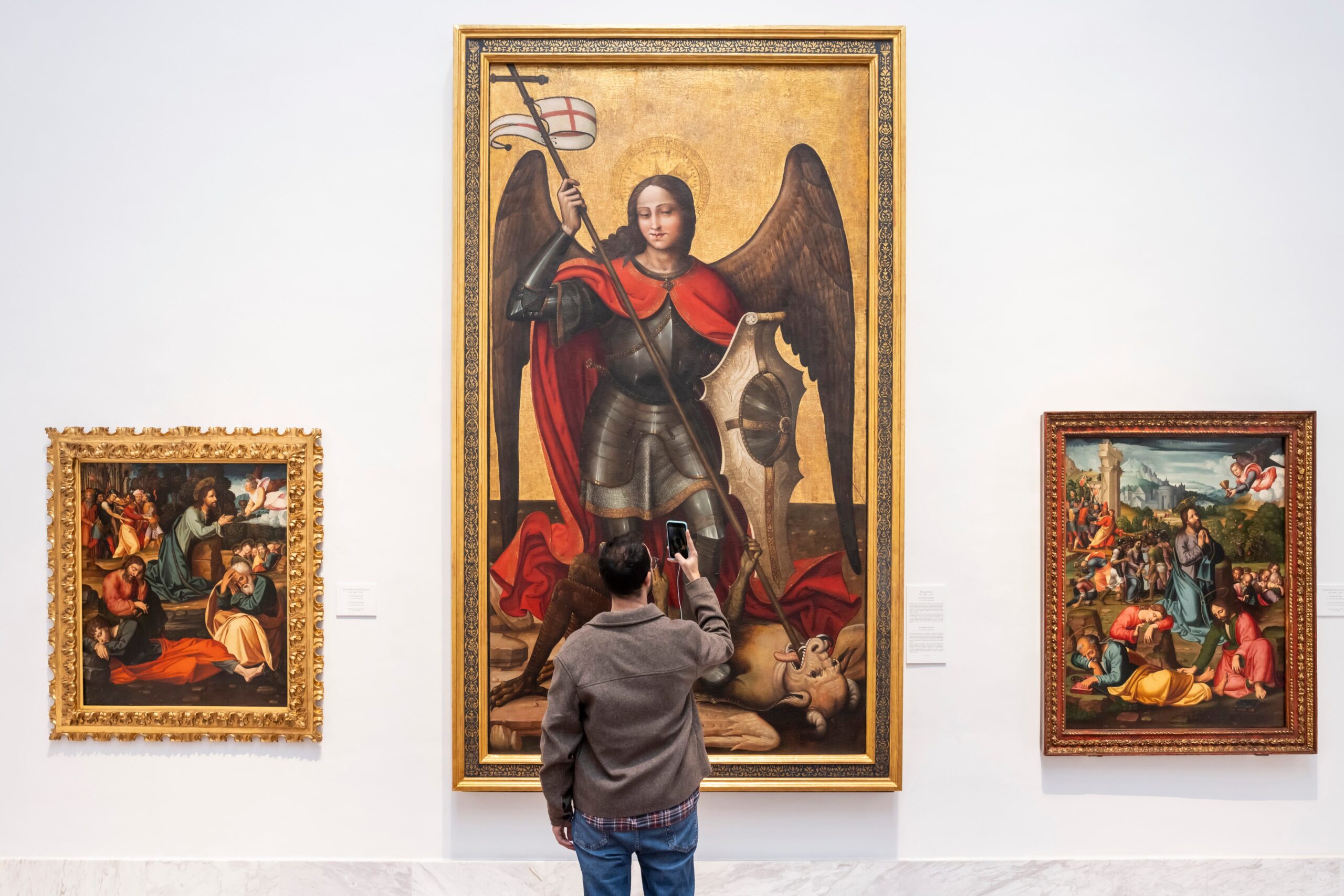
The Renewal of the Collection at the Museu de Belles Arts in Valencia
The recent renewal of the collection at the Museu de Belles Arts in Valencia has emerged as a pivotal event not only for the city but for all of Spain. This revitalization introduces new halls dedicated to the Renaissance and Counter-Reformation, enriching our understanding of the nation’s artistic heritage. More importantly, it underscores Valencia’s significant role as a cultural epicenter during the transformative 15th and 16th centuries. This initiative not only reshapes art historical perspectives but also provides a rare opportunity to view works that have long been inaccessible to the public.
The Influence of Italy and Valencia’s Role
In the 15th century, Valencia established itself as the primary port connecting Spain with Italy. This strategic position facilitated economic growth and fostered an interest in innovative ideas, largely supported by influential families such as the Borgia. Valencia was among the first cities to embrace Renaissance trends, setting the stage for a cultural revolution.
As early as 1472, artists like Paolo de San Leocadio and Francesco Pagano were commissioned to create frescoes in the cathedral by the future Pope Alexander VI. This early engagement with Renaissance art laid the groundwork for what was to come. By 1506, the duo known as Los Hernandos—Fernando Yáñez de la Almedina and Fernando Llanos—began crafting altarpiece paintings for the cathedral, drawing inspiration from their experiences in Leonardo da Vinci’s Florentine workshop.
A decade later, four masters who had trained in Italy—Bartolomé Ordóñez, Diego de Siloé, Pedro Machuca, and Alonso Berruguete—returned to the Iberian Peninsula. Their influence was so profound that historian Manuel Gómez-Moreno referred to them as “Las Águilas del Renacimiento español.” As highlighted by El País, these artists played a crucial role in disseminating new artistic ideas throughout Spain, fundamentally transforming the landscape of Spanish art.
Exhibition and New Discoveries
The first of the newly renovated museum halls emphasizes Valencia’s role as a conduit for Italian influences. This exhibition features works by notable artists such as Paolo de San Leocadio, Joan de Borgonya, Fernando Yáñez de la Almedina, and Fernando Llanos. To further enrich the display, the museum has acquired pieces by Diego Siloé and Alonso Berruguete, providing visitors with a comprehensive view of the artistic dialogue between Italy and Valencia.
The second renovated hall focuses on the Counter-Reformation and its profound impact on painting. Here, visitors can admire works by Nicolás Borrás, Juan Sariñena, Vicente Requena, as well as pieces by Luis de Morales, Gaspar Becerra, and Luis de Vargas. The exhibition opens with the striking ‘Tríptico de la pasión’ from the El Bosco workshop, acquired by collector Mencía de Mendoza, and continues with the ‘Michele Marullo Tarcaniota’ portrait by Sandro Botticelli, generously loaned by the heirs of Francesc Cambó.
Masterpieces and New Routes
A special focus in the exhibition is dedicated to the works of Vicente Masip (1475–1545) and his son Joan de Joanes (1503/1505–1579). Their paintings are celebrated as some of the finest examples in the history of Valencian art. The hall dedicated to Joan de Joanes showcases the remarkable ‘Ecce Homo,’ now regarded as a true gem of the collection.
With the opening of these two new halls, the museum has completed a comprehensive renovation of its Renaissance section. Visitors can now easily trace the evolution of artistic styles and grasp how Valencia emerged as a hub for new ideas. According to El País, the updated exhibition positions the museum’s collection among the most valuable in Spain.
Background and Recent Developments
In recent years, there has been a noticeable surge in interest surrounding Renaissance history in Spain. In 2025, a major exhibition in Madrid will delve into the influence of Italian masters on Spanish painting, featuring works from Valencia as part of its narrative. Meanwhile, Barcelona has recently launched a display focusing on the role of Catalan artists in the dissemination of new artistic movements. Such initiatives are instrumental in clarifying how cultural exchange has shaped modern Spain, making events like the museum renovation in Valencia particularly significant and widely celebrated.
The renewed collection at the Museu de Belles Arts not only enhances our appreciation of Valencia’s artistic legacy but also serves as a reminder of the city’s enduring influence on the broader canvas of Spanish art history.