A New Era for Emergency Healthcare in Fuerteventura
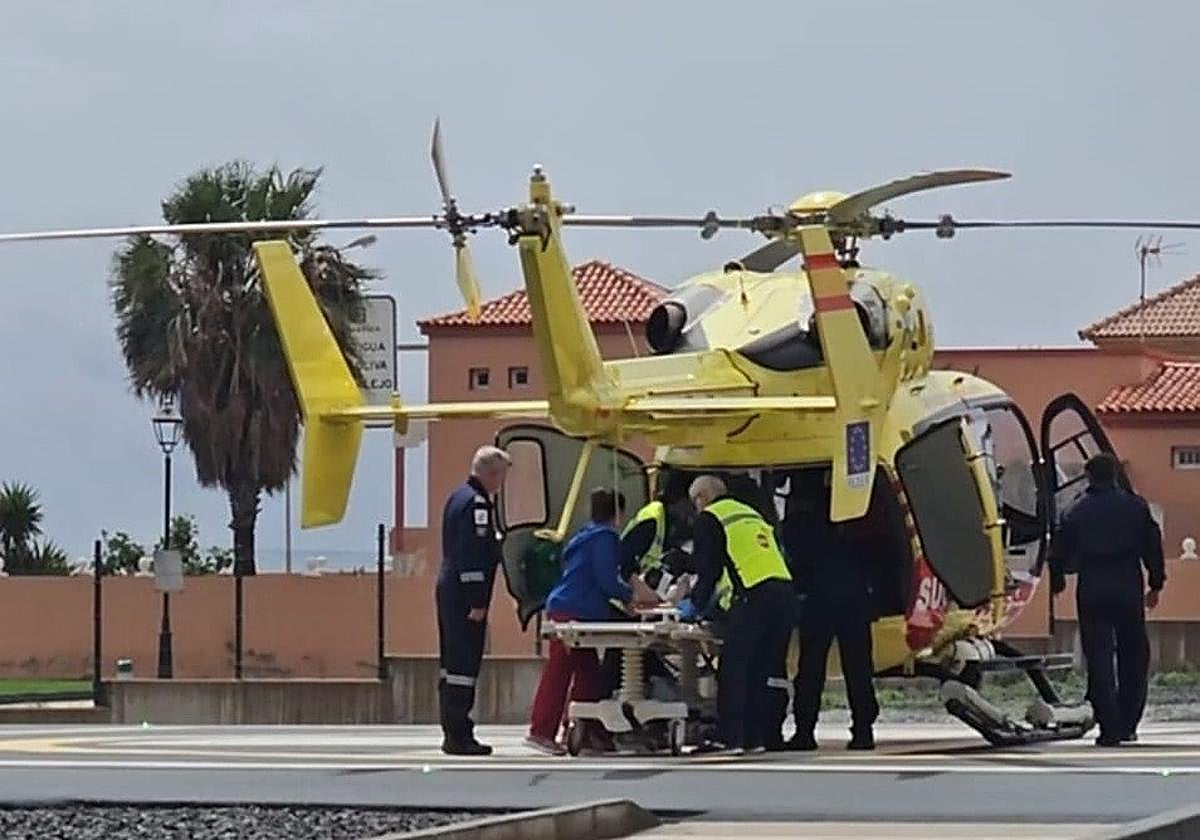
In a significant advancement for emergency healthcare services in Fuerteventura, the official presentation of the island’s first medical helicopter occurred on a recent Monday morning. Just one hour after its introduction at the helipad of the Hospital General de Fuerteventura, this newly integrated helicopter of the Servicio de Urgencias Canario (SUC) completed its first mission—rescuing a 68-year-old man in need of urgent medical care.
The First Mission Under Pressure
At 10:15 AM, a distress call came in from a medical center located in Jandía, in Pájara municipality. A local patient required swift transfer due to a critical health issue. Given that Morro Jable, Jandía’s main town, is situated about 100 kilometers from the hospital, the need for this helicopter service became glaringly urgent. Historically, there have been grave consequences related to the lack of rapid medical response in this region; notably, a tragic incident in June 2016 when a 33-year-old woman lost her life while awaiting an equipped ambulance that never arrived. This painful memory has been a driving force behind calls for improved medical emergency services in the area.
Meeting Long-Standing Demands
The inauguration of this medical helicopter marks the culmination of a decade-long effort to enhance emergency response capabilities in Fuerteventura. Alongside the establishment of a radiotherapy unit in June 2022, the new helicopter service addresses vital healthcare needs that have long been unmet, particularly in the southern regions of the island.
The Mechanics of Emergency Response
The success of the inaugural mission hinged on timely decision-making. With the standard medical ambulance in use for another serious patient transport, the on-duty nurse coordinator at SUC promptly activated the helicopter stationed at the Fuerteventura airport. This helicopter is the third in a new series aimed at enhancing emergency services across all Canary Islands, providing essential support, especially for the more remote eastern islands.
The onboard crew for this first flight consisted of a commander, a co-pilot, and a medical team featuring Dr. Noelia Almeida and nurse Carlos Quintana, both of whom had just participated in the service’s launch. They swiftly responded to the medical needs of the patient, ensuring he was stabilized upon arrival at the hospital.
Rapid Re-Deployment for Critical Care
As if to emphasize the urgent need for this service, the helicopter was deployed again later that same evening at 9:00 PM. This time, the medical crew included Dr. Javier Ruiz and nurse Laura Saavedra, who, along with 14 other healthcare professionals, are dedicated to assisting with the medical helicopter service at the Hospital General de Fuerteventura. Their mission: transport a critically ill patient from El Hierro’s Hospital Nuestra Señora de Los Reyes to the Hospital Universitario Nuestra Señora de la Candelaria in Tenerife.
During the official presentation earlier that day, Noemí González, the SUC’s General Director, highlighted that this helicopter service would significantly decrease response times in emergencies across the three islands of the Las Palmas province while remaining available for the entire Canarian archipelago if the situation demands.
An Adaptive Emergency Network
The newly deployed medical helicopters of the SUC operate under the coordination of the sanitary personnel from the emergency room. They engage based on immediate needs and availability, regardless of which island the helicopter is based. This flexibility ensures that the healthcare service can effectively respond to emergencies that demand fast and reliable transportation.
In a landscape marked by geographical challenges, this new helicopter service heralds a much-needed upgrade in urgent care capabilities for Fuerteventura and beyond, fostering a sense of hope and reassurance among its residents. As the helicopter takes to the skies, it symbolizes not just a commitment to improved healthcare but also a dedicated workforce ready to confront medical emergencies head-on.