The Ongoing Tension Between Social Media Fame and Environmental Preservation
A Disturbing Incident in Fuerteventura
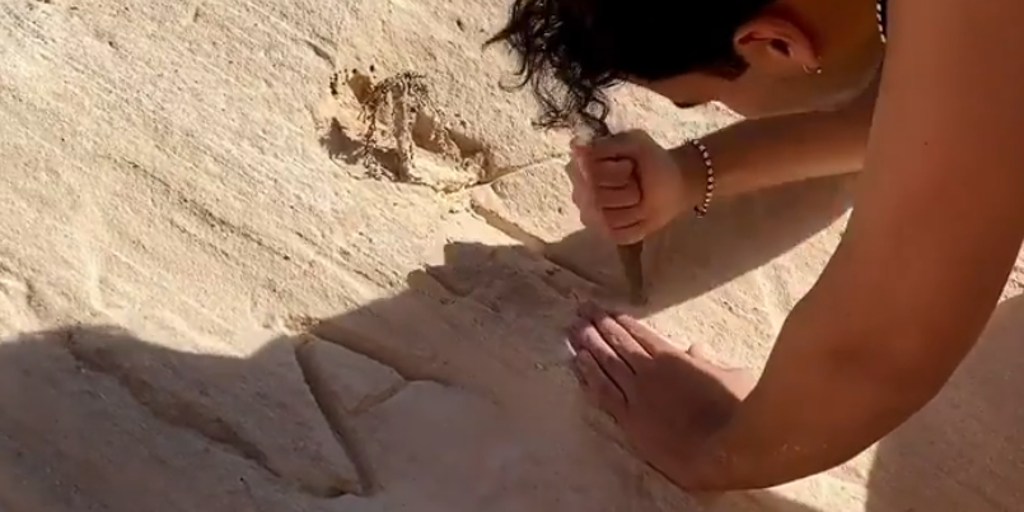
Recently, a disheartening episode has unfolded in the beautiful Lajares ravine in La Oliva, Fuerteventura. An Instagram influencer, driven by an insatiable desire for notoriety, took it upon himself to etch his initials into the landscape, a clear act of vandalism that raises questions about the responsibility we bear towards our natural heritage. With a following of 38,000, this Italian social media personality saw fit to document his actions, significantly blurring the line between self-promotion and environmental desecration.
The Natural Wonder of the Paleodunes
The Lajares area is home to the paleodunes, often referred to as the “Petra of Fuerteventura.” These remarkable formations are roughly 342,000 years old, sculpted by ancient waters during the Middle Pleistocene, when oceanic tides receded. Their otherworldly appearance not only captivates visitors but also encapsulates a rich geological history worthy of admiration and protection. Declared a Cultural Heritage Site in 2008, these dunes are under special protection, underscoring their significance.
The Impact of Vandalism
The latest incident involving the influencer highlights a growing trend where the pursuit of social media fame leads to destructive behaviors. As he carved his initials into the ravine, this individual filmed the act, eager to share it with his followers. The video, showcased by the page ‘NoticiasFuerteventura’, serves as a stark reminder of how social media can sometimes prioritize personal gain over respect for cultural and natural treasures.
Valuable Scientific Insights
Beyond their aesthetic appeal, the walls of the eolianites in Lajares are invaluable to scientific research. They harbor fossils from various geological strata, offering a window into evolutionary studies of the region during the Pleistocene epoch. These findings enable scientists to understand better the climatic and ecological changes that have shaped Fuerteventura over thousands of years. Notably, the discovery of species from the genus Cochlicella, ancient relatives of modern snails, adds another layer of importance to this site.
The Intersection of Fame and Environmental Ethics
As platforms like Instagram continue to grow in popularity, the responsibility of influencers also escalates. The act of vandalism in Lajares not only disrespects local culture but also threatens future generations’ ability to appreciate and study such priceless natural wonders. This incident acts as a compelling case study in the ongoing conversation about the ethics of social media engagement and the imperative to protect our environment.
The Community’s Reaction
The local community and conservationists are likely to respond vigorously to such acts of vandalism. It’s crucial for society to foster a dialogue around responsible tourism and the impact of social media on both cultural sites and natural landscapes. Awareness campaigns and educational programs could help inform both residents and visitors about the importance of preserving Fuerteventura’s unique geological history and ensuring that places like Lajares remain untouched for future exploration and study.
A Reflection on Responsibility
This incident serves as a critical reminder of our collective responsibility towards the environment. While the allure of social media fame is strong, it is imperative to consider the implications of one’s actions on the natural world. The delicate balance between human expression and nature’s preservation invites us all to reflect on the legacies we wish to leave behind.