Canary Islands Development Fund: A Commitment to Progress
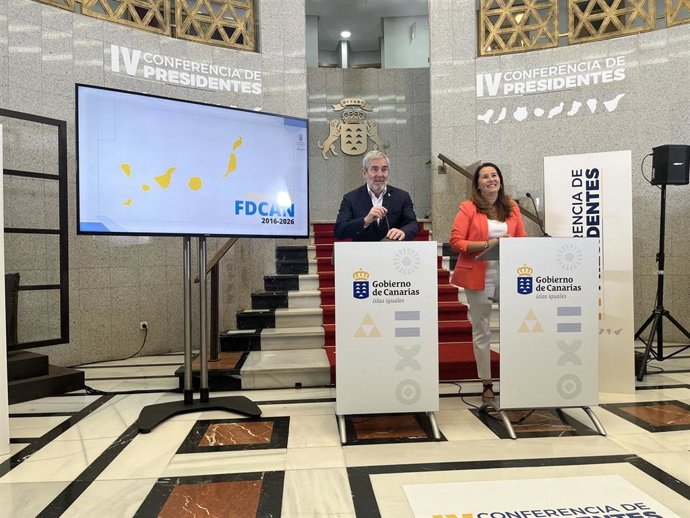
The Canary Islands are set to continue their ambitious development journey with the announcement that the Canary Islands Development Fund (Fdcan) will extend into the 2027-2037 period. This decision was made during a recent Conference of Presidents, where key figures such as Fernando Clavijo, the President of the Canary Islands, and Lola García, the President of the Cabildo of Fuerteventura and current President of the Canary Islands Federation of Islands (FECAI), outlined the fund’s future focus areas.
A Decade of Investment
The Fdcan has proven to be a significant driver of economic growth and infrastructure development in the Canary Islands. Since its inception in 2016, the fund has mobilized over €2.6 billion, a figure that reflects the collaborative efforts of the Canary Islands Government, cabildos, and municipalities. This initial investment stemmed from a €160 million cession from the central government, derived from the now-defunct General Tax on Economic Traffic (IGTE).
The fund was designed for a ten-year period, with contributions of €1.6 billion from the Canary Islands Government and an additional €1.003 billion from local governments. This financial backing has allowed for substantial investments in various sectors, particularly in housing and socio-health infrastructures, which are set to be the focal points for the next decade.
Positive Impact on Local Economies
Lola García emphasized the positive evaluations of the Fdcan by the cabildos, highlighting its role in enhancing territorial and economic cohesion across the islands. The fund has not only facilitated the development of essential infrastructures but has also spurred research and development initiatives and job creation. The impact of the Fdcan has been profound, with the economic effects of the mobilized funds multiplying significantly.
Fernando Clavijo provided a detailed overview of the fund’s achievements from 2016 to 2026. The total investment of €2.619 billion has generated an estimated economic impact of €4.504 billion, resulting in the creation of approximately 47,278 jobs. This impressive figure underscores the fund’s effectiveness as a catalyst for employment and economic growth in the region.
Job Creation and Economic Multipliers
The job market in the Canary Islands has seen a notable boost thanks to the Fdcan. Clavijo reported that between 2016 and 2024, the investments made through the fund facilitated the creation of 44,459 jobs, with 26,314 being direct positions and 18,145 indirect or induced roles. This trend is expected to continue, with projections indicating that the total number of jobs created could reach 47,278 by the end of the fund’s current cycle.
The allocation of the €1.6 billion contributed by the Canary Islands Government varied across the islands, with different funding percentages based on specific project needs. For instance, Gran Canaria and Tenerife received 50% funding for projects, while El Hierro and La Gomera benefited from 90% funding. This tailored approach has allowed for a more effective distribution of resources, ensuring that each island’s unique needs are met.
Looking Ahead: The Next FDCAN
As the Canary Islands prepare for the next phase of the Fdcan, Clavijo announced that technical and political teams from the autonomous government and the seven cabildos will begin discussions to finalize priorities for the fund. The goal is to reach an agreement by June, allowing for the definition of strategies that will guide the fund’s implementation in the coming decade.
One significant change being proposed is the shift from grants for individual projects to a more flexible funding model. Cabildos have requested that the funds be transferred directly from the Canary Government, allowing for greater adaptability in resource allocation. This approach aims to ensure that the funding can be redirected as needed to address the evolving priorities of each island.
Conclusion
The continuation of the Fdcan into the 2027-2037 period marks a pivotal moment for the Canary Islands. With a focus on housing and socio-health infrastructures, the fund is poised to drive further economic growth, job creation, and infrastructural development. As discussions progress, the commitment to adapt and evolve the fund’s structure reflects a proactive approach to meeting the diverse needs of the islands and their communities.


