The Allure of Cofete and the Mysteries of Villa Winter
When approaching the beautiful stretch of land known as Jandía, particularly from the vantage point of an airplane, one can’t help but be mesmerized by the sight. As the aircraft veers over Morro Jable, the coastline transforms into a pristine model: the striking contrast of the malpaís against a calm, azure Atlantic serves as an invitation to explore further.
The Setting: Landscape and Infrastructure
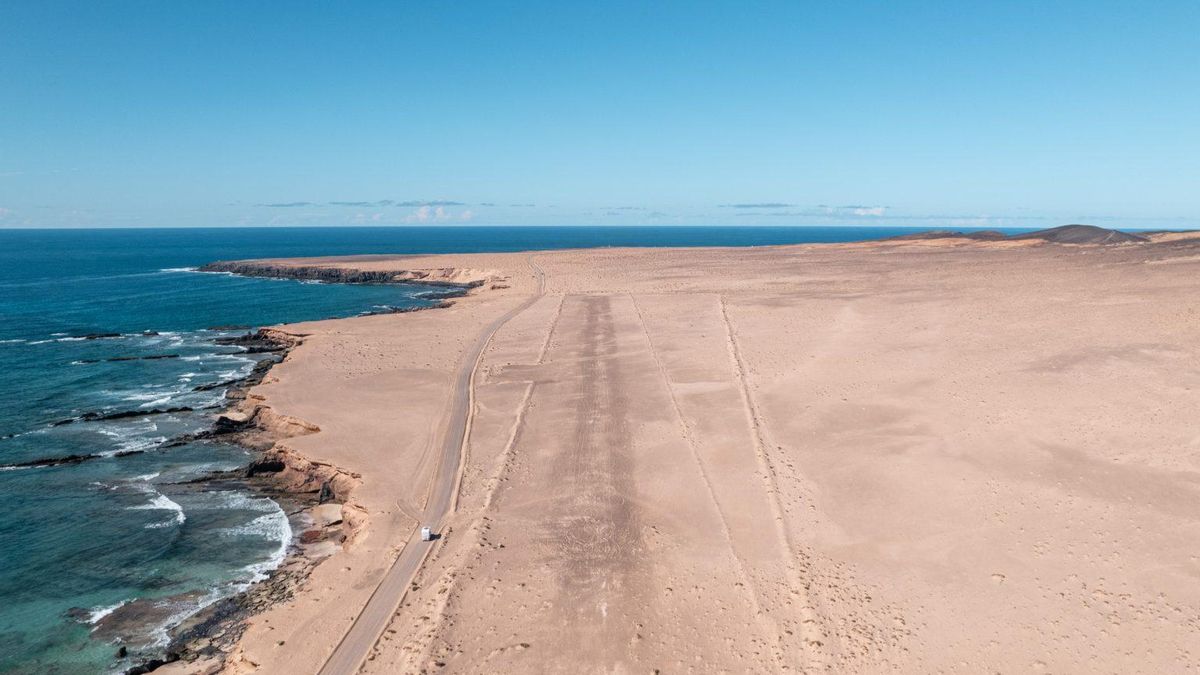
Beneath the contrast of gold from the desert sands and the deep blue sea, an improbable straight line emerges—a landing strip stitched to the Jandía Peninsula. This seemingly ordinary stripe of land tells a story steeped in history: from German aircraft making clandestine landings to the legendary underwater U-boats. Above, the imposing Villa Winter stands watch, a structure layered with tales of the past.
The narrative surrounding Villa Winter begins not with grand tales but with pragmatic necessity—the construction of the villa and its associated infrastructures during the post-war years. Historical records indicate that between 1946 and 1948, Gustav Winter oversaw the construction progress from Madrid, coordinating efforts to build a road leading to Punta de Jandía. This road tied directly into the broader aim of improving access to an otherwise isolated territory.
While some view the construction of the landing strip primarily as a military initiative, local sources suggest otherwise, emphasizing the need for emergency escape routes. This was particularly critical during a time when travel was fraught with challenges due to rough terrain and unpredictable weather conditions.
The Construction of Legends
As our gaze sweeps from the Villa Winter to the low-lying stretch of Jandía from Cofete to Punta Pesebre, an air of mystery emerges. The area feels otherworldly—open, unblemished, and devoid of the trappings of modern tourism. This stark landscape is punctuated by the villa’s peculiar architecture, featuring two floors, a basement, a sea-facing balcony, and a 360-degree observation tower.
Local lore suggests that the region long after World War II served as more than just a remote, uninhabited coastal expanse. The villa and its surroundings reportedly played host to secretive activities: German planes landing under the cover of night, U-boats sneaking into secluded coves for fuel and food, and covert tunnels where clandestine medical procedures took place.
Tales of hidden surveillance towers and obscure radio posts, along with closed-off roads meant to obscure visibility, contribute to the legend of Villa Winter. Allegations of the villa functioned as a refuge for fleeing Nazi hierarchs and a supply point for mysterious operations continue to fascinate those intrigued by history’s darker chapters.
Dissecting Reality from Myth
However, the differentiation between myth and reality in this narrative is a complex one. Disputes over dates can fuel speculation; some locals insist that the area has historical connections dating back to 1937, while official accounts point toward 1946, with some sources suggesting developments into 1958. The Wikipedia entries often reflect this jumble of timelines, contrasting with the Winter family’s records that more accurately propose a timeline between 1946-1948 alongside later developments in 1950.
The allure of the villa and the adjoining landing strip has spurred documentaries, travel shows, and local anecdotes, all delving into the tales of concealed medical facilities and clandestine operations. Yet, it’s crucial to note that contemporary researchers and historical investigations have found no conclusive evidence tying the villa or landing strip to Nazi activities.
Even the official Casa Winter website debunks the idea of a covert submarine base, illuminating the precariousness of the waters around the region. Thus, it appears that the legend grew not from a singular event but rather from an accumulation of anecdotes and the human propensity for storytelling.
Exploring the Abandoned Landing Strip and Villa Winter Today
Visitors to Punta Pesebre today are met not with gatekeepers or signs warning of military secrets but with the peaceful solitude of the desert landscape. What remains is a modest maritime beacon nearby and traces of the haunted, abandoned runway that once held potential during turbulent times. No grand structures mark the place, just the whispers of history carried by the wind through the rocks and sands.
Facing the mountain, the Villa Winter stands stark against the landscape—its thick walls and peculiar room layouts sparking the imagination. Although the official narratives may differ, the lore surrounding the villa continues to inspire curiosity, beckoning adventurous souls to explore and ponder what truly transpired in this remote enclave.
In a world where reality mingles with legend, the allure of places like Cofete remains powerful. With letters detailing construction, road timelines, and emergency landing strips nestled deep in the archives, the truths from the past—though seemingly dull—bear an intrinsic fascination that transcends embellishments. Here, amidst the empty landscapes of Fuerteventura, lies a living mosaic of stories, dreams, and realities.