In a distressing turn of events, the Cabildo of Fuerteventura, through its Cultural Heritage Service, has confirmed an act of vandalism at the archaeological site of the Montaña del Sombrero, located in the municipality of Antigua. This incident, characterized as a “theft of cultural heritage,” will be reported to the relevant authorities as it constitutes a criminal offense. The Corporation issued a statement following a citizen’s report that prompted an inspection of the site by the Cultural Heritage Service, accompanied by Environmental agents.
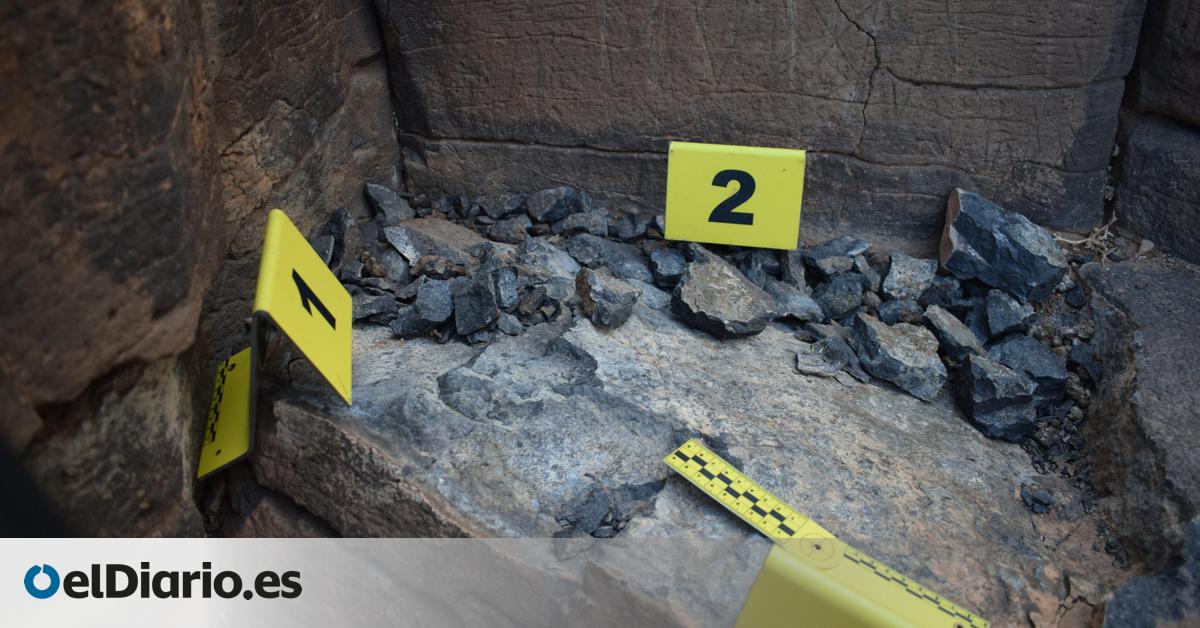
Upon inspecting the site, officials confirmed evidence of theft, identifying portions of the engraved rock as missing. The Cabildo emphasizes that this act represents a crime against historical and cultural heritage, impacting a protected asset of significant archaeological value. Such incidents not only undermine the integrity of these irreplaceable artifacts but also rob future generations of invaluable insights into the early cultures of the region.

In a commendable act of civic responsibility, the citizen who reported the theft also returned five fragments detached from the panel to the Cabildo of Fuerteventura. These fragments have been recovered, placed in the custody of the Cultural Heritage Service for safekeeping, conservation, and analysis. Thanks to this community cooperation, a portion of the stolen material has been preserved, facilitating potential research and restoration efforts.
The heritage association El Efequén has joined in condemning the vandalistic attack on the Montaña del Sombrero site. This archaeological site is notable for its rich variety of engraved motifs created by the Majos people before the European colonization of the island. These engravings include pastoral games, podomorphs (footprints), lines, and geometric figures, alongside alphabetic inscriptions of significant historical importance, crucial for interpreting our past.
In both Fuerteventura and Lanzarote, various engraved lines representing two different alphabets—libyo-Latin and libyo-Berber—can be found. The panel that was “completely destroyed” during the theft contained inscriptions in both scripts, including the longest line of libyo-Berber script in all of Fuerteventura. This loss is particularly significant as it erases historical records likely inscribed by members of the Majo ethnic group approximately 2,000 years ago.
The damage caused by this act of vandalism is described by the association as “irreparable,” as it obliterates inscriptions that serve as a direct link to our cultural heritage. El Efequén has vehemently demanded that the Cabildo implement “decisive” deterrent, educational, punitive, and surveillance measures to proactively safeguard the archaeological heritage of the island.
According to the association, the neglect of archaeological heritage in Fuerteventura is glaringly evident. The island is home to around one thousand archaeological sites, yet it only has one individual responsible for monitoring all these heritage assets, which include not only archaeological but also ethnographic and architectural properties. This overwhelming oversight raises significant concerns regarding the preservation of Fuerteventura’s cultural history.
Furthermore, there is currently no dedicated service for the surveillance of cultural heritage on the island. This responsibility largely falls upon the Environmental agents and guards, a department that also suffers from a limited workforce. This lack of adequate monitoring underscores the urgent need for enhanced protections to prevent future acts of vandalism and ensure that these cultural treasures are preserved for future generations.
Community Involvement
The Cabildo of Fuerteventura acknowledges and appreciates the citizen’s crucial role in averting further loss by reporting the situation. They encourage the public to remain vigilant and report any discoveries of fragments or alterations at the site immediately to the relevant authorities or to the Cultural Heritage Service at (928 86 23 00, ext 664).
The Cabildo of Fuerteventura asserts that this criminal activity “will not go unpunished” and that they will pursue any actions jeopardizing the island’s cultural heritage. Their commitment reflects a broader intent to uphold and respect the rich historical narratives embedded within Fuerteventura’s landscape.