Arrecife Town Council Takes Action Against Illegal Scrap Management
The Arrecife Town Council has made headlines recently by imposing a fine of €15,001 on Reciclajes Fuerteventura Compraventa de Chatarras y Metales, a scrap metal trading company based in the municipality of Antigua, Fuerteventura. The council’s decision also includes the closure of the company’s operations concerning scrap management in a plot located in Argana Alta. The move has been prompted by the company’s failure to obtain the necessary permits for conducting such activities.
Background of the Case
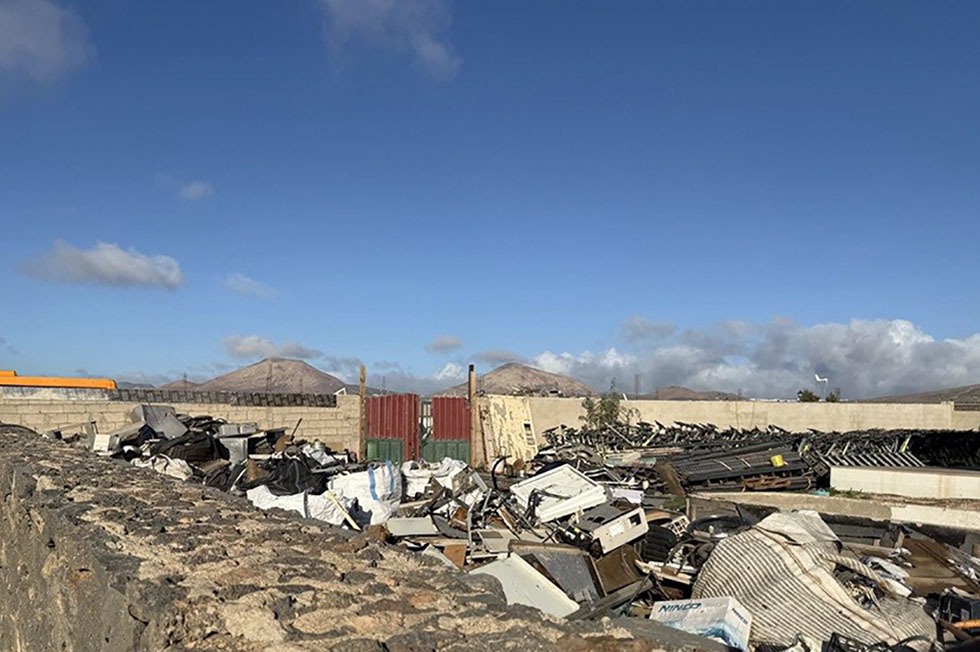
The sanctioning process began following a report from the Local Police of Arrecife, dated October 30, 2025. The police report illuminated concerning activities occurring on a parcel of land in Argana Alta. The officers observed a significant build-up of vehicle remnants and an assortment of motor parts in an enclosed area. This raised red flags regarding the legality and environmental safety of the operations.
The report further detailed alarming conditions, noting that “the interior of a fenced plot contains a residence, while the exterior is cluttered with a substantial number of vehicle scraps.” Additionally, it mentioned that various car batteries, tires, and other vehicle pieces were also scattered around the area. Evidence indicated that multiple individuals were engaged in sorting through the scrap materials.
Observations by Local Authorities
Law enforcement officials documented scenes filled with machinery designed for dismantling vehicles, as well as numerous car chassis lying along the roadway. This was compounded by the presence of various vehicles situated in public spaces that were apparently being dismantled without any oversight or regulation. These findings prompted concerns regarding potential violations of public safety and environmental laws.
A noteworthy aspect of the police report is their interaction with the person responsible for overseeing the property. Upon being asked for the required licenses, the individual admitted that they had not applied for any, thereby acknowledging a crucial lapse in compliance.
The Response from Reciclajes Fuerteventura
In the wake of the police report, the Arrecife Town Council initiated a formal sanctioning process for administrative infractions regarding classified activities. During the subsequent hearings, representatives from Reciclajes Fuerteventura argued that the land was acquired in 2019 and maintained that the debris had been progressively removed. They asserted that the property was not being used for scrap activities but served merely as a resting place for the company’s trucks.
Despite these claims, the council’s resolution refuted the arguments presented, emphasizing that they did not alter the facts established by law enforcement. It became evident that the parcel was indeed being utilized for the storage, handling, and sorting of scrap, corroborated by the presence of machinery and workforce.
Legal Implications
The Town Council determined that the activities carried out by Reciclajes Fuerteventura constituted a serious violation of the Law on Classified Activities and Public Shows. This is particularly relevant given that the operation of such activities was conducted without any existing licenses, prior communication, or responsible declarations from the company.
Stipulated under this legal framework, the council decided to impose the minimum financial penalty of €15,001. In addition to the fine, the council mandated the immediate cessation of all operations related to the scrap management conducted at the site.
Summary of Actions Taken
To summarize, the decisive actions taken by the Arrecife Town Council highlight a commitment to enforcing regulations governing waste management and environmental safety. The case against Reciclajes Fuerteventura serves as an essential reminder of the obligations that businesses operating in similar sectors hold regarding the acquisition of necessary permits and adherence to local laws. The significant financial penalty and the ordered closure of operations reflect the council’s staunch stance on maintaining community regulations and sustaining public welfare.
As discussions surrounding illegal scrap operations continue to unfold, this case stands as a pivotal example of local governance taking decisive actions to address and rectify environmental concerns. The implications extend beyond just one company, emphasizing the need for compliance across all sectors dealing with waste management and environmental stewardship.