Environmental Approval for Hotel RIU Palace Tres Islas Reforms
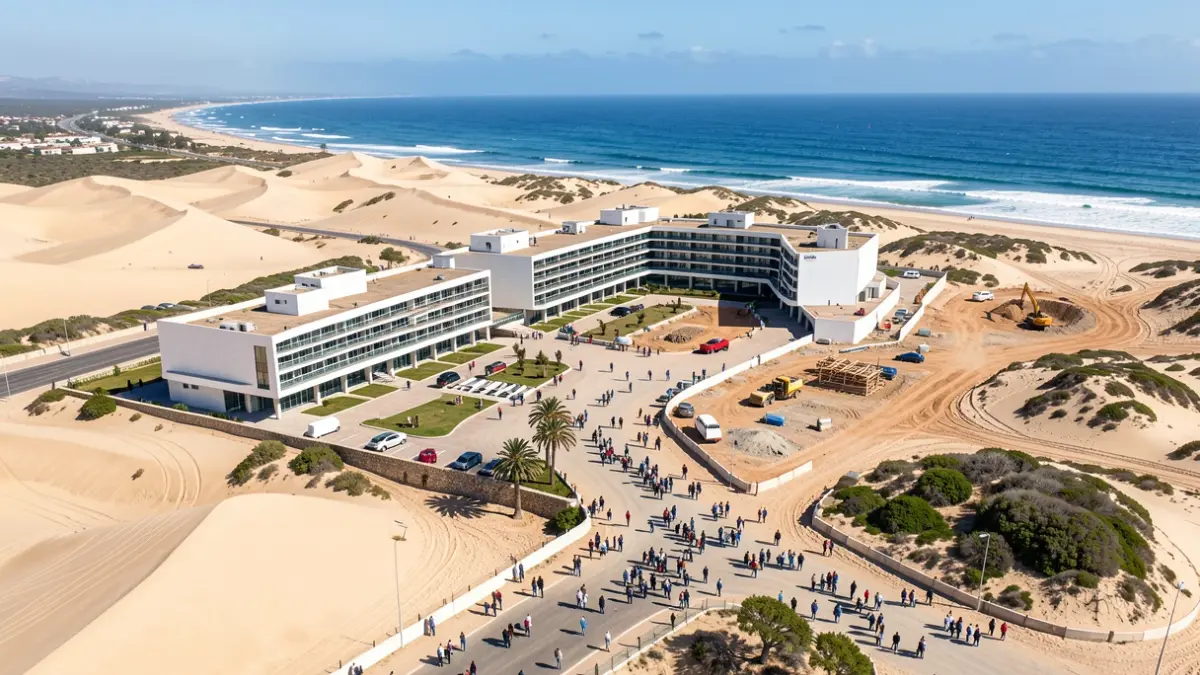
The Environmental Agency of Fuerteventura has granted permission for the renovation of the Hotel RIU Palace Tres Islas, located in the splendid Dunas de Corralejo in La Oliva. Following a simplified environmental impact assessment, it has been concluded that the planned modernization will not result in any significant adverse effects on the environment. This development is crucial for both the hotel and the surrounding ecological landscape.
Rationale Behind the Renovation
The hotel chain RIU has emphasized the need for these renovations due to the building’s deterioration from “exposure to salt spray.” This exposure has raised concerns about the structural integrity of the establishment. Located within a coastal protection area, the hotel aims to evolve into a “benchmark for sustainability.” The proposed project plans to enhance various aspects of the hotel, including the addition of six new rooms, parking facilities, the replacement of old elevators and kitchen exhausts, a lobby renovation, a new solarium, a fitness area, as well as upgrades to the swimming pool and spa sections.
Focus on Existing Structures
RIU assures that the renovations will solely focus on existing structures, ensuring no expansion in volume, height, or surface area. This approach intends to minimize disruption in an area known for its ecological delicacy. The main renovations will target the hotel’s interior spaces that serve both essential and recreational purposes, prioritizing sustainability throughout the process.
Environmental Considerations
The impact assessment report specifically highlights the hotel’s proximity to the Corralejo Dune System and protected habitats within the Natura 2000 network, which includes the Special Conservation Area (ZEC) Corralejo and the Special Protection Area for Birds (ZEPA) Dunas de Corralejo and Isla de Lobos. However, it concludes that carrying out the renovations on existing structures should not lead to significant consumption of geological resources or the occupation of new natural land. The anticipated landscaping impact is deemed “limited” and largely tied to the execution phase.
Mitigating Potential Impacts
Regarding the Natura 2000 network, it has been determined that with appropriate preventive and corrective measures in place, no notable effects that might compromise these sensitive environments are expected. To protect nearby dune habitats and their species, specific conditions will be established to prevent any unplanned development. Temporary disturbances to local wildlife, including noise and dust, will be addressed, with mandates in place to minimize such impacts, including the potential temporary closure of the hotel’s operations during construction.
Monitoring and Compliance Measures
The renovations will involve close monitoring by an environmental technician. This includes the demarcation of protected species, such as the Limonium tuberculatum (common sea lavender), and the removal of any invasive exotic species. In addition, measures will be implemented during the nesting season of the Cory’s Shearwater—a bird species that frequents the area—by reducing external lighting to protect the nesting sites. Moreover, should any archaeological or historical remains be discovered during construction, work will be halted immediately, ensuring the heritage of the region is respected and preserved.
Addressing Ecological Concerns
In response to concerns raised by various environmental organizations, including Agonane-Ecologistas en Acción, Turcón, and Ben Magec, the environmental agency clarified that issues such as land-use legality and public domain occupation fell outside the scope of the environmental assessment. These claims were addressed with supporting documentation provided by the La Oliva City Council, which ultimately dismissed those allegations.
Goals of the Renovation
The proposed project aims for a comprehensive update of the hotel’s climate control systems to improve energy efficiency and enhance structural safety to correct existing deterioration. The initiative will also focus on functionality, accessibility, and sustainability through the adoption of water-saving technologies. RIU has labeled this renovation as “imperative,” citing critical obsolescence in both technical and energy aspects of the hotel that necessitate urgent action for the building’s future security and environmental integrity, and to enhance the overall hospitality offering in the region.
As the renovations are set to commence, the focus remains on balancing the enhancement of guest experiences while safeguarding the local ecological treasures that make Fuerteventura a sought-after destination.