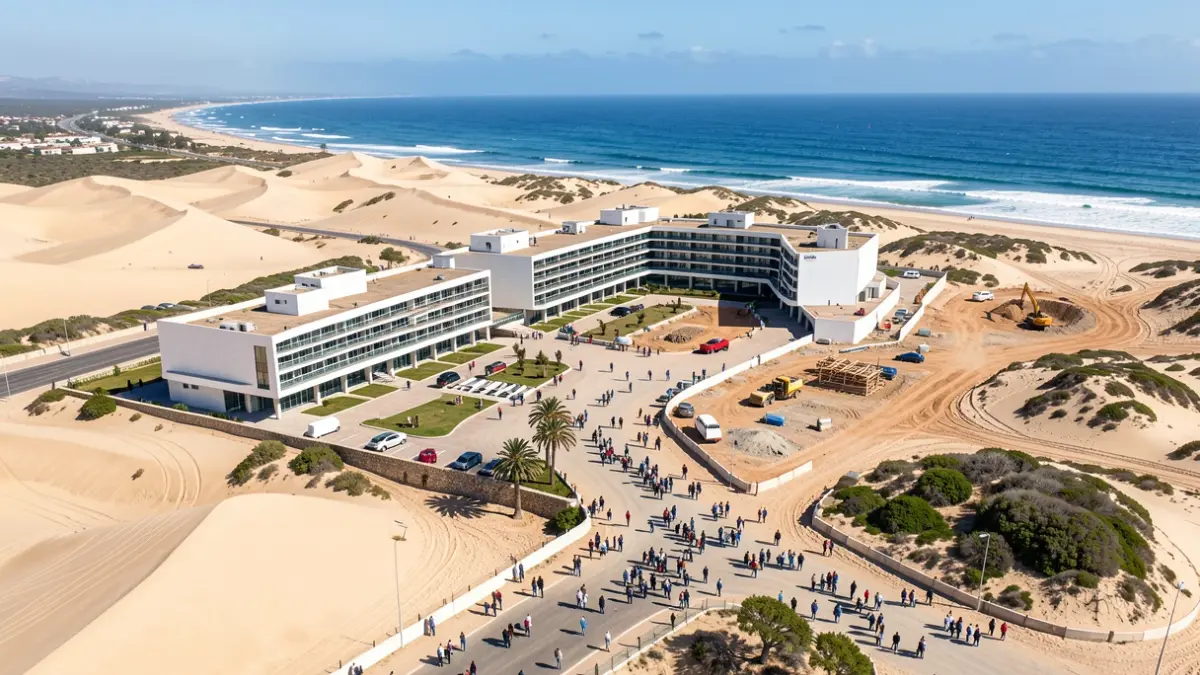
The Rising Waters of Mallorca: A New Era for the Mediterranean
PALMA DE MALLORCA, Spain — For generations, Germans, Britons, and other Northern Europeans have boarded aircraft for Mallorca in search of something reliably different from home: sunshine, warm beaches, and the cooling blue waters of the Mediterranean. However, this summer, the sea is no longer necessarily the place to cool down.
Highest Water Temperature Ever Measured in Spanish Waters
A buoy near Sa Dragonera, just off Mallorca’s western coast, registered a water temperature of 33.02°C (91.4°F) on August 7, 2026. This measurement, reported by Spain’s national weather agency AEMET, is being described as a record for the area and, according to Spanish public broadcaster RTVE, the highest recorded in Spanish waters. The western Mediterranean is currently running approximately 4°C above its long-term average in some areas. For a vacation island marketed to millions of travelers on the promise of sun and sea, a water temperature of 33°C is extraordinary.
It Is Also Part of a Much Bigger Story
Individual temperature records are influenced by various factors such as winds, currents, sunshine, and short-term weather patterns. Therefore, it would be misleading to attribute the buoy’s reading of 33.02°C solely to climate change. However, the backdrop against which such records are occurring has changed dramatically.
Research from Copernicus indicates that the Mediterranean sea-surface temperature has warmed by approximately 0.41°C per decade between 1982 and 2023, amounting to roughly 1.7°C of average surface warming over four decades. This means that the Mediterranean background climate is now about 0.4°C warmer than it was ten years ago and roughly 0.8°C warmer than 20 years ago.
The extraordinary marine heatwave of 2025 found that long-term warming had amplified extreme sea-surface-temperature anomalies by as much as 1.5°C when comparing present-day conditions with analogous weather patterns from earlier climates. While natural variability remains significant, the warming background is unmistakable. Human-caused greenhouse gas emissions are not a side issue; they are the principal driver of the long-term warming environment in which Mediterranean heat records are now being broken.
Historical Context: A Decade of Change
The contrast with only a decade ago is striking. Historical coastal data compiled for Palma shows an average August sea temperature of around 26°C in 2016. By 2022, the comparable August average reached 28.9°C; in 2023, it was around 28°C, and in 2025, approximately 27.6°C.
The new 33.02°C reading from Sa Dragonera is not directly comparable to those monthly averages—it is an individual observation from a different location—but it highlights how far today’s marine heat extremes can exceed the temperatures visitors historically associated with a Mallorcan summer.
Across the entire Mediterranean basin, the average daily sea-surface temperature reached a record 28.7°C on August 13, 2024, surpassing the previous record of 28.3°C set just a year earlier. Mallorca’s 33°C reading is almost 4.5°C warmer than that already exceptional whole-Mediterranean record average.
Is 33°C the Hottest Seawater on Earth?
No, it is not. Some of the world’s naturally hottest marine environments regularly reach or exceed Mallorca’s new extreme. NOAA Coral Reef Watch data from July 20, 2026, showed the western Persian Gulf at 34.2°C and waters around Bahrain at 34.3°C. Florida has also provided a glimpse of even more extreme possibilities. During the historic July 2023 marine heatwave, a sensor at Manatee Bay in South Florida recorded 38.4°C (101.1°F).
Historical Monthly Comparison
| Location / Event | Water Temperature | Context |
|---|---|---|
| Mallorca, Sa Dragonera — Aug. 7, 2026 | 33.02°C | Record local buoy measurement |
| Western Persian Gulf — July 2026 | 34.2°C | NOAA Coral Reef Watch |
| Bahrain — July 2026 | 34.3°C | NOAA Coral Reef Watch |
| Florida Keys reef region — July 2023 | Up to 33.6°C | Historic marine heatwave |
| Manatee Bay, Florida — July 2023 | 38.4°C | Shallow estuarine record |
| Mediterranean-wide record average — Aug. 2024 | 28.7°C | Basin-wide daily SST record |
| Palma de Mallorca August average — 2016 | About 26°C | Historical monthly comparison |
The key takeaway is not that Mallorca has suddenly become hotter than the Persian Gulf; rather, it is that a Mediterranean vacation destination is beginning to experience water temperatures previously associated more readily with subtropical and tropical seas.
The Tourism Economy: A Double-Edged Sword
The Balearic island remains one of Europe’s most successful leisure destinations. Germans continue to dominate its international air market, followed by the British. Palma de Mallorca Airport handled 33.8 million passengers in 2025, marking a 1.5% increase from 2024. Of those, approximately 9.84 million passengers traveled on German routes and 5.92 million on British routes.
In May alone, Palma airport handled 4,009,687 passengers, a 4.9% increase over May 2025, including more than 3.17 million international travelers. Mallorca is no longer merely a short-haul playground for Europeans; United Airlines launched a nonstop Newark–Palma route in 2022, expanding its seasonal operation to meet growing American demand for the island.
“Mallorca at the Limit”
On July 26, 2026, only days before the new ocean-temperature record, tens of thousands of people marched through Palma under the slogan “Mallorca al límit” — Mallorca at the limit. The demonstration was organized by the platform Menys Turisme, Més Vida — Less Tourism, More Life. Among its demands were limits on visitor numbers and measures to ease the island’s severe housing pressures.
Protesters cited traffic congestion, pollution, pressure on natural resources, and climate change as evidence that the current tourism model has exceeded Mallorca’s carrying capacity. The movement insists it is not opposed to individual tourists but rather targets a tourism-dependent economic model whose sheer scale is making housing, transportation, and everyday life increasingly difficult for residents.
Rising Costs and Changing Dynamics
Visitors are noticing another change: Mallorca is no longer necessarily an inexpensive Mediterranean escape. Official Spanish statistics show hotel prices continuing to rise rapidly. In May 2026, the Balearic Islands recorded Spain’s largest regional annual increase in its Hotel Price Index, up 8.9%.
Travelers have reported dramatic short-term price changes, with rooms doubling or tripling in price during specific booking periods. While claims that normal Mallorca hotel prices have increased tenfold across the board over the past few decades cannot currently be substantiated, it is clear that accommodation costs have climbed strongly, particularly since the pandemic.
When the Sea Stops Cooling the Island
As the waters of Mallorca heat up, the island faces a complex interplay of tourism, climate change, and local living conditions. The rising temperatures not only affect the natural environment but also the very fabric of life for those who call Mallorca home. The island’s future may depend on how it navigates these challenges, balancing the allure of its sun-soaked shores with the needs of its residents.